

Kidney diseases, including acute kidney injury (AKI) and chronic kidney disease (CKD), are among the most significant health challenges worldwide. Conventional medical treatments focus mainly on slowing disease progression and controlling symptoms.
In recent years, regenerative medicine has introduced new possibilities for treating kidney disorders. A leading approach involves mesenchymal stem cells (MSCs), especially those obtained from umbilical cord tissue, known as UC-MSC stem cells. These cells possess unique biological properties that allow them to promote tissue repair, regulate immune activity, reduce inflammation, and support healing in damaged organs.
Mechanisms of Stem Cell Activity in Kidney Repair
Immune System Regulation: Stem cells help regulate these immune responses by releasing signaling molecules that reduce excessive immune activity. They influence immune cells such as T lymphocytes and macrophages, encouraging them to adopt less inflammatory behavior. By calming these immune reactions, stem cells help minimize further tissue injury and allow the kidney’s natural repair processes to function more effectively.
Paracrine Signaling and Tissue Support: One of the most important ways stem cells contribute to healing is through the release of signaling molecules. Stem cells secrete a wide range of growth factors, cytokines, and chemokines that influence surrounding cells.
These molecules promote the survival of injured kidney cells, stimulate the formation of new blood vessels, and improve oxygen delivery to damaged tissues. Stem cells can also reduce programmed cell death, which often occurs during kidney injury. Additionally, these signals encourage native kidney cells to divide and repair damaged structures.
Potential Differentiation into Kidney Cells: Stem cells can develop characteristics similar to renal tubular epithelial cells. This ability may contribute modestly to the structural repair of damaged nephrons, the microscopic filtration units of the kidney. While this transformation is not the dominant mechanism of healing, it may still play a supportive role in restoring kidney tissue integrity.
Anti-Fibrotic Effects: Stem cells have demonstrated the ability to slow or inhibit this scarring process. They influence signaling pathways that regulate tissue remodeling and suppress molecules responsible for excessive collagen production. By reducing fibrosis and preserving the natural structure of kidney tissue, stem cells may help maintain kidney function for longer periods.
Protection Against Oxidative Stress: Stem cells release antioxidant compounds and stimulate the body’s natural protective mechanisms. These actions help protect kidney cells from oxidative damage, support mitochondrial function, and improve overall metabolic stability within renal tissues.
Stem Cell Therapy Potential Clinical Benefits for Kidney Disease
Early clinical research and observational studies have suggested several potential benefits of stem cell therapy for patients with kidney disease. Improvements have been observed in several important markers of kidney function.
One key indicator is the glomerular filtration rate (GFR), which reflects how effectively the kidneys filter waste from the blood. Some studies have reported stabilization or modest improvements in GFR following stem cell therapy. Another important marker is proteinuria, the presence of excess protein in the urine. Reduced protein levels often indicate improved kidney filtration and healthier glomerular structures.
Serum creatinine levels, which rise when kidney function declines, may also stabilize or decrease after treatment. In addition to laboratory improvements, many patients report increased energy levels, reduced fluid retention, and improved overall well-being, which may reflect better kidney performance.
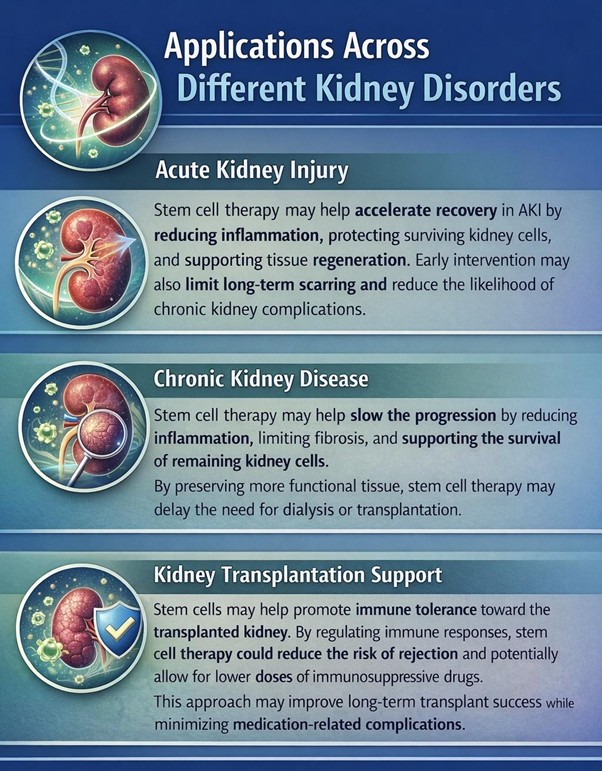
Applications Across Different Kidney Disorders
Acute Kidney Injury: Stem cell therapy may help accelerate recovery in AKI by reducing inflammation, protecting surviving kidney cells, and supporting tissue regeneration. Early intervention may also limit long-term scarring and reduce the likelihood of chronic kidney complications.
Chronic Kidney Disease: Stem cell therapy may help slow the progression by reducing inflammation, limiting fibrosis, and supporting the survival of remaining kidney cells. By preserving more functional tissue, stem cell therapy may delay the need for dialysis or transplantation.
Kidney Transplantation Support: Stem cells may help promote immune tolerance toward the transplanted kidney. By regulating immune responses, stem cell therapy could reduce the risk of rejection and potentially allow for lower doses of immunosuppressive drugs. This approach may improve long-term transplant success while minimizing medication-related complications.
Stem Cell Therapy Development in Thailand
Thailand has become an increasingly active center for regenerative medicine research and clinical practice. The country’s medical institutions combine modern biotechnology with established healthcare infrastructure, allowing for careful development of stem cell therapies.
Specialized laboratories process stem cells under regulated conditions to ensure cell quality, safety, and sterility. Healthcare professionals trained in regenerative medicine and nephrology collaborate to design treatment protocols and monitor patient outcomes.
Patients receiving stem cell-based therapies in Thailand are often closely monitored through laboratory testing and clinical assessments. Some individuals report improvements in kidney-related symptoms and laboratory markers, although continued research is needed to better understand long-term outcomes.
Conclusion
Stem cell therapy represents an innovative and evolving approach to the treatment of kidney disease. Unlike conventional therapies that primarily manage symptoms, regenerative treatments aim to repair damaged tissues, regulate immune responses, and preserve organ function.
Through mechanisms such as immune modulation, paracrine signaling, anti-fibrotic activity, and protection against oxidative stress, stem cells offer a multifaceted strategy for supporting kidney health. For patients with acute kidney injury, chronic kidney disease, or those undergoing transplantation, these therapies may provide new possibilities for improving outcomes.
In Thailand, ongoing research and advancements in regenerative medicine are helping to expand access to stem cell therapies for kidney disorders. Stem cell-based treatments represent a promising step toward more restorative approaches in kidney care.