

Parkinson’s disease is a chronic and progressive neurological condition that significantly affects movement, coordination, and overall motor function. The disease develops primarily due to the gradual loss of dopamine-producing neurons in a region of the brain known as the substantia nigra. Dopamine is a vital neurotransmitter responsible for regulating smooth and coordinated muscle activity. As dopamine levels decline, individuals begin to experience hallmark symptoms such as tremors, muscle stiffness, slowed movement (bradykinesia), and impaired balance.
Although existing treatments—such as levodopa therapy, dopamine agonists, and surgical approaches like deep brain stimulation—can help manage symptoms, they do not stop or reverse the underlying degeneration of neurons. Over time, their effectiveness may diminish, and patients often experience side effects. As a result, attention has increasingly shifted toward regenerative medicine, particularly stem cell-based therapies like umbilical cord-derived mesenchymal stem cells (UC-MSCs), which aim to address the root cause of the disease.
Key Therapeutic Mechanisms of Stem Cell Therapy for Parkinson’s Disease
- Replacement of Damaged Neurons: One of the primary objectives is to generate new dopamine-producing neurons. Once introduced into the brain, stem cells may differentiate into dopaminergic-like cells capable of releasing dopamine. These new cells can potentially integrate into existing neural networks, helping to restore communication between brain regions responsible for movement control.
- Neuroprotective Support: Stem cells release a variety of neurotrophic factors—naturally occurring proteins that promote neuron survival and function. These factors help protect remaining healthy neurons from further degeneration while also encouraging repair of damaged tissue. This protective effect is crucial in slowing disease progression.
- Restoration of Dopamine Levels: By replenishing dopamine through newly formed or supported neurons, stem cell therapy can improve signaling between nerve cells. This restoration plays a key role in reducing common symptoms such as tremors, rigidity, and impaired coordination.
- Anti-Inflammatory Effects: Chronic inflammation in the brain contributes to neuronal damage in Parkinson’s disease. Stem cells possess immunomodulatory properties, meaning they can regulate immune responses and reduce harmful inflammation. This creates a more favorable environment for healing and regeneration.
How Stem Cell Therapy Help to Support Individuals Affected by Parkinson’s Disease
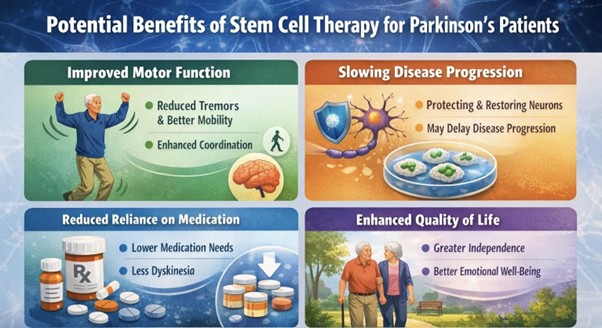
Improved Motor Function: Patients receiving stem cell therapy often report better control over their movements. Reduced tremors, increased mobility, and improved coordination can significantly enhance daily functioning.
Possibility of Slowing Disease Progression: Unlike medications that mainly address symptoms, stem cell therapy targets the loss of neurons itself. By safeguarding and possibly restoring these cells, it may slow the disease’s progression.
Reduced Reliance on Medication: Long-term use of drugs like levodopa can lead to complications such as involuntary movements (dyskinesia). With improved dopamine regulation from stem cell therapy, patients may be able to lower their medication dosage or stabilize its effects.
Enhanced Quality of Life: As symptoms become more manageable, patients often regain independence in daily activities. Improvements in physical ability can also positively impact emotional well-being, reducing stress and improving overall mental health.
Thailand’s Growing Role in Regenerative Medicine
Thailand has emerged as a key destination for advanced stem cell therapies, including treatments for Parkinson’s disease. The country offers a combination of modern healthcare infrastructure, internationally trained specialists, and cutting-edge laboratory facilities.
Many medical centers in Thailand collaborate with global research institutions to ensure that treatment protocols align with international standards. Patients typically undergo comprehensive evaluations, allowing clinicians to design personalized treatment plans based on factors such as disease stage, age, and overall health condition.
Additionally, Thailand’s regulatory framework supports innovation while maintaining patient safety, making it an attractive option for individuals seeking advanced regenerative therapies.
Advances in Research and Innovation
Stem cell therapy for Parkinson’s disease continues to evolve, with ongoing research aimed at improving its safety, effectiveness, and long-term outcomes. Clinical trials conducted in countries such as the United States, the United Kingdom, and Japan have demonstrated that transplanting laboratory-grown dopaminergic neurons is both feasible and generally safe.
Early findings from these studies suggest that some patients experience measurable improvements in motor function and a reduced need for traditional medications. While these results are still preliminary, they highlight the potential of stem cell therapy as a transformative treatment option.
Researchers are also exploring ways to enhance therapy outcomes through advanced technologies. These include gene-editing tools, personalized medicine approaches, and improved methods for delivering cells directly to targeted areas of the brain. Such innovations may increase the precision and durability of treatment effects.
Future Outlook
As scientific understanding deepens and clinical techniques improve, stem cell therapy is expected to play an increasingly important role in the management of Parkinson’s disease. While it is not yet considered a standard treatment, its potential to repair damaged brain tissue and restore lost function represents a significant shift from traditional approaches.
In the coming years, larger clinical trials and long-term studies will be essential to confirm its safety and effectiveness. If successful, stem cell therapy could move from experimental use to mainstream clinical practice, offering patients a more comprehensive and lasting solution.
Conclusion
Stem cell therapy represents a promising advancement in the treatment of Parkinson’s disease. By focusing on regeneration rather than symptom control alone, it offers a multi-dimensional approach that includes neuron replacement, neuroprotection, inflammation reduction, and dopamine restoration.
With its advanced medical infrastructure and commitment to innovation, Thailand is playing a significant role in bringing these therapies closer to clinical reality. For patients seeking alternatives beyond conventional treatments, stem cell therapy provides a hopeful pathway toward improved mobility, greater independence, and a better quality of life.
As research continues to progress, this regenerative approach may ultimately redefine how Parkinson’s disease is treated—shifting the focus from managing decline to actively restoring function and enhancing long-term outcomes.