

Hair loss affects millions of individuals worldwide and is a growing concern in Thailand as well. Whether caused by genetics, hormonal changes, autoimmune conditions, or environmental factors, hair thinning and baldness can significantly impact self-esteem and quality of life. Traditional treatments such as medications and hair transplantation have provided solutions for many people, but they often come with limitations, including temporary results, side effects, or invasive procedures. In response to these challenges, stem cell therapy—particularly using umbilical cord-derived mesenchymal stem cells (UC-MSCs)—has emerged as an innovative and promising option for hair restoration.
In Thailand, stem cell therapy is gaining popularity as an advanced solution for individuals experiencing various forms of hair loss, especially androgenetic alopecia, commonly known as pattern baldness. By harnessing the regenerative capabilities of stem cells, this treatment aims to promote stronger, thicker hair growth while improving overall scalp health.
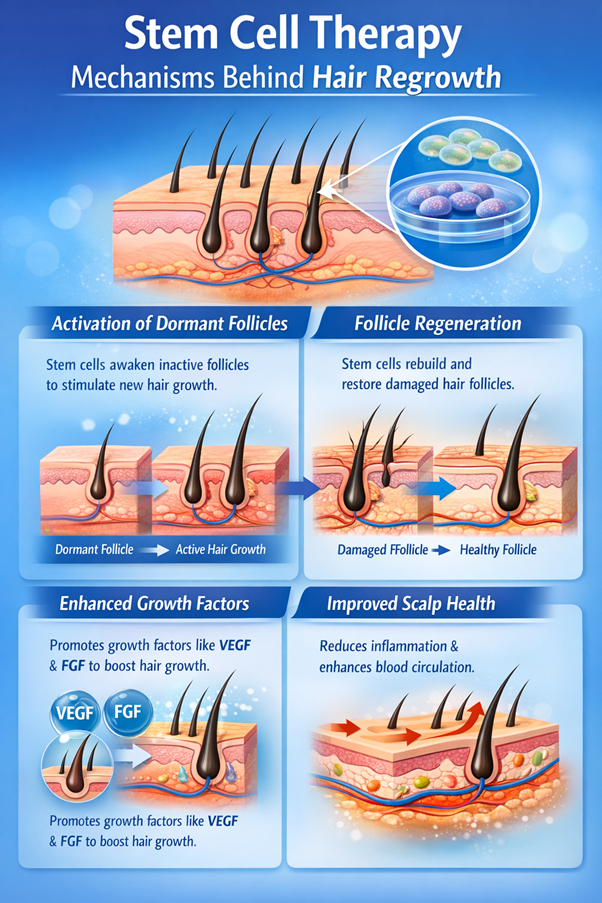
Stem Cell Therapy Mechanisms Behind Hair Regrowth
Stem cell therapy supports hair restoration through several interconnected biological processes. One of the primary mechanisms involves activating dormant hair follicles. Hair follicles naturally cycle through growth and rest phases, but in conditions like pattern baldness, many follicles become inactive and stop producing hair. Stem cells can stimulate these dormant follicles, encouraging them to re-enter the active growth phase and begin generating new hair strands.
Another key function is the regeneration of damaged follicles. Over time, hair follicles can shrink or lose functionality due to genetic or environmental influences. Stem cells have the ability to differentiate into various supportive cell types that contribute to rebuilding the follicular structure. This regenerative process enables the follicle to regain its capacity to generate healthy hair.
In addition to structural repair, stem cells enhance the production of growth factors essential for hair development. These include vascular endothelial growth factor (VEGF), which improves blood vessel formation, and fibroblast growth factor (FGF), which plays a role in regulating the hair growth cycle. By increasing the availability of these factors, stem cells can prolong the anagen phase—the period during which hair actively grows—leading to thicker and more resilient hair.
Improving scalp health is another critical aspect of this therapy. Inflammation, poor circulation, and nutrient deficiencies in the scalp can all contribute to hair loss. Stem cells help reduce inflammation, enhance blood flow, and optimize the delivery of nutrients to hair follicles. This creates a healthier environment that supports consistent and sustained hair growth.
Applications Across Different Hair Loss Conditions
Stem cell therapy offers versatility and has shown potential in treating a range of hair loss conditions. One of the most common applications is androgenetic alopecia, which affects both men and women. This condition is driven by genetic and hormonal factors that cause progressive thinning. Stem cell therapy may help slow down follicle miniaturization and stimulate new growth, offering an alternative to medications like minoxidil or finasteride.
Another condition where stem cells may be beneficial is alopecia areata, an autoimmune disorder in which the immune system attacks hair follicles, resulting in patchy hair loss. The immunomodulatory properties of stem cells can help regulate this immune response, reducing inflammation and encouraging hair regrowth in affected areas.
Stem cell therapy may also be useful for individuals experiencing hair thinning due to stress, nutritional deficiencies, or scalp disorders. By repairing damaged tissue and improving the scalp environment, stem cells can help restore hair density and strength.
Advantages Over Conventional Treatments
Compared to traditional hair restoration methods, stem cell therapy offers several notable benefits. One of the most significant advantages is that it is minimally invasive. Unlike surgical hair transplants, which require grafting and recovery time, stem cell therapy typically involves injections or topical applications, resulting in less discomfort and faster recovery.
Another benefit is its ability to address the underlying causes of hair loss. Rather than simply slowing hair loss or covering bald areas, stem cell therapy works to repair and regenerate hair follicles, offering a more comprehensive solution.
Additionally, the results of stem cell therapy may be longer-lasting. While conventional treatments often require continuous use to maintain results, regenerative approaches aim to restore natural hair growth processes, potentially reducing the need for frequent maintenance.
Thailand as a Hub for Advanced Hair Restoration Using Stem Cell Therapy
Thailand has established itself as a leading destination for medical tourism, particularly in the field of regenerative medicine. The country is home to modern healthcare facilities, skilled specialists, and advanced technologies, making it an attractive option for patients seeking innovative treatments.
Clinics in Thailand offering stem cell therapy typically follow a structured process that begins with a thorough consultation and scalp assessment. Treatment plans are tailored to each individual, taking into account the type and severity of hair loss. Stem cells are then administered through targeted injections or other delivery methods, with follow-up sessions to monitor progress and optimize results.
The combination of high-quality care and competitive pricing has drawn both local and international patients to Thailand for stem cell-based hair restoration.
Conclusion
Stem cell therapy represents a transformative approach to hair restoration, offering a natural and regenerative solution for individuals experiencing hair loss. By activating dormant follicles, repairing damaged structures, and improving scalp health, this therapy addresses the root causes of hair thinning and baldness.
For those seeking effective and long-term results, Thailand provides access to advanced stem cell treatments within a supportive and innovative healthcare environment. As research progresses and technology advances, stem cell-based hair restoration holds great promise for restoring not only hair but also confidence and quality of life.