Our Services
Others
- DFPP
- Shockwave
- IV Drip
The search for biological interventions to manage adult autism spectrum disorder (ASD) symptoms has increasingly centered on regenerative medicine. Specifically, Mesenchymal Stem Cells (UC-MSCs). Adults managing severe ASD-related neuroinflammation are frequently bombarded with conflicting, high-volume claims about what cellular therapy can actually achieve.
And frankly, the noise is dangerous. Navigating this medical space without objective clinical data exposes vulnerable patients to unverified “cures” that obscure the genuine, incremental reality of biological support.
By the end of this guide, you will understand the precise mechanisms, profound financial risks, and realistic benefits of stem cell therapy for autistic adults. We are stripping away the medical tourism marketing to look exclusively at the clinical data. Our clinical evaluation maps the evolution of adult treatments, the specific cellular action of UC-MSCs within an adult immune system, procedural safety, and the logistical nightmare of vetting offshore clinics.
If you are evaluating these experimental medical treatments, you need a framework to separate biological plausibility from predatory sales tactics.
The primary benefits of stem cell therapy for autistic adults involve targeted immunomodulation rather than disease reversal. Clinical evidence suggests cellular therapies may primarily address systemic, inflammatory issues.
When evaluating the newest treatments for autism spectrum disorder, patients must recognize that adult pathology differs fundamentally from childhood neurodevelopment. Experimental stem cell applications in adults focus entirely on managing chronic inflammatory burdens rather than altering established neurological architecture.
Families and patients frequently ask: can autism get better with age? The answer depends entirely on how you define “better.” While core diagnostic traits such as differences in social communication and sensory processing remain permanent fixtures of an autistic adult’s neurobiology, the physiological burdens associated with the spectrum often compound over time.
Look, the clinical presentation of ASD evolves. Adults frequently develop severe secondary systemic issues, including chronic immune dysregulation, profound gut-brain axis disruptions, and persistent neuroinflammation. These aren’t just behavioral issues. They are biological realities that heavily impact high-functioning autism life expectancy and overall quality of life. For many individuals, metabolic dysregulation and heightened systemic immune responses become substantially more pronounced during the transition into adulthood, directly influencing cognitive fatigue and sensory thresholds.
The physiological presentation of autism evolves significantly into adulthood, often shifting from developmental milestones to chronic neuroinflammatory management (CDC).
CDC data on the trajectory of autism shows that while some symptoms may evolve or improve, comprehensive long-term support is strictly required. Understanding this biological shift dictates exactly why modern therapies are pivoting. We are moving away from pure behavioral modification and looking closer at systemic inflammatory management.
The historical standard of care for autistic adults relies heavily on pharmaceutical management typically SSRIs for anxiety or antipsychotics for irritability. But these medications frequently just mask symptoms. They don’t touch the underlying immune microenvironment driving the distress.
This brings us to The Evidence-Led Cellular Support Framework (ELCSF) a methodology for assessing experimental therapies based on (1) Biological Plausibility, (2) Risk Profile, and (3) Clinical Validation.
Applying the ELCSF to modern treatments means we evaluate stem cell therapy not as a preventative tool or a behavioral “fix,” but strictly as a biological support mechanism. Regenerative interventions aim to alter the inflammatory cascade at the cellular level. Contrast this with conventional drugs that simply alter neurotransmitter uptake. The theory behind cellular support is biologically sound, but as we push past the theory, the clinical validation remains fiercely debated. To evaluate the ELCSF’s biological plausibility accurately, it is necessary to examine the specific cellular mechanics of UC-MSCs in a mature adult body.
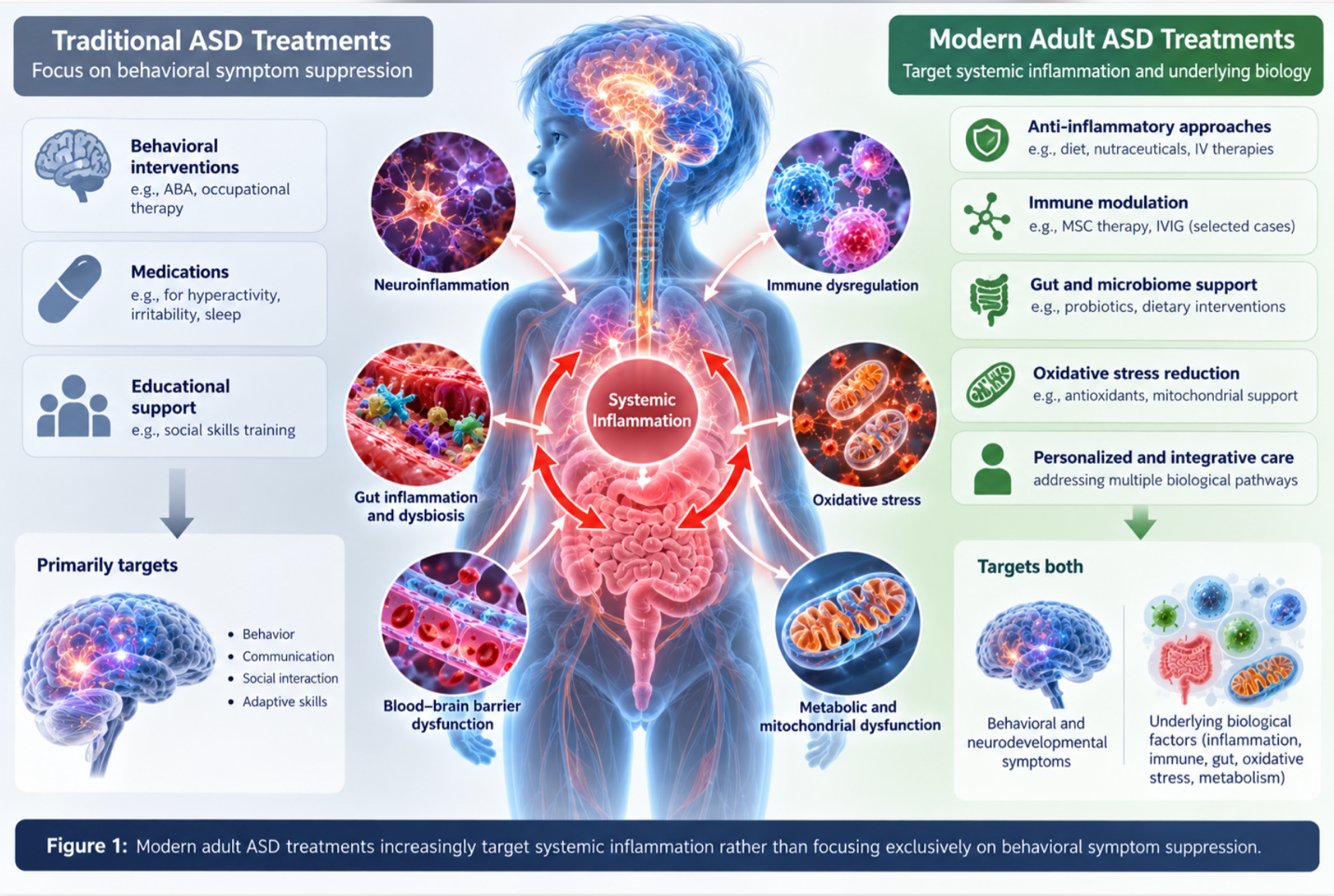
Figure 1: Modern adult ASD treatments increasingly target systemic inflammation rather than focusing exclusively on behavioral symptom suppression.
Full-body stem cell therapy with UC-MSCs for adults with autism relies on a mechanism known as paracrine signaling. Rather than replacing damaged brain cells, these infused cells act as localized immune modulators, secreting anti-inflammatory proteins that fundamentally alter how the adult body processes chronic neuroinflammation.
To grasp the full-body benefits of stem cell therapy for autism, you have to look past the outdated idea that stem cells simply turn into other types of cells. That’s cellular differentiation. And in adult ASD therapy, differentiation isn’t the primary goal at all.
Umbilical Cord-derived Mesenchymal Stem Cells (UC-MSCs) are an abundant source of active progenitor cells. When introduced into an adult system via systemic infusion, their primary value lies in their secretome the massive payload of bioactive molecules, cytokines, and growth factors they release. Think of them as microscopic pharmacies.
They actively inhibit Toll-like receptor signaling, which is a major systemic driver of inflammation. By secreting highly protective proteins, exosomes, and neurotrophic factors (like BDNF and VEGF), UC-MSCs essentially signal the surrounding hyper-active immune cells to stand down. These growth factors do not create new neurons, but they drastically improve the survival and metabolic function of existing neural networks currently bogged down by oxidative stress. This biochemical intervention helps clear metabolic waste from neural pathways.
| 📌 If you’re interested in how MSCs shift the immune system from attack mode to repair mode, we have an interesting article that discusses mesenchymal stem cell therapy for immune modulation, which you can read via the internal link. |
Early clinical research on how MSCs target neuroinflammation shows that Mesenchymal stem cells (MSCs) have demonstrated promise in regulating immune dysfunction associated with autism spectrum disorder (2019). This secretory profile is precisely what addresses the systemic pathology found in adult patients. They don’t rebuild the brain. They actively change the chemical environment the brain operates within.
Chronic neuroinflammation doesn’t just cause generic “brain fog.” In autistic adults, this persistent inflammatory state is heavily implicated in severe emotional dysregulation, debilitating anxiety spikes, and physical comorbidities like gastrointestinal distress. For patients looking to reduce neuroinflammation, autism stem cells protocols offer a unique biological mechanism compared to traditional pharmaceuticals.
Mesenchymal stem cells target chronic neuroinflammation by reprogramming pro-inflammatory macrophages into anti-inflammatory phenotypes (NIH, 2019).
Macrophages are the primary immune cells involved in systemic inflammatory responses. In many autistic adults, these cells are locked in a pro-inflammatory state (the M1 phenotype). These M1 macrophages constantly release pro-inflammatory cytokines like IL-6 and TNF-alpha which can cross the blood-brain barrier and exacerbate neural distress. This directly correlates with anxiety in mature neural architecture; when the brain’s immune environment is constantly inflamed, the amygdala remains hyper-reactive, leading to the profound sensory overload and emotional volatility many adults experience daily.
UC-MSCs trigger a process called phenotypic macrophage reprogramming. They aggressively switch these cells to an anti-inflammatory state (the M2 phenotype). Once reprogrammed, these M2 cells begin secreting IL-10, an anti-inflammatory cytokine that regulates ERK MAPK signaling pathways and cools systemic inflammation. The ERK MAPK pathway is critical because it dictates how cells respond to stress signals. By downregulating this pathway, stem cells essentially block the runaway inflammatory cascade at the cellular level.
This systemic calming effect is exactly why we see emerging preliminary clinical data regarding stem cell therapy for autism gut problems. The gut-brain axis is highly sensitive to macrophage activity. By cooling the inflammatory fire in the gut, systemic neuroinflammation drops. Similarly, stem cell therapy for autism sleep problems operates on this exact same biological axis; lowering systemic cytokines often allows for normalized circadian rhythms and deeper REM sleep architecture.
Recent studies demonstrating chronic neuroinflammation in autistic adults suggest that chronic neuroinflammation and immune dysregulation persist heavily into adulthood, impacting emotional regulation (2020).
We have to draw a hard line here. Treating a 4-year-old is biologically distinct from treating a 30-year-old.
Pediatric stem cell therapy often focuses on protecting or slightly modifying the neurodevelopmental trajectory. A child’s neural pathways are still highly plastic. For adults, the neuroarchitecture is firmly established. You simply cannot rewire a mature autistic brain with an IV drip of umbilical cord stem cells.
If you read the literature on pediatric UC-MSC neurodevelopment therapy, you’ll notice a massive focus on developmental milestones. Adult therapy, conversely, is strictly about damage control and optimization. It is about modulating established, chronic systemic dysfunction. You are dealing with decades of compounded oxidative stress and learned coping mechanisms.
Clinical reviews of patient advocacy data demonstrate a recurring dynamic—adults expecting a fundamental shift in how their brain processes social cues, only to be heavily disappointed. Stem cells will not teach you new neurotypical social behaviors. Setting realistic clinical expectations is non-negotiable. Stem cells may optimize the biological environment, reduce sensory overload driven by inflammation, and calm the gut, but they will not change the core autistic identity.
Despite the high biological plausibility of these mechanisms, the translation from laboratory theory to clinical reality requires a stringent, unforgiving risk assessment.
Patients asking if stem cell therapy is effective for autism must confront the regulatory reality: these treatments carry substantial clinical uncertainty. The primary downside of stem cell therapy is the glaring gap between biological plausibility in a petri dish and verified, consistent safety outcomes in human clinical trials.
Let me be entirely clear. No stem cell treatments are currently approved by major regulatory bodies for the cure, mitigation, or treatment of adult autism. None.
When commercial clinics promise a “100% safe” procedure that will “reverse” autism, they are actively lying. They are operating far outside the bounds of established, peer-reviewed medical science. Commercial clinics often exploit the desperation of patients by presenting these biological support mechanisms as guaranteed cures. They intentionally conflate preliminary animal data with guaranteed human outcomes, ignoring the massive, highly dangerous gap between in vitro studies and phase III human trials.
Regulatory agencies explicitly classify commercial stem cell therapies for autism as experimental, citing risks of infection and unverified efficacy (FDA).
The FDA warnings regarding unapproved stem cell treatments clearly state that unapproved interventions can be dangerous, potentially leading to adverse reactions, and are strictly experimental. Accepting this experimental status means accepting that you are stepping outside the protective guardrails of conventional medicine.
How these cells get into your body matters immensely. The administration process dictates the immediate safety profile and the overall comfort level for the patient.
Most clinics utilize either Intravenous (IV) infusion or Intrathecal administration. IV is relatively straightforward similar to a standard blood draw or vitamin drip. Intrathecal, however, involves injecting the cells directly into the spinal canal to bypass the blood-brain barrier.
Intrathecal delivery is not comfortable. It requires strict clinical monitoring, carries higher risks of spinal fluid leaks, and can trigger severe localized pain or persistent headaches. Even with the less invasive IV method, documented immediate adverse events exist. Patients frequently report transient low-grade fevers, profound fatigue for 24-48 hours, and localized immune reactions.
While UC-MSCs generally avoid catastrophic immune rejection due to their unique immuno-evasive properties, the procedure itself is a significant medical event. It requires a sterile environment and a physician capable of immediately managing acute anaphylaxis. For those who accept these clinical risks, the next profound barrier is financial access.
| 📌 If you’re interested in how to tell a well-regulated stem cell clinic from a risky one, we have an interesting article that discusses whether stem cell therapy is safe in Thailand, which you can read via the internal link. |
Stem cell therapy cannot cure autism in adults or children. Autism spectrum disorder involves established neurobiological architecture that cellular therapies do not reverse. Instead, investigational applications of UC-MSCs aim strictly to modulate chronic neuroinflammation and optimize the immune microenvironment. This biological support may potentially alleviate secondary symptoms like severe anxiety or systemic fatigue. Patients should view this purely as an experimental adjunct, not a curative treatment.
The cost of stem cell therapy for autism generally ranges from $10,000 to $50,000 out-of-pocket (NIH, 2019). Because these procedures are classified as experimental, they are virtually never covered by standard health insurance, leaving patients to bear the full financial burden. Additional expenses frequently include international travel, specialized lodging, and requisite pre-treatment laboratory testing.
| 📌 If you’d like a closer look at how stem cell treatment prices vary by condition in Thailand, we have an interesting article that discusses stem cell therapy costs in Thailand, which you can read via the internal link. |
Stem cell therapy is generally minimally invasive, though overall comfort levels vary significantly based on administration methods. Intravenous (IV) infusions cause mild discomfort similar to a standard blood draw. Alternatively, Intrathecal administration (injection directly into the spinal canal) carries higher procedural risks and potential temporary pain. Transient side effects such as low-grade fever, fatigue, or localized soreness may occasionally occur post-procedure. Clinicians must carefully monitor patients for acute adverse immune reactions. Long-term procedural discomfort is rare, but immediate post-treatment rest is absolutely mandatory.
Stem cell treatments for autism are not FDA approved and remain strictly classified as experimental. The FDA authorizes stem cell applications primarily for specific blood and immune system disorders, such as certain cancers. Regulatory bodies have issued repeated, stern warnings regarding the unverified marketing claims of commercial regenerative clinics. Patients receiving these therapies generally do so through off-label applications in international jurisdictions or specialized clinical trials. Participation requires acknowledging significant regulatory and clinical uncertainty.
For autistic adults, investigational stem cell therapy focuses exclusively on biological support, specifically targeting chronic neuroinflammation through UC-MSC immunomodulation. Data indicates that medical tourism for these unapproved procedures costs upwards of $10,000 to $50,000 (NIH, 2019). The safest approach combines rigorous clinic vetting, continuation of conventional psychiatric support, and intensely realistic functional expectations.
Applying The Evidence-Led Cellular Support Framework (ELCSF) is critical for navigating this complex medical field. By intentionally isolating biological plausibility from aggressive marketing hyperbole, patients can accurately assess whether the theoretical benefits of macrophage reprogramming truly justify the extreme financial and procedural risks involved.
Before pursuing any regenerative intervention, gather all your existing medical records, inflammatory marker imaging, and diagnostic histories. Discuss these options comprehensively with a qualified, independent neurologist or primary care physician to determine if an investigational cellular consultation actually aligns with your long-term health trajectory.