

Hair loss affects millions of people worldwide and can occur across different ages, genders, and backgrounds. The search for reliable and lasting hair restoration methods has become a key focus within both medical science and aesthetic medicine.
For decades, individuals dealing with hair loss have relied on several conventional treatment options. These commonly include oral medications, topical solutions applied to the scalp, and surgical hair transplantation procedures. Because these treatments primarily focus on managing symptoms rather than improving follicle health, many people continue to look for alternatives that are both effective and less invasive.
One of the leading innovations in this area involves the use of stem cell therapy. This innovative approach aims to stimulate the body’s natural repair mechanisms, helping damaged tissues regenerate and encouraging hair follicles to function more effectively. Among the different types of stem cells studied for regenerative medicine, Umbilical Cord–Derived Mesenchymal Stem Cells (UC-MSCs) have gained particular attention for their potential role in hair restoration treatments.
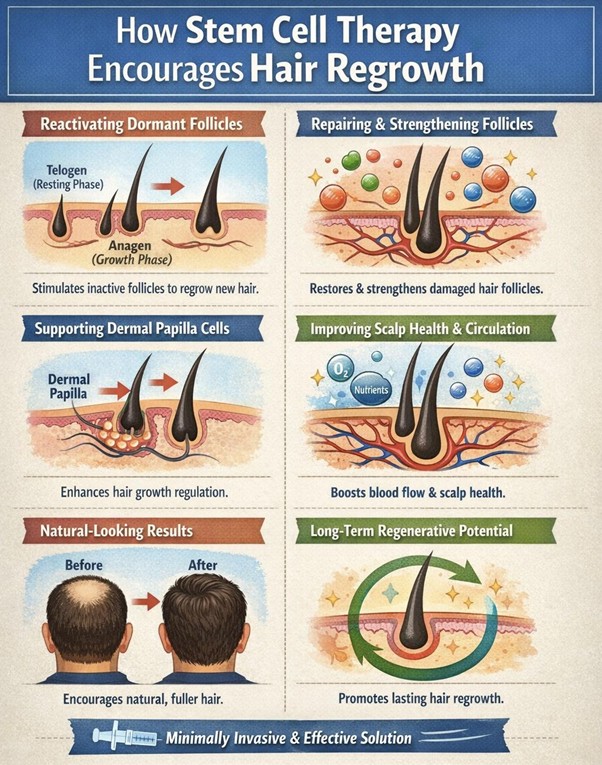
How Stem Cell Therapy Encourages Hair Regrowth
Reactivating Dormant Hair Follicles: A major factor contributing to many forms of hair loss is the inactivity of hair follicles. In conditions such as androgenetic alopecia, follicles often remain present within the scalp but become dormant over time. These inactive follicles may stay in the telogen phase, which is the resting stage of the hair growth cycle. When follicles remain in this stage for extended periods, new hair growth becomes limited or stops entirely. Stem cells may help stimulate these follicles to transition back into the anagen phase, the active growth stage. Once reactivated, follicles can begin producing new hair strands, gradually improving overall hair density.
Repairing and Strengthening Hair Follicles: Hair follicles can be affected by many internal and external influences. Hormonal fluctuations, aging, stress, nutritional deficiencies, and environmental factors may all weaken follicle structures over time. When follicles become damaged, they may produce thinner or more fragile hair strands. Stem cells release a variety of regenerative molecules and growth factors that help repair surrounding tissues and strengthen follicle function. With continued support from these biological signals, follicles may regain the ability to produce thicker, healthier hair.
Supporting Dermal Papilla Cells and Hair Growth Regulation: Another important aspect of hair growth involves dermal papilla cells, which are located at the base of each hair follicle. These specialized cells play a key role in regulating the development and cycling of hair follicles. Stem cells have the potential to support the regeneration and activity of these cells, helping maintain the natural rhythm of hair growth, shedding, and renewal. By supporting dermal papilla function, regenerative therapies may contribute to a more stable and balanced hair growth cycle.
Improving Scalp Health and Circulation: Healthy hair growth depends heavily on the condition of the scalp. Hair follicles require a consistent supply of oxygen and nutrients delivered through blood circulation. Stem cell therapy may help enhance microcirculation within the scalp, improving the delivery of these essential resources to hair follicles. In addition, these stem cells possess anti-inflammatory properties that may help reduce irritation or inflammation affecting the scalp. A healthier scalp environment allows follicles to function more effectively and supports consistent hair growth.
Natural-Looking Results and Minimally Invasive Treatment: One of the major advantages of stem cell-based hair restoration is that it produces natural-looking outcomes. Because the therapy stimulates existing follicles rather than implanting artificial hair grafts, the resulting hair grows naturally and blends with surrounding strands. A further advantage is that the procedure causes minimal disruption to the body. Treatment typically involves targeted microinjections into areas of the scalp where thinning is most noticeable. Since no surgical incisions are required, most individuals experience minimal discomfort and can resume daily activities relatively quickly.
Long-Term Regenerative Potential: Unlike treatments that temporarily slow hair loss, stem cell therapy focuses on improving the biological environment that supports hair growth. By strengthening follicles, enhancing circulation, and reducing inflammation, the therapy aims to promote more sustainable improvements over time. As the scalp environment becomes healthier, hair follicles may continue to function more efficiently, supporting ongoing hair growth and improved hair quality.
Thailand as a Leading Destination for Stem Cell Hair Restoration
Thailand has emerged as an important destination for regenerative medical treatments, including stem cell-based hair restoration. The country’s healthcare sector combines modern biotechnology, experienced medical professionals, and advanced treatment facilities. Stem cells used in therapies are generally prepared under strict laboratory standards such as Good Manufacturing Practice (GMP) protocols. These quality controls ensure that cells are screened, processed, and preserved carefully before clinical use.
Expected Progress and Hair Growth Timeline
Hair restoration through regenerative treatments does not occur instantly. Because hair grows in natural cycles, improvements typically appear gradually over several months. Many individuals who undergo stem cell therapy report increased hair density, thicker strands, and improvements in scalp condition over time. As hair follicles regain activity and strength, continued progress may occur with ongoing follicle regeneration.
Conclusion: The Future of Regenerative Hair Restoration
Umbilical Cord–Derived Mesenchymal Stem Cell therapy represents a significant advancement in modern hair restoration. By targeting the biological causes of hair loss rather than simply addressing its visible effects, stem cell therapy helps reactivate dormant follicles, repair damaged tissues, and improve scalp health. This regenerative approach offers a natural and minimally invasive alternative to traditional treatments while focusing on long-term improvement.
With its growing expertise in regenerative medicine and advanced medical infrastructure, Thailand continues to play an important role in the development and clinical application of innovative stem cell therapies. As scientific research expands and treatment techniques continue to evolve, stem cell-based hair restoration may offer new possibilities for individuals seeking sustainable solutions to hair loss and renewed confidence in their appearance.