

Scars are a natural outcome of the body’s healing process after skin injury. Whether caused by surgery, burns, acne, or physical trauma, scar tissue forms as the body works to repair damaged skin. While this process protects the body and restores tissue integrity, scars can sometimes appear raised, thick, discolored, or rigid. In certain cases, scars may also limit movement or cause discomfort, particularly when they develop over joints or highly mobile areas of the body.
Advances in regenerative medicine are introducing new possibilities for improving how the skin heals. One of the most promising developments is the use of umbilical cord–derived mesenchymal stem cells (UC-MSCs) for scar reduction and skin repair. This innovative therapy focuses on enhancing the body’s natural healing ability while encouraging more balanced tissue regeneration. As a result, the treatment may help minimize visible scarring and improve the overall appearance and function of the skin.
The Role of Stem Cell Therapy in Scar Reduction
During normal wound healing, the body produces collagen to close and strengthen the injured area. Collagen is a key structural protein that helps maintain the skin’s strength, firmness, and flexibility. However, when collagen production becomes excessive or poorly organized, it can result in noticeable scar tissue.
Stem cell therapy aims to influence this healing process in a more balanced manner. Instead of simply allowing the body to produce dense scar tissue, stem cells encourage the regeneration of healthy skin cells and support the formation of tissue that more closely resembles normal skin.
This regenerative approach is particularly valuable because it addresses the underlying biological processes involved in scar formation rather than focusing only on the surface appearance of the scar.
Mechanisms Through Which Stem Cells Improve Scars
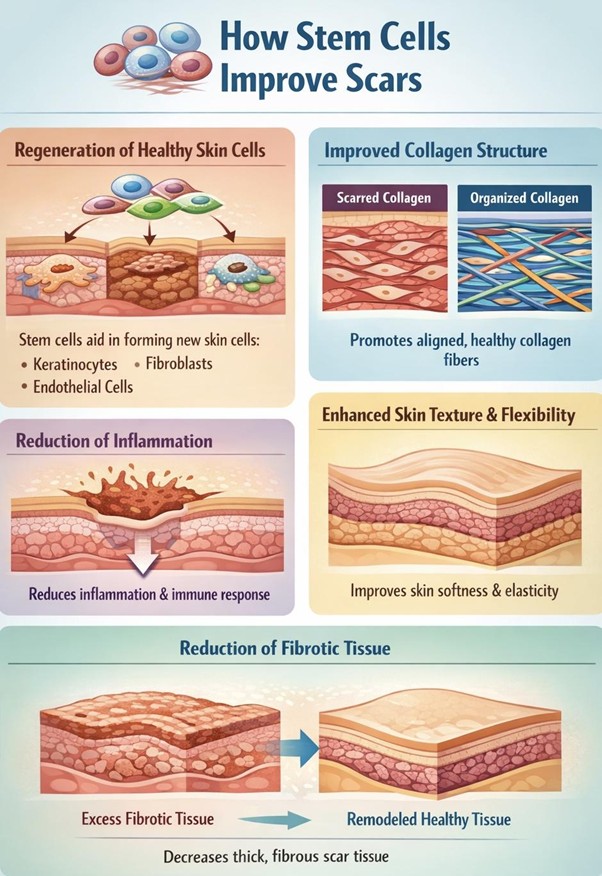
Regeneration of Healthy Skin Cells: One of the most important functions of stem cells in scar therapy is their ability to contribute to the regeneration of normal skin components. When stem cells are introduced into damaged tissue, they can differentiate into multiple cell types involved in skin repair. These include keratinocytes, which form the outer protective layer of the skin; fibroblasts, which generate connective tissue and collagen; and endothelial cells, which help create new blood vessels.
By supporting the production of these essential cells, stem cell therapy can encourage the formation of skin tissue that more closely resembles the surrounding healthy skin in both structure and function. This process may reduce the appearance of thick or irregular scars.
Improved Collagen Structure: Collagen plays a central role in wound healing, but the way collagen fibers are arranged determines whether the final tissue appears smooth or scarred. In typical scar formation, collagen fibers often become densely packed and misaligned, resulting in firm, raised scars.
Stem cells help regulate the activity of fibroblasts—the cells responsible for producing collagen. By influencing fibroblast behavior, stem cells can promote more organized collagen deposition. This improved arrangement of collagen fibers may lead to flatter, softer scars that blend more naturally with the surrounding skin.
Reduction of Inflammation: Inflammation is a natural response to injury, but excessive or prolonged inflammation can contribute to abnormal scar development. Mesenchymal stem cells are well known for their anti-inflammatory and immunomodulatory properties.
These cells release signaling molecules that can help calm inflammatory responses and regulate immune activity in the affected area. By creating a more balanced healing environment, stem cells may reduce the risk of excessive scar formation and support healthier tissue repair.
Enhancement of Skin Texture and Flexibility: Another potential benefit of stem cell therapy is the improvement of skin quality in the treated area. In addition to influencing collagen production, stem cells release growth factors that support the production of elastin and other structural proteins.
These proteins contribute to the elasticity and softness of the skin. As a result, areas treated with stem cell therapy may become smoother, more flexible, and better integrated with the surrounding tissue. This improvement is particularly helpful for scars located in areas that experience frequent movement, such as elbows, knees, or shoulders.
Reduction of Fibrotic Tissue: Fibrosis refers to the buildup of dense connective tissue that forms during the scarring process. When fibrosis becomes excessive, scars may become thick, stiff, and raised above the surrounding skin.
Stem cells have demonstrated potential to influence tissue remodeling by releasing signaling molecules known as cytokines and growth factors. These substances can help regulate the breakdown and reconstruction of scar tissue, reducing excessive fibrous buildup and encouraging the formation of healthier skin structures.
Scar Types That May Benefit from Stem Cell Therapy
Research and early clinical applications suggest that stem cell therapy may help improve several different types of scars. The effectiveness of the treatment can vary depending on factors such as the severity of the scar, its location, and how long it has been present.
Scars that may benefit from regenerative treatment include surgical scars, burn scars, scars resulting from traumatic injuries, acne-related scarring, and stretch marks. In many cases, stem cell therapy is used alongside other dermatological procedures to enhance the overall healing outcome.
The Future of Regenerative Skin Treatments
Stem cell therapy represents an exciting development in the treatment of scars and skin damage. Rather than focusing solely on cosmetic improvements, regenerative medicine aims to restore skin tissue at a deeper biological level. By promoting balanced healing, encouraging healthy collagen formation, and reducing inflammation, stem cell–based treatments offer a more advanced strategy for managing scars.
As ongoing research continues to explore the potential of stem cells in dermatology, these therapies may become increasingly refined and widely available. In the future, regenerative approaches like stem cell therapy could play a significant role in helping individuals restore smoother, healthier skin while minimizing the long-term effects of scarring.