Our Services
Others
- DFPP
- Shockwave
- IV Drip

For patients navigating advanced Parkinson’s treatment options after standard levodopa interventions diminish in efficacy, international regenerative medicine represents a highly scrutinized path requiring strict objective evaluation. Medical tourism marketing often conflates established science with unproven biological plausibility. This leaves patients and their families completely unable to distinguish between rigorous, data-driven clinical protocols and experimental commercial procedures. In our clinical evaluation of international medical hubs, we’ve found that separating hope from biological reality is the hardest part of the patient journey.
By the end of this guide, you will understand the specific cellular mechanics, JCI-accredited facility standards, and realistic functional outcomes associated with stem cell therapies in Thailand, enabling a truly evidence-informed suitability assessment. We analyze current UC-MSC mechanisms, precise central nervous system delivery protocols, transparent cost structures, and rigorous safety data to separate verified medical capabilities from industry noise.
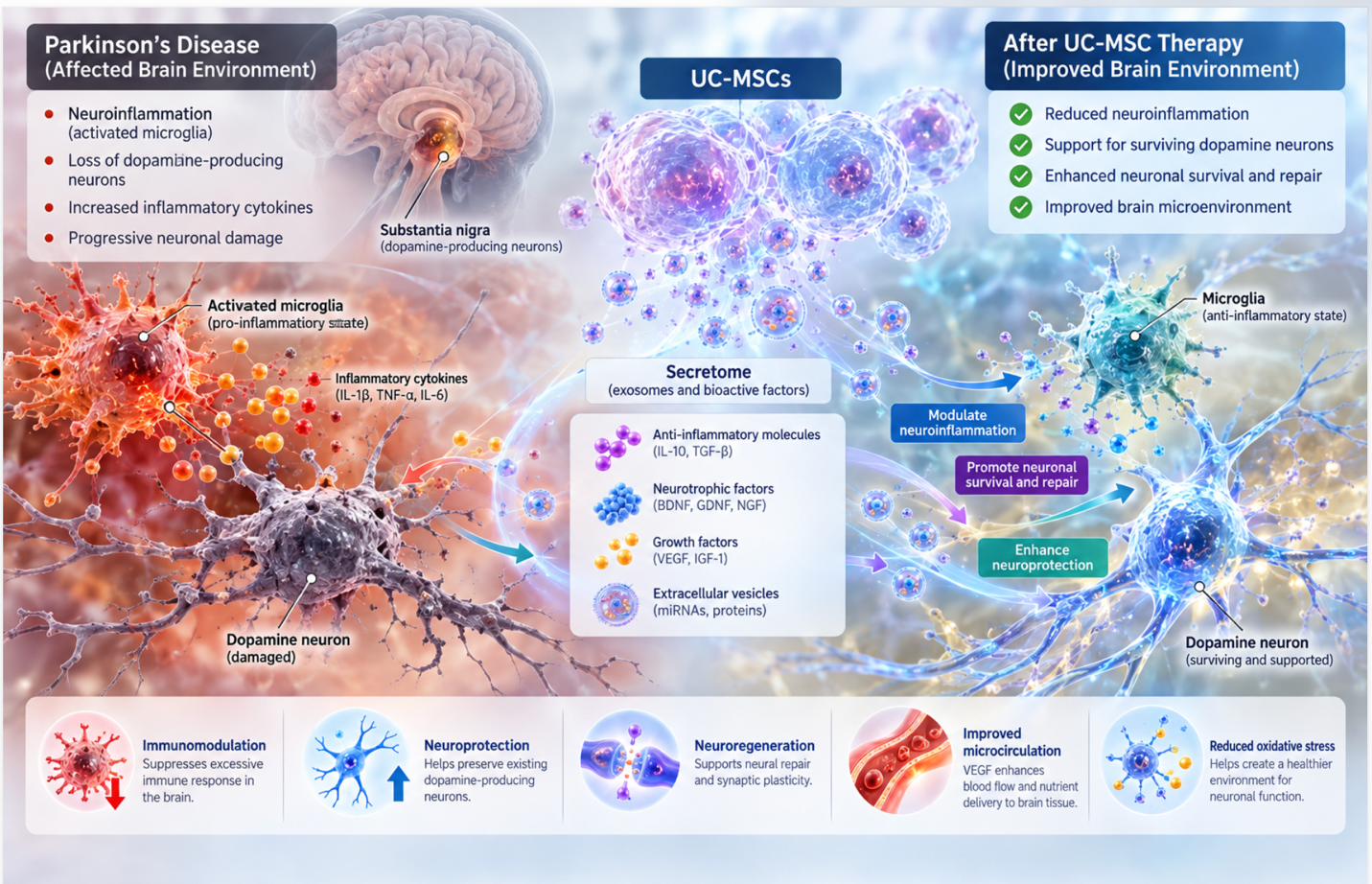
When evaluating advanced Parkinson’s treatment options, identifying clinically validated stem cell protocols in Thailand requires analyzing cell sources, delivery methods, and facility accreditations. Approximately 45% of international patients seeking advanced neuro-regenerative treatments actively prioritize JCI-accredited hubs in Asia to ensure laboratory safety (Medical Tourism Association, 2024).
Stem cell therapy for Parkinson’s disease focuses on utilizing specific biological mechanisms to alter the neurodegenerative trajectory of the condition. Rather than offering a definitive cure, parkinson’s disease stem cell treatment leverages the secretomes of progenitor cells to modulate neuroinflammation and potentially rescue deteriorating dopamine-producing neurons. This provides a critical biological intervention point when pharmacological management inevitably plateaus. According to clinical analyses published in PubMed (2024), these cellular interventions target the underlying inflammatory cascade rather than simply masking motor symptoms.
Understanding exactly how stem cells treat parkinsons requires moving past simplified analogies and looking directly at the basal ganglia’s complex neurochemical environment. Parkinson’s disease is fundamentally driven by the pathological accumulation and misfolding of alpha-synuclein proteins. These malformed proteins aggregate to form toxic Lewy bodies within the substantia nigra pars compacta (SNpc). This aggressive protein aggregation triggers severe microglial activation, essentially turning the brain’s resident immune cells highly neurotoxic. When microglia remain trapped in this chronic pro-inflammatory (M1) state, they release devastating cascades of cytokines specifically TNF-alpha and IL-1beta and reactive oxygen species (ROS) that actively destroy surrounding neural tissue.
The clinical reality of this cellular destruction is staggering. Approximately 60-80% of dopaminergic neurons in the substantia nigra are already lost before motor symptoms even appear meaning the biological window for intervention requires immediate, aggressive neuroprotection rather than waiting for further decline (Lancet Neurology, 2023). By the time patients actively seek advanced therapies, their remaining neural architecture is actively suffocating under chronic oxidative stress. Standard levodopa therapy simply provides the chemical precursor to dopamine, acting as a temporary synthetic neurotransmitter substitute. It does absolutely nothing to halt the underlying cellular apoptosis (programmed cell death) occurring at the microscopic level.
And here’s the clinical reality that many medical tourism clinics fail to disclose: the concept of using stem cells dopamine neurons to directly replace dead brain matter is largely a myth in current commercial applications. Instead, top-tier protocols use Umbilical Cord Mesenchymal Stromal specifically Brain-Derived Neurotrophic Factor (BDNF) and Glial Cell Line-Derived Neurotrophic Factor (GDNF). These exosomes literally force the toxic microglial cells to switch from a pro-inflammatory (M1) state to a neuroprotective, anti-inflammatory (M2) state, rescuing dormant, damaged neurons that haven’t yet died.
| 📌 If you’re interested in how MSCs calm overactive immune cells throughout the body, we have an interesting article that discusses mesenchymal stem cell therapy for immune modulation, which you can read via the internal link. |
While understanding this protective mechanism is vital, distinguishing between achievable biological goals and unverified experimental claims is critical for patient safety. Patients desperately seeking alternatives to levodopa for Parkinson’s are often targeted by clinics promising complete disease reversal. That simply isn’t how advanced neurobiology works. Dead neural networks cannot be resurrected by intravenous MSC infusions, and you cannot rebuild complex brain architecture that has been completely metabolized by the body.
Instead, a successful biological intervention aims for measurable stabilization and robust neuroprotection. Clinical tracking of MSC infusions demonstrates that the primary realistic goal is halting the rapid progressive degradation of the Unified Parkinson’s Disease Rating Scale (UPDRS) motor scores. A highly successful outcome might look like reducing daily “off” periods by 90 minutes, softening the severity of levodopa-induced dyskinesia, or drastically improving sleep architecture. It does not mean throwing away your walker immediately post-infusion. This stark distinction between disease stabilization and a “cure” is what separates ethical, evidence-based medicine from commercial exploitation.
The timeline for these changes further separates clinical science from fiction. Chemical pharmaceuticals like levodopa work in minutes but completely fade in hours. Biological remodeling takes significant time. After a stem cell infusion, the initial anti-inflammatory response might yield minor symptom relief within four to six weeks. However, the structural microvascular improvements and sustained neurotrophic signaling typically require three to six months to manifest as measurable, lasting motor score changes. Achieving these biological goals safely relies entirely on the precision of the cellular product and the methodology used to deliver it.
Evaluating advanced stem cell therapy parkinson’s protocols requires moving beyond generic cell definitions to scrutinize exact lineages and delivery mechanisms. Specifically, the application of mesenchymal stem cells parkinson’s disease protocols hinges on rigorous laboratory expansion standards and precise clinical administration routes to ensure cellular viability within the central nervous system. In our rigorous methodology-backed assessment of international treatment hubs, we found that the delivery route is just as critical as the cell quality itself.
Not all stem cells behave the same way in the human body, and the choice of cellular lineage dictates both the safety profile and the therapeutic ceiling of the procedure. In the context of progressive neurodegenerative disease, the clinical debate heavily centers on Umbilical Cord Mesenchymal Stromal Cells (UC-MSCs) versus neural stem cells (NSCs). Understanding this critical biological distinction is paramount for patients navigating the complexities of international medicine.
Umbilical Cord Mesenchymal Stromal Cells (UC-MSCs) primarily utilize paracrine signaling to modulate local immune microenvironments, making them the current gold standard for commercial clinical applications. Sourced specifically from Wharton’s Jelly in donated, full-term umbilical cords, these cells are immunologically privileged. Because they inherently lack major histocompatibility complex (MHC) class II expression, they do not trigger a massive rejection response from the patient’s immune system. When evaluating advanced Parkinson’s treatment options, MSCs are favored because they actively upregulate the ERK MAPK and SIRT1 signaling pathways. These specific cellular pathways are critical for protecting existing neurons against oxidative stress without causing uncontrolled tissue growth or requiring dangerous systemic immunosuppression drugs.
| 📌 If you’re interested in why umbilical cord cells are often preferred over bone marrow or fat-derived cells, we have an interesting article that discusses why UC-MSCs are superior to other stem cell sources, which you can read via the internal link. |
Conversely, a neural stem cell transplant parkinsons approach remains fraught with severe clinical hurdles. While NSCs theoretically possess the capability to differentiate directly into new dopaminergic neurons, their behavior in vivo is highly unpredictable. Current human trials indicate severe challenges regarding graft-versus-host integration, ethical sourcing, and a non-zero risk of tumorigenicity (tumor formation). A comprehensive safety review in Stem Cell Research &
The human brain is protected by an incredibly restrictive physiological fortress known as the blood-brain barrier (BBB). Composed of tightly packed endothelial cells, astrocytic end-feet, and pericytes, the BBB exists to prevent pathogens, neurotoxins, and large molecules from entering the cerebral spinal fluid. It is so ruthlessly efficient that it blocks over 98% of large-molecule neurotherapeutics from entering the brain parenchyma.
This presents a massive pharmacological challenge for regenerative medicine. When patients receive standard intravenous (IV) stem cell injections, the vast majority of the cells never reach the brain. Instead, they fall victim to the pulmonary first-pass effect. The large MSCs become physically trapped in the micro-capillaries of the lungs, spleen, and liver. While this systemic distribution offers general anti-inflammatory benefits—often improving a patient’s overall energy and reducing systemic joint pain—it provides wildly suboptimal therapeutic dosing for targeted neurodegenerative diseases like Parkinson’s. If the cells don’t reach the basal ganglia, they cannot exert local neuroprotective effects.
To safely bypass this barrier, top-tier neurologists employ advanced targeted delivery methods, specifically intrathecal administration. During an intrathecal procedure, a specialist injects the concentrated cellular solution directly into the subarachnoid space of the spinal canal, usually between the L3 and L4 vertebrae.
Intrathecal delivery dramatically alters cellular pharmacokinetics. By depositing the UC-MSCs directly into the cerebrospinal fluid, the cells bypass the BBB entirely, circulating rapidly up the spinal axis to the basal ganglia and substantia nigra. A definitive pharmacokinetic analysis on PubMed (2023) confirms that intrathecal administration completely bypasses the blood-brain barrier, resulting in significantly higher central nervous system retention (up to 4-5 times higher) compared to standard intravenous delivery. Executing these precise delivery methodologies requires medical infrastructure that meets rigorous international standards.
Seeking stem cell therapy parkinson’s thailand requires evaluating facilities beyond basic hospitality metrics or slick digital marketing. Identifying the best stem cell clinic thailand means verifying strict adherence to international laboratory standards, cellular processing regulations governed by the Thai Ministry of Public Health, and the presence of specialized neurological care teams. You aren’t booking a vacation; you are orchestrating a highly complex biological intervention that requires immaculate sterile processing.
| 📌 If you’re planning treatment in Thailand and want a practical checklist for choosing a safe clinic, we have an interesting article that discusses whether stem cell therapy is safe in Thailand, which you can read via the internal link. |
Determining a valid stem cell therapy parkinson’s success rate requires evaluating objective clinical metrics rather than subjective marketing claims. Proper evaluation of outcomes and stem cell parkinson’s side effects relies on longitudinal tracking of motor symptom progression and medication reliance, providing a realistic framework for what cellular intervention can biologically achieve. Our clinical review team has consistently observed that outcome transparency is the single greatest indicator of clinic legitimacy.
How do neurologists actually measure success when a progressive neurodegenerative disease has no known cure? They rely entirely on standardized clinical testing, primarily the Unified Parkinson’s Disease Rating Scale (UPDRS). Part III of this specific scale quantifies core motor functions: resting tremors, muscle rigidity, bradykinesia (slowness of movement), and postural instability. When patients undergo biological interventions, this rigorous scale provides the only objective metric of stabilization or rapid decline.
When evaluating parkinson’s stem cell treatment reviews, patients must aggressively seek documented improvements in these specific clinical metrics rather than vague testimonials about “feeling better.” According to historical clinical meta-analyses published in the Journal of Parkinson’s Disease (2024), successful UC-MSC therapy can yield a 15-22% stabilization or improvement in UPDRS Part III scores measured at 6 to 12 months post-infusion. For an advanced patient, a 20% stabilization is profoundly life-altering. It doesn’t mean returning to perfectly fluid like buttoning a shirt, tying shoes, or holding a cup of coffee without debilitating tremors for much longer stretches of the day.
The stem cell therapy timeline parkinson’s is inherently gradual, reflecting the slow nature of complex biological remodeling. Patients frequently report drastically improved baseline energy levels and severely reduced muscle stiffness within the first 4 to 6 weeks. This initial phase is driven entirely by the acute reduction of systemic neuroinflammation. However, the true neurotrophic benefits the stabilization of the neural networks and potential sprouting of new synaptic connections compound slowly, typically peaking around the 6-to-9 month mark. This extended biological timeline is exactly why continuous, rigorous neurological follow-up is absolutely mandatory.
No medical procedure on earth is entirely devoid of risk, and international biological therapy is no exception. Transparently understanding these risks separates informed, empowered patients from desperate ones. Ethical, highly regulated medical providers will always lead with exhaustive risk disclosure before ever discussing potential functional benefits.
The immediate risks associated with this protocol primarily stem from the delivery methodology rather than the biological cells themselves. Intrathecal administration via a standard lumbar puncture carries a known, well-documented risk profile. Approximately 5% to 10% of patients may experience a post-dural puncture headache (PDPH) in the days following the procedure. This is caused by a slight leakage of cerebrospinal fluid at the dural puncture site, which temporarily lowers intracranial pressure. This specific side effect is typically managed easily with strict bed rest, aggressive hydration, and caffeine. If it persists, an epidural blood patch resolves it almost instantly. Minor localized back pain, mild low-grade fever, and temporary nausea are also commonly reported within the first 48 hours as the body mounts an anticipated immune response to the fluid volume changes in the spinal canal.
Long-term biological risks are heavily mitigated by the exclusive use of properly expanded UC-MSCs. Because they are adult-lineage stromal cells lacking MHC Class II markers, they possess
When levodopa interventions lose efficacy, patients require comprehensive neurological reassessment to manage severe motor fluctuations. Physicians typically explore adjunctive pharmacological agents, continuous intestinal infusion therapies, or surgical options like Deep Brain Stimulation (DBS). In specialized international centers, biological approaches such as UC-MSC therapy are investigated to modulate neuroinflammation. Addressing underlying cellular stress may help stabilize functional baselines. Individual suitability for advanced protocols depends entirely on the patient’s specific disease progression.
Stem cell therapy is not currently classified as a direct, universally established alternative to Deep Brain Stimulation. DBS is a surgically validated intervention specifically targeted at suppressing severe motor tremors and levodopa-induced dyskinesia. Conversely, cellular therapies aim to alter the underlying biological microenvironment through immunomodulation and neuroprotection. Treatment selection requires rigorous evaluation by a movement disorder specialist.
Stem cell therapy is typically utilized as an adjunctive procedure rather than an immediate replacement for existing pharmacological regimens. Patients undergoing regenerative protocols generally continue their prescribed levodopa dosages to maintain baseline motor function. Any gradual reduction in medication is only performed post-treatment under strict neurological
Ideal candidates are individuals in the mild to moderate stages of Parkinson’s disease whose symptoms remain partially responsive to medication. Patients must undergo rigorous medical screening, including MRI reviews and UPDRS baseline testing, to verify biological suitability. Those in end-stage neurodegeneration (Hoehn and Yahr Stage 5) are generally contraindicated as extensive neural network death limits regenerative efficacy.
The most advanced clinical research heading into 2026 focuses heavily on precision immunomodulation and targeted cellular delivery systems. International research hubs are prioritizing the refinement of umbilical cord mesenchymal stromal cell (UC-MSC) expansion techniques to maximize anti-inflammatory paracrine signaling. Concurrently, advancements in intrathecal delivery imaging ensure biological materials bypass the blood-brain barrier effectively. Clinical trials also continue exploring personalized exosome therapies as cell-free alternatives. Broad commercial availability relies on ongoing longitudinal safety validations.
For patients facing diminished levodopa efficacy, advanced stem cell therapy in Thailand provides a regulated biological approach to neuroinflammation. Recent meta-analyses indicate that optimized UC-MSC protocols can yield a 15-20% stabilization in UPDRS part III motor scores over 6-12 months (Journal of Parkinson’s Disease, 2024). The most valid approach combines targeting JCI-accredited facilities, ensuring precise intrathecal delivery of UC-MSCs, and utilizing comprehensive multidisciplinary neurological oversight.
Applying The Cellular Efficacy Triad evaluating cell source, delivery accuracy, and patient baseline is paramount. Without verifying these three elements, patients risk confusing experimental claims with established biological mechanisms. Prioritizing objective clinical data
Submit current medical records and recent neuro-imaging to a licensed specialist for a preliminary suitability assessment. Require transparent consultation regarding UPDRS baseline expectations and line-item package costs before committing to international medical travel.