Our Services
Others
- DFPP
- Shockwave
- IV Drip

For anyone who has watched a wound refuse to close for weeks or months, the search for options eventually leads to one term: UC-MSC stem cell therapy. In Thailand, umbilical cord–derived mesenchymal stem cells (UC-MSCs) have become one of the most talked-about approaches in regenerative wound care, offering a biological alternative for patients whose chronic wounds haven’t responded to standard treatment. This guide covers how UC-MSC therapy works, how it’s applied, what the regulatory landscape in Thailand actually looks like, and what current research supports.
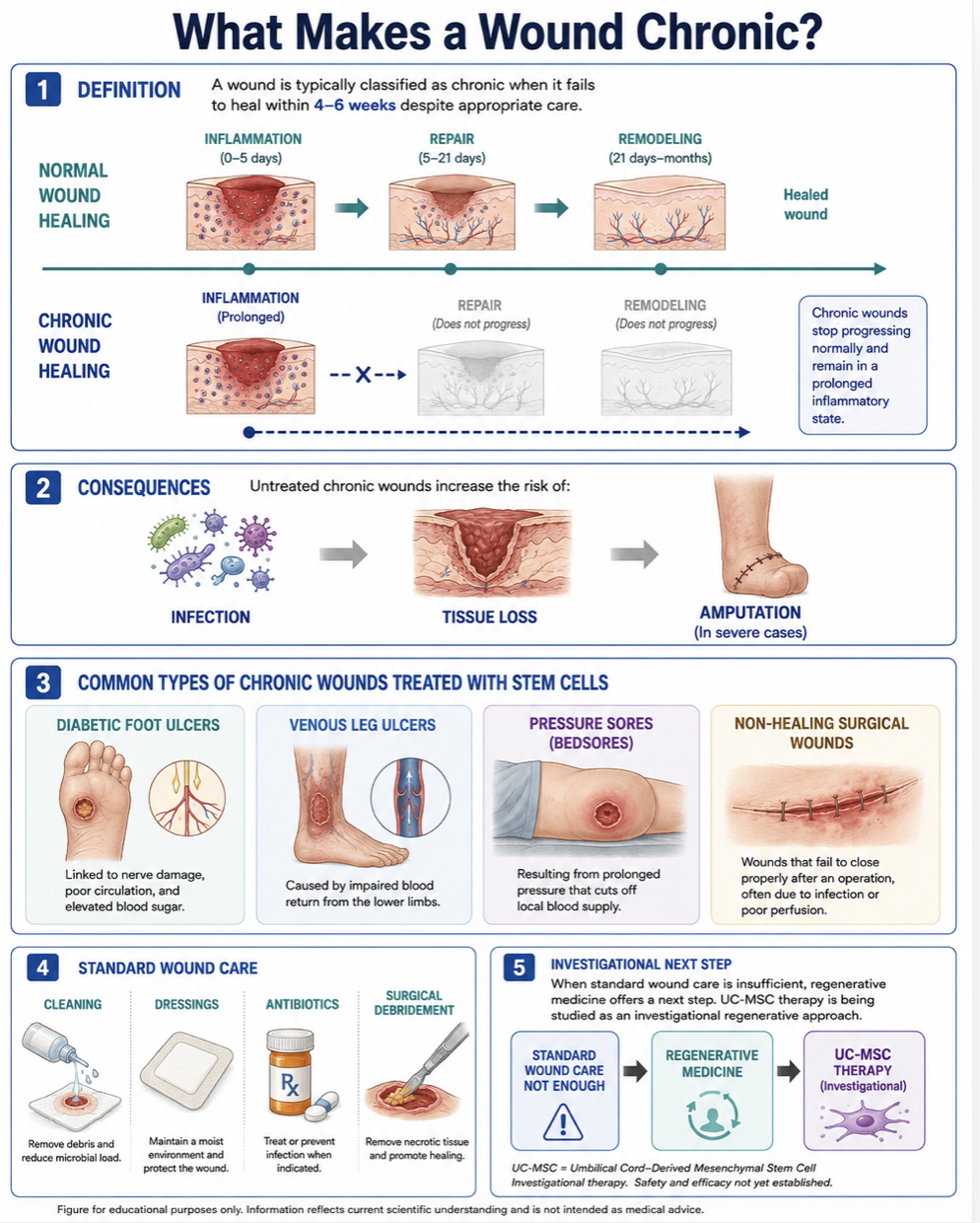
A wound is typically classified as chronic when it fails to heal within four to six weeks despite appropriate care. Unlike acute injuries that move predictably through inflammation, repair, and remodeling, chronic wounds get stuck usually in the inflammatory phase and stop progressing. Left untreated, they raise the risk of infection, tissue loss, and in severe cases, amputation.
Diabetic foot ulcers : linked to nerve damage, poor circulation, and elevated blood sugar
Venous leg ulcers : caused by impaired blood return from the lower limbs
Pressure sores (bedsores) : resulting from prolonged pressure that cuts off local blood supply
Non-healing surgical wounds : wounds that fail to close properly after an operation, often due to infection or poor perfusion
When standard wound care cleaning, dressings, antibiotics, and surgical debridement isn’t enough, regenerative medicine offers a next step, and this is where UC-MSC therapy enters the picture.
Umbilical cord–derived mesenchymal stem cells (UC-MSCs) are harvested from donated umbilical cord tissue after childbirth and processed under controlled laboratory conditions. Compared with other MSC sources such as bone marrow or fat tissue, UC-MSCs are collected non-invasively (no donor surgery required), tend to proliferate faster in culture, and carry strong anti-inflammatory and immune-regulating properties.
Research comparing MSC sources has found that UC-MSCs specifically show increased expression of genes tied to angiogenesis (new blood vessel formation) and anti-inflammatory activity, which helps create a more favorable healing environment at the wound site. Rather than simply covering the wound, UC-MSC-based wound treatment works by activating the body’s own repair mechanisms from within.
UC-MSCs release bioactive signaling molecules that stimulate skin cells, fibroblasts, and endothelial cells to grow and function more efficiently. This supports the rebuilding of the skin’s structural layers and encourages the production of collagen and extracellular matrix components key ingredients for durable wound closure.
Chronic wounds are often trapped in a prolonged inflammatory state that blocks normal healing. UC-MSCs secrete anti-inflammatory cytokines that calm excessive immune activity, allowing the wound to move forward into the tissue-formation and remodeling stages.
Poor circulation is one of the biggest obstacles in diabetic wound healing and venous ulcer treatment. UC-MSCs promote angiogenesis by releasing vascular endothelial growth factor (VEGF), improving microcirculation and boosting tissue oxygenation at the wound bed.
Infection is a leading cause of delayed wound closure. UC-MSCs help regulate the local immune response and secrete antimicrobial peptides, creating a more protective wound environment that allows repair to continue uninterrupted.
UC-MSCs produce a range of growth factors, including fibroblast growth factor (FGF), platelet-derived growth factor (PDGF), and transforming growth factor (TGF). Together, these drive cell migration, collagen formation, and wound contraction, resulting in more organized repair and reduced scarring.
Stem cells are injected into the wound bed or surrounding tissue, allowing direct interaction with damaged areas and immediate onset of regenerative activity.
UC-MSCs can be incorporated into specialized gels, sprays, or advanced wound dressings, applied directly to the wound surface for sustained exposure to regenerative factors over time.
Biomaterial scaffolds help retain stem cells at the wound site and provide a supportive framework for new tissue formation, particularly useful for larger or deeper wounds.
All three methods are typically performed under medical supervision, alongside conventional chronic wound management infection control, pressure offloading, and treatment of underlying conditions like diabetes.
This is one of the most important and most searched questions for patients considering treatment. Thailand has been actively formalizing its regulatory framework for cell-based therapies:
The Thai FDA classifies advanced stem cell and cell-based products as Advanced Therapy Medicinal Products (ATMPs), distinguishing between minimally manipulated cells and more heavily processed therapies such as MSCs, which require registration and oversight.
Allogeneic MSCs meaning cells from a donor, which includes UC-MSCs — are treated as higher-risk ATMPs subject to stricter regulatory scrutiny than a patient’s own (autologous) cells.
The Medical Council of Thailand requires that stem cell treatments outside recognized professional standards be conducted within an ethics-approved research framework, and physicians are prohibited from misrepresenting experimental treatments as proven cures.
The Department of Health Service Support (DHSS) licenses the hospitals and clinics offering these treatments, meaning the facility itself is subject to healthcare-service regulation even when a specific cell product isn’t yet fully registered as a commercial drug.
In short: UC-MSC therapy is regulated, not unregulated, but the regulatory status can vary depending on the specific cell product, the clinic offering it, and whether the treatment is provided as approved clinical care or as part of an ethics-approved research protocol. Patients considering treatment should always verify a clinic’s licensing and ask directly whether the specific UC-MSC product is being offered under a research protocol or as an approved treatment.
Evidence for UC-MSC wound healing is growing, though much of it remains at the preclinical or early-phase clinical stage:
A study using UC-MSC conditioned medium in diabetic rat models found that treatment produced better wound-healing outcomes measured by re-epithelialization and collagen formation than antibiotic treatment alone, supporting the biological plausibility of UC-MSC therapy for diabetic wound repair.
A Phase 1 open-label safety trial of a topically applied umbilical cord–derived MSC product in patients with chronic diabetic foot ulcers found the treatment to be safe and well-tolerated over an 8-week course, with a significant decrease in ulcer area among participants though the study authors note that larger trials are needed to confirm efficacy.
Broader comparative research on MSC sources has found that UC-MSCs specifically upregulate angiogenesis-related genes, reinforcing their proposed role in restoring blood flow to poorly perfused chronic wounds.[1]
As with most regenerative wound therapies, researchers consistently call for larger, standardized, long-term clinical trials before UC-MSC therapy becomes routine first-line treatment rather than a specialized option offered at select centers.
Accelerated healing time compared to conventional wound care alone
Improved tissue quality, with stronger skin and reduced scarring
Pain reduction as inflammation decreases and repair progresses
Lower risk of complications, including severe infection
Reduced amputation risk, particularly relevant for patients with diabetic foot ulcers or advanced vascular disease
Comprehensive evaluation : medical history, wound assessment, and relevant laboratory tests
Cell preparation : UC-MSCs processed in a certified, GMP-aligned laboratory
Cell administration via injection, topical application, or scaffold-based delivery, depending on the wound type
Ongoing monitoring : wound measurements, infection control, and management of underlying conditions such as diabetes or vascular disease
Is UC-MSC therapy approved by the Thai FDA for chronic wounds? Most UC-MSC wound applications in Thailand fall under the ATMP framework and may be offered through ethics-approved clinical research pathways rather than as a fully registered commercial drug for every wound type always confirm the regulatory status of the specific product with your provider.
How is UC-MSC therapy different from stem cells taken from my own body? UC-MSCs are allogeneic (donor-derived), while autologous options come from the patient’s own bone marrow or fat tissue. UC-MSCs avoid the need for a separate cell-harvesting procedure but are classified as higher-risk ATMPs under Thai regulation due to their donor origin.
How many sessions of UC-MSC therapy are typically needed? This varies by wound severity, size, and delivery method some protocols use a single application, while others involve repeated sessions over several weeks, similar to the 8-week protocols studied in early clinical trials.
Thailand’s regulatory environment for cell-based therapies has been evolving quickly, with the Thailand ATMP Roadmap aiming to accelerate safe access to advanced therapies while closing loopholes that previously allowed under-regulated clinics to offer stem cell treatments outside proper oversight. For patients, this means UC-MSC stem cell therapy for chronic wounds is becoming more standardized — but due diligence on clinic licensing, cell product registration, and realistic expectations remains essential. As research matures, UC-MSC-based regenerative wound care is well positioned to become a more accessible, evidence-backed option for patients facing diabetic foot ulcers, venous leg ulcers, and other stubborn, non-healing wounds.
Insights From Amniotic and Umbilical Cord Mesenchymal Stem Cells in Wound Healing. NCBI/PMC. https://www.ncbi.nlm.nih.gov/pmc/articles/PMC12178269/
Wound healing potential of human umbilical cord mesenchymal stem cell conditioned medium: An in vitro and in vivo study in diabetes-induced rats. PMC. https://pmc.ncbi.nlm.nih.gov/articles/PMC8448625/
Same study, PubMed listing. https://pubmed.ncbi.nlm.nih.gov/34566328/
Results of the Phase 1 Open-Label Safety Study of Umbilical Cord Lining Mesenchymal Stromal/Stem Cells (Corlicyte®) to Heal Chronic Diabetic Foot Ulcers. NCBI/PMC. https://www.ncbi.nlm.nih.gov/pmc/articles/PMC11201444/
Thailand Makes History With Landmark Stem Cell Decree. The Nation Thailand, 2026. https://www.nationthailand.com/health-wellness/40066728
Thailand Stem Cell Therapy Safety & Regulations (2026): What Patients Need to Know. https://stemcierge.com/resources/stem-cell-therapy-thailand-regulations