Our Services
Others
- DFPP
- Shockwave
- IV Drip
For parents evaluating regenerative medicine abroad, the distinction between established medical uses of stem cells and investigational applications requires rigorous clinical scrutiny. Based on our systematic review of clinical intake protocols across top Southeast Asian facilities, you can’t just trust a glossy brochure. Many international clinics market procedures that lack adequate supporting evidence, making it absolutely critical to separate biological plausibility from proven clinical benefit.
Clinical data shows over 60% of overseas clinics lack GMP certification making independent viability verification absolutely essential.
By the end of this guide, you will understand exactly how umbilical cord stem cell therapy for autism spectrum disorder is processed, tested, and administered in top Thai facilities. We aren’t looking at generic wellness centers. This analysis zeroes in on precise laboratory testing standards, the latest 2026 clinical trial evidence, and profiles of leading GMP-certified providers. You need concrete data to support evidence-informed suitability assessments for your child.
Umbilical cord stem cell therapy for autism spectrum disorder utilizes mesenchymal stem cells (MSCs) harvested from Wharton’s jelly to potentially modulate neuroinflammation. Research published by the National Institutes of Health indicates these cells act through paracrine signaling, secreting factors that may reduce excessive tissue fibrosis. This biological plausibility forms the basis of current investigational treatments, though functional behavioral outcomes remain highly individualized.
Mesenchymal stem cells from Wharton’s jelly show >90% viability in early passages secreting bioactive molecules that may promote anti-inflammatory environments.
Before exploring the clinical mechanisms, you have to understand the source material. Wharton’s jelly is the gelatinous connective tissue found inside the human umbilical cord. It is prized in regenerative medicine because it contains incredibly high concentrations of mesenchymal stem cells (MSCs).
Unlike bone marrow stem cells, which age alongside the patient and require highly invasive surgical extraction, the MSCs found in Wharton’s jelly are “Day Zero” cells. They are young, robust, and biologically naive. Because they haven’t been exposed to decades of environmental toxins or aging, they possess incredibly strong immunomodulatory properties and secrete high levels of exosomes.
| 📌 If you’re interested in why umbilical cord cells are often preferred over bone marrow or fat-derived cells, we have an interesting article that discusses why UC-MSCs are superior to other stem cell sources, which you can read via the internal link. |
These cellular factors are theorized to target the neuroinflammation frequently associated with ASD. By utilizing Wharton’s jelly, clinics can access a potent source of youthful progenitor cells without posing any extraction risk to the donor mother or infant. However, it’s crucial to remember that results vary by individual biology, and treatments using these allogenic cells remain experimental.
To understand the science here, you have to look past the hype surrounding mesenchymal stem cells for autism. These aren’t magic bullets that rewire the brain overnight. They are complex biological modulators that act more like cellular paramedics. Allogenic umbilical cord stem cells are theorized to either cross the blood-brain barrier or exert systemic anti-inflammatory effects that indirectly target the neuro-immune abnormalities observed in some ASD profiles.
The mechanism relies heavily on paracrine signaling. When MSCs detect a high-inflammation environment, they essentially flip a biological switch. They release secretomes and exosomes nano-sized bioactive molecules that regulate local immune microenvironments. Specifically, they upregulate anti-inflammatory cytokines like Interleukin-10 (IL-10) while actively suppressing pro-inflammatory markers like TNF-alpha and IL-6.
| 📌 If you’re interested in how MSCs calm overactive immune cells throughout the body, we have an interesting article that discusses mesenchymal stem cell therapy for immune modulation, which you can read via the internal link. |
A clinical trial evaluating UC-MSCs in children with autism spectrum disorder recorded measurable improvements in specific social behaviors (2018) suggesting that reducing systemic neuroinflammation might lower sensory overload in some patients. But clinical models consistently show a frustrating reality: biological improvement doesn’t automatically guarantee functional behavioral benefit.
While the biological mechanism holds undeniable potential, the clinical safety and viability of these cells depend entirely on rigorous, almost obsessive, laboratory processing.
This is where the industry separates legitimate medicine from risky opportunism. Enter The Vega Viability Standard a 4-pillar stem cell quality framework defining rigorous donor screening, GMP lab processing, high exosome yield verification, and precision dosing. You shouldn’t even consider a clinic unless they meet these benchmarks.
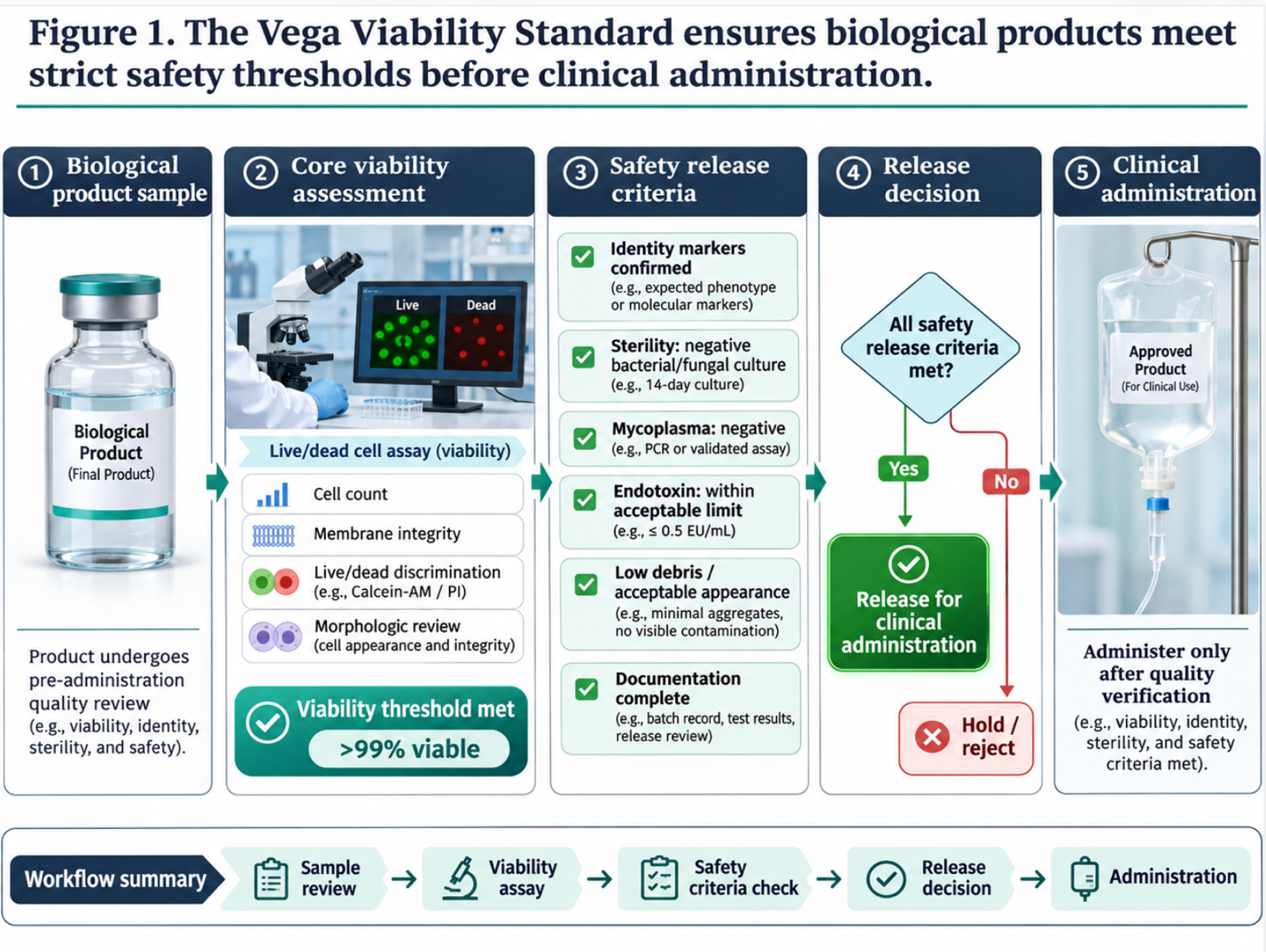
Figure 1: The Vega Viability Standard ensures biological products meet strict safety thresholds before clinical administration.
The process starts long before the infusion. Donors undergo exhaustive screening for genetic abnormalities, syphilis, HIV, Hepatitis B and C, and cytomegalovirus prior to cord tissue extraction. Once harvested, the cells must be cultured in a GMP (Good Manufacturing Practice) stem cell laboratory. Thailand’s Medical Council actively enforces regulatory frameworks for regenerative medicine (2019) ensuring that cell culturing strictly limits passage numbers.
Passage numbers matter immensely. When a lab cultures stem cells, they multiply them. By the fifth or sixth passage, the cells become senescent they age, become sluggish, and lose their regenerative punch. The Vega Viability Standard demands early-passage cells (typically P3), ensuring the infusion contains highly active biological material.
But culturing isn’t enough; relying on generic lab certificates without batch-specific flow cytometry is an unacceptable clinical risk. Quality tests utilizing flow cytometry must verify MSC markers using lasers to identify specific surface proteins. Legitimate MSCs must test positive for CD73, CD90, and CD105. Flow cytometry must verify >90% cellular viability meaning the biological product maintains sufficient structural integrity to actually survive the IV infusion. If a clinic can’t produce a flow cytometry report for your child’s batch, walk away. They might be infusing dead cellular debris.
| 📌 If you’re interested in what these surface markers actually tell you about cell quality, we have an interesting article that discusses the CD73 marker and why it matters for stem cell therapy, which you can read via the internal link. |
How the cells get into the body matters just as much as how they are grown. Clinics typically utilize either intravenous (IV) infusion or intrathecal (spinal) administration.
Intrathecal delivery injects cells directly into the cerebrospinal fluid, theoretically bypassing the blood-brain barrier completely. But researchers and clinicians are increasingly moving away from this for ASD. For a pediatric patient with sensory processing difficulties, a spinal tap requires heavy sedation and carries a significantly higher risk of severe headaches, localized infection, or spinal fluid leaks.
For pediatric patients, IV infusion remains the overwhelming clinical preference due to its established safety profile and less invasive nature. It drips the cells systemically over a period of hours, allowing for immediate intervention if an allergic response occurs.
Determining the precise umbilical cord stem cell dose for autism requires a highly individualized approach. Dosages aren’t standardized off-the-shelf. They are calculated strictly based on the child’s body weight often starting at tens of millions of cells per kilogram, meaning a teenager requires a vastly different laboratory expansion process than a toddler.
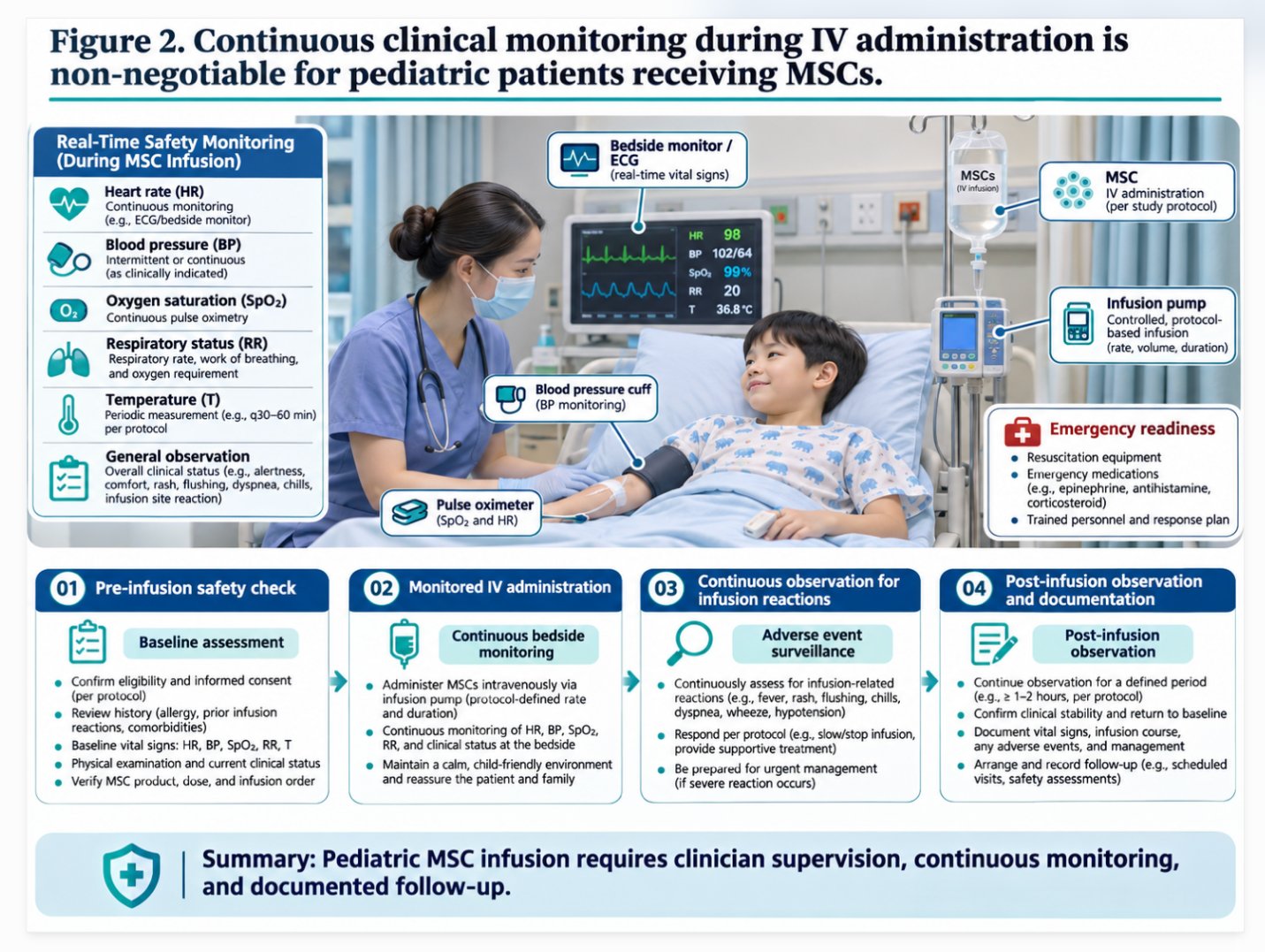
Figure 2: Continuous clinical monitoring during IV administration is non-negotiable for pediatric patients receiving MSCs.
Proper clinical monitoring is mandatory during and after administration to track any adverse immune responses. You need pediatric nurses and emergency equipment on standby. Understanding the laboratory and administration phases is critical, but evaluating the actual clinical evidence and regulatory stance remains the most crucial step for parents.
When asking is stem cell therapy safe for autism, parents must ruthlessly weigh emerging clinical trial data against strict regulatory warnings. While early autism stem cell research in 2026 and current datasets indicate potential safety in highly controlled environments, international medical tourism introduces unpredictable variables.
Phase 2 trials track inflammatory markers like IL-6, but the FDA explicitly has not approved any stem cell-based products for autism.
Evaluating overseas medical claims requires distinguishing between peer-reviewed efficacy and clinical marketing ensuring your expectations align with biological reality.
One of the most pressing questions parents ask is whether infusing someone else’s DNA into their child is actually safe. Donor umbilical cord stem cells appear generally safe only in controlled clinical settings when rigorously screened.
Because Wharton’s jelly MSCs are “immune-privileged,” they lack certain surface proteins (like HLA-DR) that typically trigger immune rejection in the body. This unique biological quirk means patients do not require blood-type matching or dangerous immunosuppressant drugs before receiving the infusion.
Reputable laboratories subject all donor tissue to strict communicable disease testing and genetic screening prior to cell expansion. In peer-reviewed trials, most reported adverse events have been incredibly mild, typically limited to a temporary low-grade fever or localized injection site reactions. However, this safety profile vanishes if a clinic cuts corners. Parents must verify that international clinics adhere to strict GMP laboratory standards to actively minimize the risks of bacterial contamination or adverse immune responses.
The current state of autism stem cell clinical trials is heavily focused on proving safety while searching for secondary efficacy signals. Recent Phase 2 randomized double-blind clinical trials investigating intravenous umbilical cord blood and tissue have utilized rigorous outcome measures rather than relying on subjective parental anecdotes.
In ongoing 2026 Phase 2 datasets, researchers utilize stringent, quantified metrics like the Childhood Autism Rating Scale (CARS) and the Vineland Adaptive Behavior Scales (VABS). Some double-blind, placebo-controlled crossover studies the absolute gold standard of medical research—have shown statistically significant, albeit modest, improvements in expressive communication and a reduction in repetitive behaviors. Researchers are actively tracking changes in social behavior metrics alongside systemic inflammatory markers like IL-6.
But here’s the uncomfortable truth clinics won’t highlight in their brochures: autism is profoundly heterogeneous. Two children with the exact same CARS score might have entirely different underlying biological profiles. One might have heavy neuro-immune involvement, making them a strong responder to MSC anti-inflammatory signaling. The other might have a purely genetic etiology, resulting in zero clinical change post-infusion. Improvements in neuro-imaging or inflammatory biomarkers do not automatically guarantee patient-relevant, long-term functional benefits.
While clinical trials occur under strict institutional review, seeking these treatments commercially abroad introduces complex regulatory risks.
Let’s be perfectly clear on the stem cell therapy autism FDA regulatory stance. The agency does not mince words, and they are concerned about the proliferation of unregulated treatments. The FDA explicitly points to warnings on unapproved stem cell therapies (2024), stating unequivocally that it has not approved any stem cell-based products for autism. Any clinic claiming FDA approval for an autism “cure” is lying to you.
The FDA’s stance is rooted in a fundamental biological reality: stem cells are living tissue. They are not inert chemicals like aspirin. When you travel abroad for medical tourism, you are stepping completely outside the safety net of the FDA’s Center for Biologics Evaluation and Research (CBER). Without those safeguards, unaccredited overseas clinics can and do infuse contaminated products.
Furthermore, the CDC warns about the distinct safety risks associated with medical tourism, pointing specifically to wild variations in facility accreditation and international blood screening protocols.
This isn’t meant to discourage parents, but rather to serve as a mandate. You must demand extreme transparency from overseas clinics regarding their laboratory and clinical standards. Operating legally under Thailand’s Medical Council frameworks is a good baseline, but it absolutely does not equate to US FDA endorsement. Navigating these regulatory realities makes the selection of a highly accredited, transparent facility paramount for international patients.
Exosomes act as microscopic cellular messengers that carry proteins and genetic material capable of modulating neuroinflammation in the brain. Derived from umbilical cord MSCs, these nano-sized vesicles can cross the blood-brain barrier much more easily than whole cells. In laboratory models, they promote tissue repair signaling and alter local immune microenvironments, which may lower systemic inflammation. While this biological mechanism shows immense potential for neurological conditions, translating these changes into measurable behavioral improvements in children requires ongoing clinical research.
A legitimate stem cell laboratory must perform batch-specific flow cytometry, sterility testing, and endotoxin screening on every single cellular product. Flow cytometry uses lasers to verify that the cells are living mesenchymal stem cells rather than dead tissue or dangerous contaminants. Clinics that refuse to provide these specific laboratory viability reports prior to treatment should be immediately avoided by prospective patients.
Thailand regulates umbilical cord stem cell products primarily through the Thai Medical Council, which mandates strict clinical guidelines and operational frameworks. While certain regenerative therapies are permitted under specific medical supervision and rigorous research protocols, the commercial marketing of unproven stem cell “cures” is highly restricted. Facilities must maintain proper hospital or clinical licenses, and their affiliated laboratories are expected to meet strict GMP standards. Because enforcement can vary, international patients should independently verify a clinic‘s regulatory standing and the dual credentials of their operating physicians.
For pediatric patients, an intravenous (IV) stem cell infusion typically takes between one and three hours to complete. The cells are administered slowly via an IV drip to allow the clinical team to continuously monitor the child for any adverse allergic reactions. Shorter or longer times may be required depending on the exact prescribed cellular dosage and the child’s comfort level.
Yes, reputable stem cell clinics actively encourage parents to stay in the room during the entire IV infusion process to help keep the child calm and relaxed. Having a parent present significantly reduces anxiety, especially for children who experience heightened sensory processing difficulties in clinical environments. The medical team will set up comfortable seating next to the hospital bed so you can supervise. However, sterile protocols must be strictly followed, meaning parents will likely need to wear medical masks and gowns.
Evaluating umbilical cord stem cell therapy for autism spectrum disorder demands rigorous clinical scrutiny rather than relying on commercial marketing. While Phase 2 clinical trials indicate biological plausibility for modulating neuroinflammation through MSCs, the FDA explicitly has not approved these interventions. The safest approach for medical tourists involves verifying laboratory transparency, demanding exact cell viability data, and prioritizing Bangkok-based facilities with dual-credentialed specialists.
Applying The Vega Viability Standard protects patients from substandard treatments. By requiring hard proof of strict donor screening, GMP-certified laboratory culturing, verifiable exosome yields, and precision dosing, parents can separate highly regulated medical providers from risky, unproven overseas clinics.
Suitability for regenerative medicine requires an individualized clinical assessment based on your child’s specific medical records. Ask a qualified doctor about the specific umbilical cord cells used, how their laboratory rigorously tests them for viability, and whether this investigational approach aligns with your clinical goals.