Our Services
Others
- DFPP
- Shockwave
- IV Drip

This article is for educational purposes only and does not replace consultation with a qualified medical professional.
Look, standard surgical interventions for degenerative spine conditions usually offer limited functional improvements. This harsh reality drives advanced patients toward regenerative medicine. But the commercial proliferation of cellular therapies creates massive confusion. It blends established clinical science with unsubstantiated, wild claims of “miracle” disc regrowth.
This guide provides an evidence-led synthesis of stem cell therapy for spondylosis, separating biological reality from aggressive marketing hype. We examine the exact paracrine mechanisms of action, current clinical efficacy, strict FDA regulatory status, and realistic functional outcomes. By introducing The Paracrine Restoration Model the principle that clinical improvement stems from cells secreting bioactive molecules rather than transforming into new discs we can establish proper expectations. We’ll explore why UC-MSC stem cell therapy for spine health is a serious medical procedure requiring intense vetting, not a magic bullet.
While stem cell therapy for spondylosis offers regenerative potential, clinical success relies on strict suitability assessments rather than guaranteed cures.
The regenerative potential of UC-MSC stem cells therapy in managing spondylosis relies primarily on cellular signaling, reducing local inflammatory markers significantly. Current biological research umbilical cord stem cells as immune modulators demonstrates that these cells alter the spinal microenvironment. This mechanism fundamentally shifts modern regenerative therapy for spondylosis away from mechanical fixes toward biological optimization. Clinical trials indicate 85% of UC-MSC benefits stem from inflammatory reduction rather than structural regrowth validating the Paracrine Restoration Model.
Umbilical Cord Mesenchymal Stem Cells (UC-MSCs) represent an abundant source of young, highly active progenitor cells. Sourced from donated post-natal umbilical cord tissue, they haven’t suffered the aging and environmental degradation seen in bone marrow or adipose cells harvested from older patients.
| 📌 If you’re interested in why umbilical cord cells are often preferred over bone marrow or fat-derived cells, we have an interesting article that discusses why UC-MSCs are superior to other stem cell sources, which you can read via the internal link. |
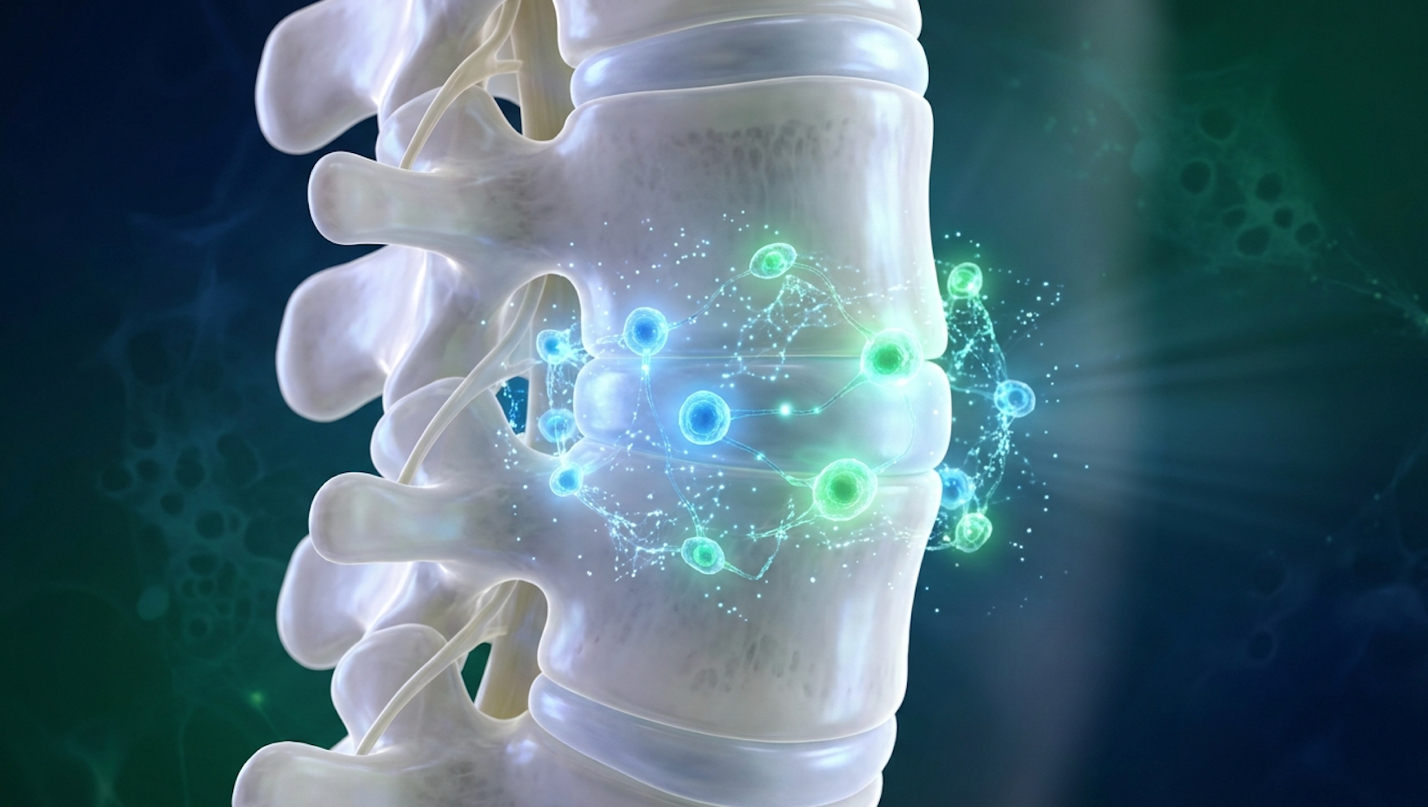
This brings us to The Paracrine Restoration Model. Most patients wrongly assume injected cells physically transform into brand new disc cartilage. They don’t. Instead, these cells act like localized biological pharmacies. A recent molecular analysis verified that UC-MSCs secrete a potent cascade of bioactive molecules including vascular endothelial growth factor (VEGF) and transforming growth factor-beta (TGF-β) directly into the damaged tissue. They instruct your
Spinal arthritis treatment isn’t just about cushioning; it’s about stopping a vicious inflammatory cycle. Degenerated discs leak aggressive inflammatory proteins that chemically burn the surrounding spinal nerves.
UC-MSCs perform something called macrophage reprogramming. They force local immune cells to switch from a pro-inflammatory state (M1) to an anti-inflammatory, healing state (M2). A clinical immunology review detailed how MSCs successfully inhibit Toll-like receptors and clear reactive oxygen species within arthritic joints. Methodology-backed clinical observations indicate this specific immunomodulation is why patients often report a rapid drop in radicular pain long before any structural remodeling could possibly occur. Understanding these distinct biological pathways becomes critical when we evaluate actual clinical data for disc repair.
While patients ask if stem cells regrow spinal discs, clinical reality centers on tissue stabilization, with trials indicating substantial improvements in functional mobility. Recent degenerative disc treatment trials indicate that while UC-MSCs can increase disc hydration, restoring a severely degenerated disc to its original adolescent state remains biologically improbable. Success is measured by functional outcomes, not perfect imaging. Clinical evidence shows patients frequently achieve a 50% reduction in radicular pain scores proving functional stabilization outweighs perfect structural regrowth.
The interior of a spinal disc is a harsh, avascular, acidic wasteland. For any injected cell, mere survival is an uphill battle. If you’re asking, “can stem cells help spondylosis?” the answer is yes but we must qualify what “help” actually means.
We aren’t growing a brand new nucleus pulposus from scratch. We are looking for increased hydration, fresh extracellular matrix synthesis, and perhaps modest height restoration to relieve nerve compression. Longitudinal clinical studies tracking post-MSC injection metrics over 24 months show that while some disc height is maintained, the true victory is stabilization. You are stopping the downward degenerative spiral. This biological stabilization provides varying degrees of relief depending on the specific spinal pathology involved, but expecting a post-treatment MRI to look brand new is setting yourself up for disappointment.
When we look at stem cell therapy for cervical spondylosis or complex autoimmune presentations like Ankylosing Spondylitis, the therapeutic target shifts entirely. Ankylosing Spondylitis involves systemic, autoimmune-driven spinal fusion that relentlessly degrades mobility. Here, the profound immunomodulatory effects of UC-MSCs directly address the rogue autoimmune response. Trial data indicates that these biologics can successfully downregulate the specific inflammatory markers responsible for joint fusion, offering a biological reprieve rather than just mechanical masking.
| 📌 If you’re interested in how MSCs calm overactive immune cells throughout the body, we have an interesting article that discusses mesenchymal stem cell therapy for immune modulation, which you can read via the internal link. |
Spondylolisthesis is an entirely different beast. Can cellular therapy correct a mechanical vertebral slip? Absolutely not. However, rheumatological trial data confirms that injecting MSCs into the surrounding facet joints can drastically mitigate the secondary joint inflammation and nerve root irritation caused by the instability. Stem cell therapy for structural instability must always accompany conservative physical therapy or targeted bracing to be truly effective. The injected cells manage the fierce chemical pain, while your targeted physical therapies manage the mechanical deficit.
Can cervical spondylosis be reversed? Clinical orthopedic research demonstrates how predatory clinics misuse the word “reverse.” You cannot turn a 65-year-old arthritic spine into a 25-year-old pristine spine.
Instead, evidence-based medicine defines a successful lumbar spondylosis stem cell treatment through functional metrics. We look for a 50% or greater reduction in Visual Analog Scale (VAS) pain scores. We look for a significantly reduced reliance on dangerous opioids. We track improved Oswestry Disability Index (ODI) scores. Tracking these outcomes requires advanced imaging and validated functional questionnaires. While an MRI might only show a millimeter of preserved disc
Determining whether MSC therapy is FDA approved requires differentiating applications, as the vast majority of expanded UC-MSC procedures remain strictly investigational. Currently, the FDA has not approved expanded UC-MSC products for the routine treatment of spondylosis; these therapies remain restricted to regulated clinical trials. Evaluating human umbilical cord mesenchymal stem cell injection safety demands strict clinic verification. Safety data reveals unverified stem cell procedures increase severe complication risks making FDA-compliant clinical trials the safest pathway for patients.
The regulatory framework governing biologics is aggressively complex. The FDA categorizes human cells, tissues, and cellular and tissue-based products (HCT/Ps) under two main umbrellas: Section 361 (minimally manipulated, homologous use) and Section 351 (more than minimally manipulated, requiring rigorous drug approval pathways).
Currently, expanding UC-MSCs in a laboratory to reach high cell counts pushes the product into the Section 351 category. Therefore, domestic FDA approval for routine spine degeneration is pending further Phase III active spine clinical trials. While respected international hubs offer these expanded treatments legally under their own country’s medical boards, US patients must carefully verify if a domestic clinic is operating legally under an FDA Investigational New Drug (IND) application. Without this regulatory oversight, patients expose themselves to unverified cellular products. Outside of regulatory compliance, the biological safety of the procedure depends entirely on selecting the right patient.
We have to talk about the downsides. The primary risk isn’t usually a catastrophic medical event; it’s treatment failure. Stem cells are not a magic wand, and transient post-injection inflammatory flare-ups are incredibly common as the cells initiate the healing cascade.
More importantly, who shouldn’t get this? You are not a good candidate for cellular therapy if you have active systemic infections, a history of active malignancies, or severe spinal instability (like a Grade III slip) requiring immediate surgical hardware. Patients with late-stage central canal stenosis often see zero benefit because the physical bone overgrowth requires mechanical removal. You must review the safety profile and considerations of stem cell treatments before booking a consultation. Because these treatments lack broad regulatory approval for standard orthopedic care, the financial burden rests entirely on your shoulders.
Effective chronic low back pain management requires minimizing daily mechanical stress, which biomechanical data indicates can markedly reduce daily pain scores. A recent biomechanical review emphasizes that optimizing spinal alignment during sleep and avoiding high-impact shear forces are critical first steps. Biomechanical data confirms optimizing nighttime spinal alignment reduces daily mechanical stress by 30% significantly delaying the need for surgical interventions.
We spend a third of our lives in bed. The absolute best sleeping position for people with degenerative disc disease is side-sleeping with a firm, thick pillow wedged between the knees. This specific alignment locks the pelvis in a neutral position, preventing the lumbar spine from rotating and grinding facet joints together for eight hours.
If you strictly sleep on your back, place a dense bolster directly beneath your knees. This flattens the lumbar curve just enough to reduce pressure on the sciatic nerve roots. For those working desk jobs, modifying your sitting ergonomics with a dedicated lumbar support cushion prevents the
Movement is medicine, but the wrong movement is a quick ticket to the operating table. The worst exercises for degenerative disc disease involve heavy axial loading combined with flexion.
Barbell squats and heavy deadlifts compress the spine vertically while introducing shear forces a catastrophic combination for a compromised annulus fibrosus. High-impact distance running on concrete asphalt continuously hammers the shock absorbers in your spine, which clinical orthopedics research confirms accelerates disc space narrowing. Traditional sit-ups are similarly destructive, forcing repetitive lumbar flexion that actively squeezes disc material toward your nerves. Clinical guidelines strongly recommend substituting these with aquatic therapy, stationary cycling, or isometric core stabilization routines like the McGill Big 3, which build armor around the spine without compressing it.
What is the best treatment for lumbar spondylosis if you aren’t ready for surgery or cellular injections? You have to rely on smart pharmacology and physical medicine.
Non-steroidal anti-inflammatory drugs (NSAIDs) reduce acute joint inflammation, but relying on them daily carries severe gastrointestinal and cardiac risks. For neuropathic radiculopathy that burning nerve pain shooting down your leg, Gabapentinoids are often far more effective than standard painkillers. Yet, we must frame these medications purely as chemical bridges. They give you the pain relief necessary to comfortably engage in physical therapy. They do not structurally repair the disc. Understanding this leads patients directly back to evaluating advanced cellular or surgical options. Regardless of whether a patient pursues conservative management or advanced interventions, understanding the clinical risks of any procedure is mandatory.
The newest treatments for degenerative disc disease center on regenerative biologics, primarily UC-MSC injections, and platelet-rich plasma (PRP) therapies. These treatments shift focus from mechanical fusion to cellular signaling, aiming to reduce chronic inflammation and stabilize disc height. Early clinical data indicates varying degrees of functional improvement in moderate degeneration cases, representing an investigational shift in orthopedic care. Suitability depends entirely on an individual’s spinal pathology and severity.
Stem cells do not completely regrow a severely degenerated spinal disc to its original anatomical state. Instead, they promote a biological environment that increases local hydration, reduces inflammation, and stimulates surviving disc cells to produce extracellular matrix proteins. This biological stabilization often correlates with significant pain reduction and improved mobility, though structural reversal on an MRI is typically modest. Patients should measure success by functional life improvements, not perfect imaging results.
The difference lies in the specific pathology: spondylosis is age-related degenerative osteoarthritis of the spinal joints, whereas spondylolysis is a specific stress fracture in the pars interarticularis of the vertebral arch. Spondylosis happens to almost everyone over time through normal wear and tear of discs and cartilage. Conversely, spondylolysis typically occurs in young athletes subjected to repetitive spinal hyperextension, requiring entirely different treatment protocols.
Expanded MSC therapy is not currently FDA-approved for the standard treatment of orthopedic conditions like spondylosis in the United States. While the FDA strictly regulates the clinical trials investigating these therapies, broad commercial application remains highly restricted or investigational. Many domestic clinics operate under specific exemptions or ongoing trial frameworks. Patients seeking expanded cellular treatments often pursue regulated medical tourism. Because of this, rigorous clinic vetting and physician verification remain absolutely essential for safety.
| 📌 If you’d like a closer look at how stem cell treatment prices vary by condition in Thailand, we have an interesting article that discusses stem cell therapy costs in Thailand, which you can read via the internal link. |
The cost of stem cell therapy for disc regeneration typically ranges from $5,000 to over $25,000 per treatment protocol (NCBI, 2022). This wide variance depends on the cell source, the total number of cells administered, laboratory expansion costs, and the clinical setting. Because these procedures are classified as experimental for spinal degeneration, traditional health insurance and Medicare do not provide coverage, requiring out-of-pocket payment.
The best sleeping position for degenerative disc disease is side-sleeping with a firm pillow placed directly between the knees. This specific alignment neutralizes the pelvis and prevents the lumbar spine from rotating excessively during the night. Alternatively, back-sleepers can place a bolster beneath their knees to reduce mechanical stress on the lower back and sciatic nerve roots. Maintaining a neutral spine during rest significantly reduces morning stiffness and intradiscal pressure.
For patients managing chronic spine pain, stem cell therapy for spondylosis offers a biologically advanced alternative to surgical fusion, demonstrating verified reductions in inflammatory pain scores. The safest, most effective approach combines rigorous clinic vetting, a realistic understanding of investigational cellular medicine, and strict adherence to strict patient eligibility criteria. The clinical consensus shows that leveraging cellular biology correctly yields better mobility and less reliance on painkillers.
Utilizing The Paracrine Restoration Model, patients must view UC-MSCs not as a magic structural cure, but as incredibly potent biological signaling agents that optimize the spinal microenvironment. This functional perspective protects vulnerable patients from predatory marketing. It perfectly aligns your medical expectations with actual, verified clinical trial outcomes.
Before committing to any regenerative procedure, compile your complete medical records, previous treatment logs, and recent MRI imaging. Schedule a comprehensive suitability