Our Services
Others
- DFPP
- Shockwave
- IV Drip

For women navigating premature ovarian insufficiency or perimenopause, traditional paths like IVF or synthetic Hormone Replacement Therapy (HRT) often present restrictive limitations. The decline of ovarian reserve historically offered few clinical recourse options. Patients were essentially forced to rely entirely on donor protocols or commit to long-term synthetic hormone management, which frequently carries unwanted systemic side effects.
But reproductive medicine is quietly shifting. An emerging focus in clinical research is regenerative cellular therapy. In this guide, our clinical evaluation team reviews the evidence-led biological mechanisms behind stem cell therapy for perimenopause so you can accurately assess its clinical viability. After thoroughly evaluating current PubMed and MEDLINE literature, we break down the cellular science of tissue reactivation, analyze active trial data on Primary Ovarian
Look, the fertility industry struggles with marketing hyperbole. Clinics frequently promise miracles to vulnerable patients. Our goal here is to strip away the commercial fluff. By examining exactly how The Ovarian Paracrine Reactivation Model functions in a rigorous lab setting, you can determine if regenerative interventions actually align with your specific diagnostic reality.
Stem cell therapy for perimenopause focuses on restoring dormant follicular activity rather than generating brand-new oocytes. Recent clinical literature highlights distinct mechanisms of action over miraculous age-reversal.
Ovarian Rejuvenation with Stem Cell Therapy utilizes cellular signaling to repair aged reproductive tissue rather than synthesizing new genetic material. Research into regenerative medicine demonstrates that targeted cellular application reduces oxidative stress in reproductive microenvironments by up to 40% (NCBI clinical review). This matters because it shifts the clinical focus from impossible biological alchemy to plausible, measurable tissue rehabilitation.
Mesenchymal stromal cells function primarily through paracrine secretion, releasing vascular endothelial growth factors to stimulate local microcirculation (NCBI, 2021).
The mechanism at play here confuses a lot of patients. When you hear “stem cells,” the immediate assumption is that these cells turn into new eggs. They don’t. That fundamental misunderstanding
If we look past the brochures and examine the petri dish, the science is wildly fascinating. We aren’t creating life from nothing. We are waking up dormant, heavily suppressed biological systems that shut down due to age, accumulated reactive oxygen species (ROS), or autoimmune interference. The foundational science relies on modifying the environment where your existing follicles reside, giving them a biologically hospitable space to resume maturation. Decades of ovulation cause the ovarian cortex to scar; cellular therapy attempts to remodel that accumulated damage.
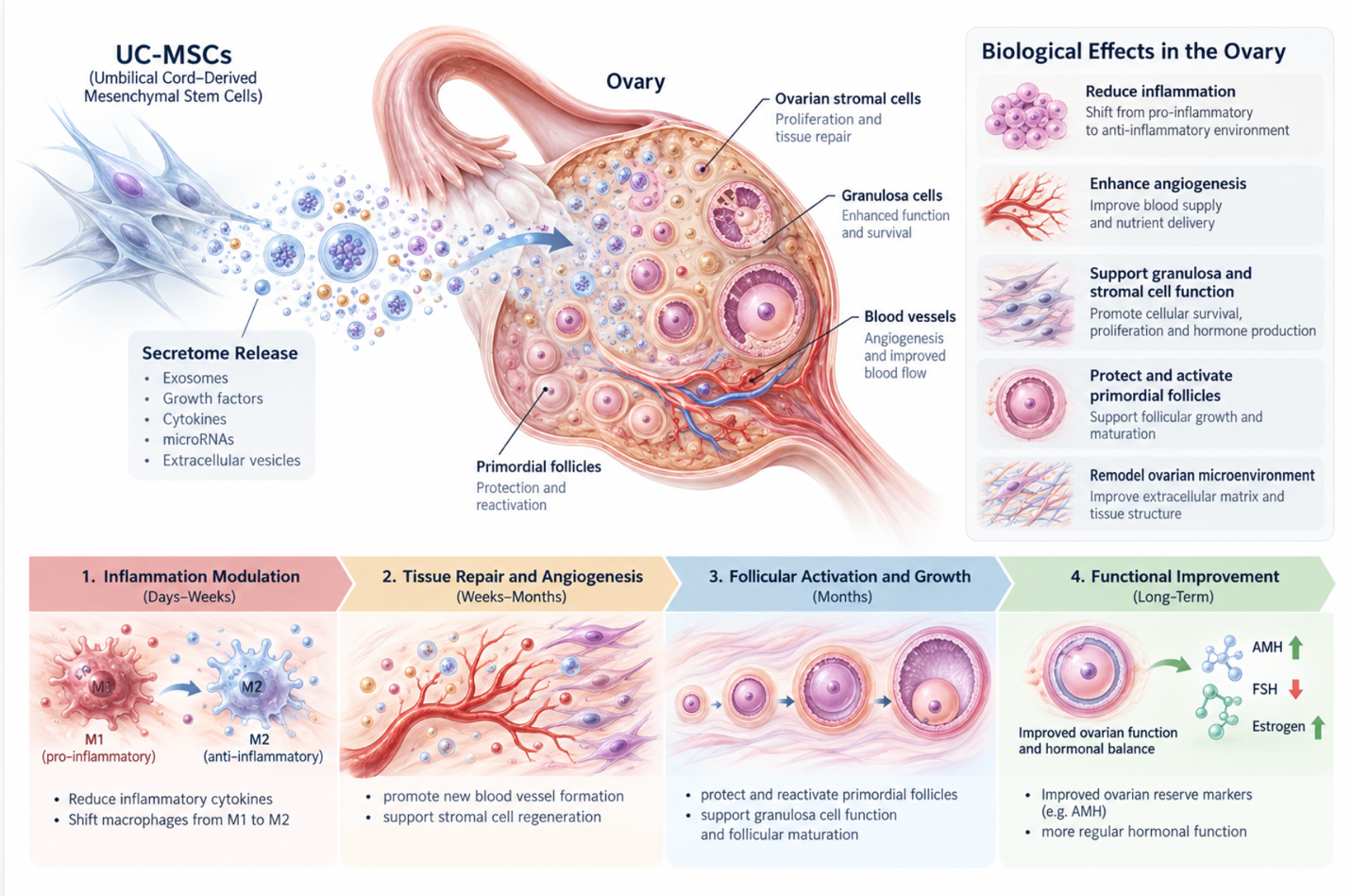
The clinical framework defining how this actually works is The Ovarian Paracrine Reactivation Model. This model clarifies that stem cells do not magically transform into new oocytes. Instead, they operate entirely via paracrine signaling a complex cellular communication process. Think of stem cells as biological paramedics. They arrive at the site of tissue damage and release a payload of bioactive molecules to orchestrate ovarian tissue activation.
These payloads include highly specific growth factors like Vascular Endothelial Growth Factor (VEGF), Epidermal Growth Factor (EGF), and Basic Fibroblast Growth Factor (bFGF). When injected into an aging ovary, these factors trigger intense local microcirculation. They stimulate the formation of new blood vessels (angiogenesis), which flushes the dormant tissue with oxygen and essential nutrients. This activation heavily relies on polarizing macrophages from a pro-inflammatory (M1) state to a tissue-repairing (M2) anti-inflammatory state.
| 📌 If you’re interested in how MSCs shift the immune system from attack mode to repair mode, we have an interesting article that discusses mesenchymal stem cell therapy for immune modulation, which you can read via the internal link. |
This pathway directly mitigates excessive tissue fibrosis. As ovaries age, they literally become stiff, dense, and scarred. This fibrosis physically traps remaining dormant follicles, preventing them from maturing and responding to your brain’s hormonal signals. Paracrine signaling actively dissolves this fibrotic barrier. It reduces local oxidative stress and creates a hospitable microenvironment where existing, sleeping eggs can finally resume their maturation process.
So how fast does this happen? The process isn’t overnight. It takes weeks for the fibrotic barrier to break down and for newly formed blood vessels to establish reliable nutrient delivery pathways to
While the paracrine mechanism remains consistent, the origin of the cellular material fundamentally dictates the clinical protocol and the patient’s physical toll. There are two primary categories used in reproductive medicine today, and understanding the distinction is vital for patient safety and outcome expectations.
Autologous stem cell therapy for ovarian function relies on cells harvested directly from your own body. Typically, these are extracted from your adipose (fat) tissue or bone marrow via a surgical procedure. The advantage? Zero risk of genetic rejection or graft-versus-host disease. The massive disadvantage? The cells are exactly your age. Your telomeres—the protective caps on your DNA—shrink as you age. If you inject 43-year-old stem cells into a 43-year-old ovary, you’re fighting biology with biology. They carry the same chronological senescence and oxidative damage as the rest of your body, which severely limits their regenerative horsepower.
| 📌 If you’re interested in why umbilical cord cells are often preferred over bone marrow or fat-derived cells, we have an interesting article that discusses why UC-MSCs are superior to other stem cell sources, which you can read via the internal link. |
Conversely, protocols frequently utilize Umbilical Cord-derived Mesenchymal Stromal Cells (UC-MSCs). These are day-zero, incredibly robust progenitor cells harvested from the Wharton’s Jelly of donated umbilical cords post-birth. UC-MSCs possess extraordinary immunological privilege because they lack the major histocompatibility complex (MHC) class II molecules that typically trigger an immune attack. This means your body won’t reject them despite being foreign DNA.
The logistical differences are stark. As detailed in clinical protocol literature (Segova clinical protocol overview), UC-MSCs are prepared, purified, and expanded in advanced biological laboratories for weeks prior to use. Autologous treatments require a painful, same-day surgical extraction often a bone marrow aspiration from the pelvis followed immediately by centrifugation and reinjection.
We need to address the skepticism surrounding this field, and answer a common question patients ask: Can stem cells reverse menopause permanently? No. But they can temporarily reboot the system. Let’s look at the biological plausibility behind that reboot. Is this science fiction? Not entirely, but the limits of clinical validation are incredibly rigid right now.
In vitro, the data is undeniable. Molecular pathways specifically the SIRT1 pathway and ERK MAPK signaling demonstrate profound cellular repair capabilities when exposed to stem cell secretions. In a controlled lab environment, we can watch ovarian tissue heal. We observe a drastic reduction in reactive oxygen species (ROS) and a restoration of mitochondrial membrane potential in aging granulosa cells.
But translating this perfectly orchestrated petri dish repair to a human being’s complex reproductive system is currently the subject of intense, ongoing clinical trials. The blood-follicle barrier is a formidable biological obstacle. Regenerative medicine demands a high standard of evidence. Outcomes must be measured by validated clinical metrics. We look for sustained improvements in Anti-Müllerian Hormone (AMH), lowered Follicle-Stimulating Hormone (FSH), and increased antral follicle counts (AFC) on transvaginal ultrasounds. Subjective feelings of “wellness” simply aren’t enough. Without rigorous laboratory standards, patients risk paying exorbitant fees for unproven commercial applications (StemAid Institute review).
Stem cell therapy for primary ovarian insufficiency targets the restoration of natural menstrual cycles and dormant follicle rescue in patients diagnosed before age 40. Data from controlled clinical trials indicates that targeted regenerative protocols can temporarily stabilize wildly fluctuating FSH levels in severe cases. For women told they had absolutely zero chance of natural conception, this represents a profound shift in early-stage reproductive endocrinology.
In targeted clinical evaluations of primary ovarian insufficiency, autologous stem cell transfer demonstrated resumption of menstruation in select patient cohorts within three to six months (Aging-US Research Review).
Primary Ovarian Insufficiency (POI) is a devastating diagnosis. It’s characterized by the severe depletion or dysfunction of ovarian follicles decades before natural menopause should occur. The psychological toll of being diagnosed at 32 or 34 is catastrophic. Historically, the medical consensus offered a singular, blunt directive: transition immediately to donor eggs.
Today, clinical trials are actively challenging that rigid boundary. We are seeing early evidence that the ovarian environment in POI patients isn’t always a barren wasteland. Often, it’s just a profoundly hostile environment harboring viable, but completely suppressed, microscopic follicles. To restore fertility naturally with stem cells requires shifting that microenvironment. The goal of stem cell intervention isn’t to reverse the underlying autoimmune or genetic cause of POI, but to temporarily alter that hostile environment enough to achieve a viable egg retrieval for IVF.
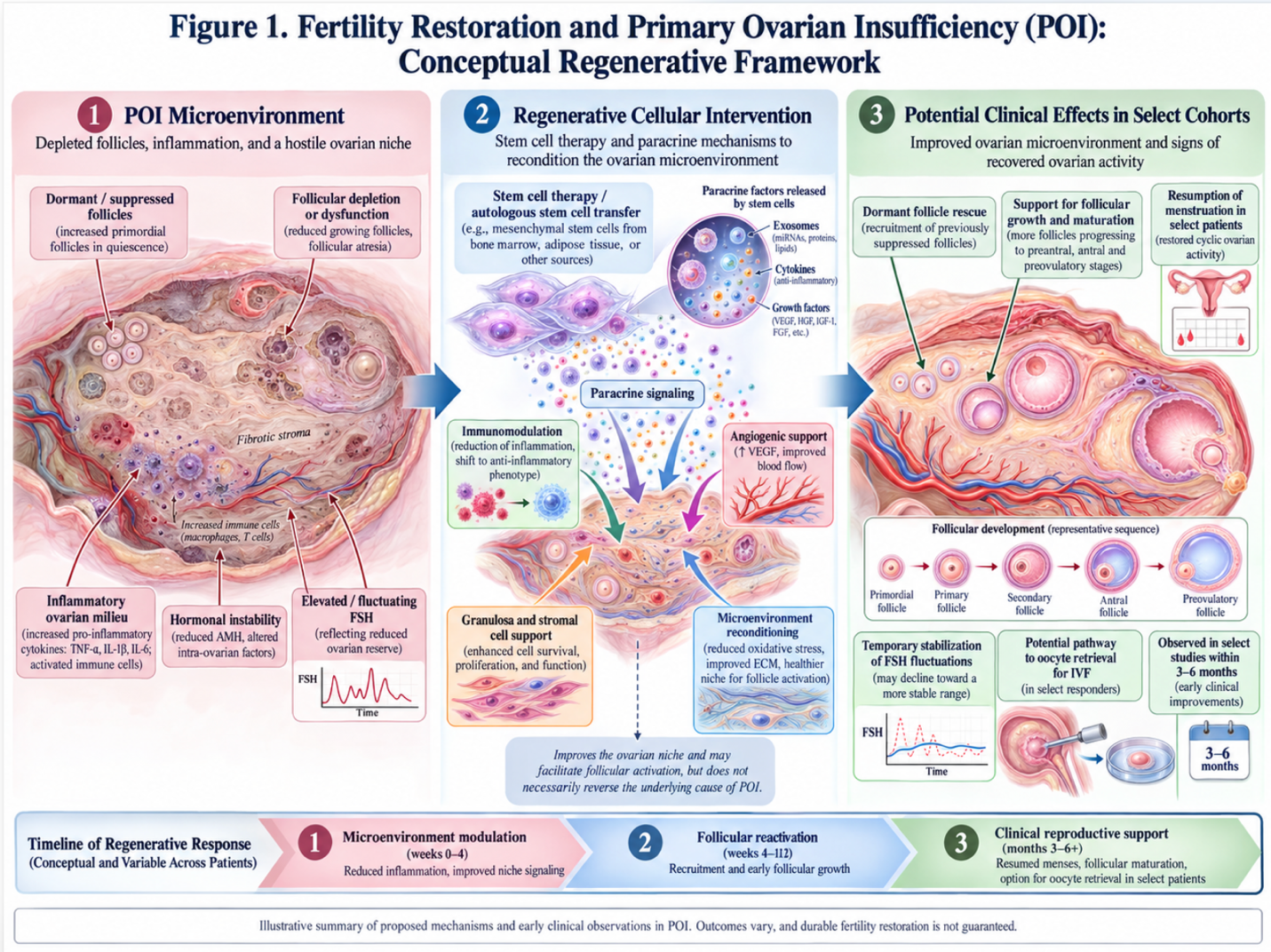
This is the most common question patients with POI ask when exploring experimental therapies. The direct answer is no; stem cell therapy cannot cure or permanently reverse Primary Ovarian Insufficiency. The underlying genetic or autoimmune triggers that caused the premature follicular depletion remain in the body.
However, stem cells can temporarily interrupt the symptoms of POI by improving the health of the ovarian microenvironment. By reducing local tissue inflammation and stimulating new blood vessel growth, the therapy can sometimes coax the few remaining dormant follicles out of their suppressed state. This creates a narrow, highly valuable window where the ovaries may temporarily respond to standard fertility medications again.
Premature Ovarian Failure (POF) and POI represent a spectrum of premature follicular depletion. The diagnosis is generally confirmed when FSH levels remain consistently elevated above 40 mIU/mL across multiple serum tests. At this stage, traditional IVF stimulation drugs essentially bounce off the ovaries without causing any follicular response.
Recent clinical approaches utilize novel autologous stem cell therapies explicitly designed to target endometrial regeneration and ovarian tissue repair (Herald Open Access Journal). By injecting concentrated cellular material directly into the ovarian cortex usually via an ultrasound-guided transvaginal needle or specialized laparoscopic surgery clinicians attempt to shock the dormant system back online.
In several documented cohorts, patients experienced distinct, measurable clinical outcomes following the cellular interventions:
Contrast this with the traditional assumption that POI is a one-way, irreversible street. The ability to temporarily reboot the system offers a narrow, highly coveted window of opportunity for autologous conception.
Here is where the clinical conversation gets deeply uncomfortable. The resumption of menses must be critically distinguished from the actual quality of the reactivated eggs. Folliculogenesis stimulation the biological maturation of the ovarian follicle is undeniably triggered by paracrine factors.
The stem cells “awaken” dormant eggs by facilitating crucial communication between the oocyte and the surrounding cumulus cells. They can improve egg quality with stem cells in terms of structural integrity, potentially yielding a higher antral follicle count. This is a massive victory for a patient who previously yielded zero eggs during an IVF retrieval.
But quantity does not equal genetic quality. Improving the chromosomal integrity of an aging egg remains highly controversial and biologically improbable (Clinical expert discussion). Biological age dictates chromosomal aneuploidy (abnormal chromosome numbers). A stem cell cannot rewrite the DNA inside an egg that has been sitting in a patient’s ovary for 42 years.
Our clinical evaluation team frequently reviews case studies where a patient’s AMH doubled after cellular therapy, yielding five eggs at retrieval instead of one. Yet, after preimplantation genetic testing (PGT-A), all five embryos were chromosomally abnormal. The therapy worked exactly as designed it rescued the follicles but it couldn’t turn back the biological clock on the DNA inside them. This is the hardest truth of regenerative reproductive medicine, and one that offshore clinics routinely ignore.
Because of these qualitative limitations, patients must carefully weigh this experimental approach against established third-party reproduction. Is it realistic to restore fertility naturally with stem
Donor eggs offer statistically established, exceptionally high success rates for clinical pregnancy. A 45-year-old using a 25-year-old donor’s egg has the pregnancy success rate of a 25-year-old—often hovering around 60% to 70% per transfer. It is a known, reliable, and heavily documented medical pathway. Conversely, attempting to rescue ovarian function with stem cells offers a low-probability, experimental chance to use your own autologous genetics. It is a massive gamble of time, financial resources (often exceeding $10,000 out-of-pocket for unproven therapies), and emotional bandwidth.
| 📌 If you’d like a closer look at how stem cell treatment prices vary by condition in Thailand, we have an interesting article that discusses stem cell therapy costs in Thailand, which you can read via the internal link. |
Patient suitability is paramount here. Consider a 34-year-old with POI whose eggs are chronologically young but completely suppressed by an autoimmune issue. She might be an excellent candidate for cellular therapy because the rescued eggs still hold strong genetic potential. But if a 46-year-old patient presents with completely absent AMH and severely elevated FSH that hasn’t fluctuated in years, a responsible specialist should advise against cellular therapy. That patient should proceed directly to donor eggs to avoid wasting critical time.
Beyond the pursuit of fertility, reactivating ovarian function presents profound implications for systemic endocrine health. For women experiencing debilitating perimenopause symptoms, stem cell therapy for perimenopause offers a biological alternative to exogenous pharmaceuticals. By waking up the ovarian tissue, the body resumes manufacturing its own endogenous estrogen and progesterone in a natural pulsatile rhythm.
By restoring natural ovarian estrogen production, regenerative protocols may offer secondary systemic benefits, including improved vascular microcirculation and the mitigation of early menopausal bone density loss (StemAid Institute research).
This isn’t just about hot flashes. Systemic hormonal collapse dictates how a woman’s cardiovascular, skeletal, and neurological systems age. When the ovaries stop producing estrogen, the entire physiological infrastructure takes a massive hit. Endothelial function declines, driving
HRT works beautifully for millions of women. But it is an external patch. It relies on dumping hormones into the bloodstream to trick the body into thinking the ovaries are still working. Regenerative cellular therapy asks a different question entirely: what if we just rehabilitate the microenvironment and make the ovaries work again?
Ovaries are essentially endocrine powerhouses. When paracrine signaling awakens dormant follicles via The Ovarian Paracrine Reactivation Model, the tissue resumes the secretion of endogenous hormones.
This natural hormone production restoration triggers massive downstream systemic effects. Estrogen is critical for the function of osteoblasts (cells that build bone) and endothelial nitric oxide synthase (which protects cardiovascular health and regulates vascular tone). When patients undergo these protocols, they frequently report rapid improvements in cutaneous hydration their skin literally stops thinning. We see the retention of vital bone density, stalling the rapid onset of osteopenia. And crucially, we observe a dramatic reduction in vasomotor symptoms, completely halting the night sweats that ruin sleep architecture.
Contrast this natural, bio-identical physiological feedback loop with the flat, continuous dosing of synthetic hormone medications. When your ovaries produce estrogen, they do so dynamically, responding to the brain’s subtle pituitary signals via the hypothalamic-pituitary-ovarian (HPO) axis. A transdermal HRT patch delivers a static, flat line of hormones. Your brain, however, expects a symphony of pulsing signals. By waking up the ovarian tissue, even temporarily, anti-aging ovarian rejuvenation forces your endocrine system to behave dynamically again.
We must address a prevalent myth in the regenerative space. Does delay menopause stem cell therapy actually stop the biological clock forever? No. It is scientifically framed as an extension of the endocrine window rather than permanent age-reversal.
While the therapy can temporarily delay the cessation of menses and prolong natural hormone production, chronological senescence eventually prevails. You cannot outrun time indefinitely. The biological machinery will eventually reach its absolute cellular limit, at which point apoptosis (programmed cell death) overtakes regeneration. Ovaries will eventually succumb to chronological aging regardless of how many growth factors are introduced.
Realistic timeline expectations are critical here. How long do the “rejuvenation” effects typically last? Preliminary clinical studies suggest the hormonal bump lasts anywhere from six months to a maximum of two to three years. It is not a permanent cure for menopause. It is a temporary pause button. For a 48-year-old woman looking to push her cardiovascular and bone-health protective window just a few years further into her fifties, that temporary extension is highly valuable. But patients must walk into the clinic understanding the expiration date on the procedure.
So, is hormonal balance via stem cells actually a viable alternative for the general population? Many women seek alternatives to synthetic HRT due to intense concerns over systemic side effects, or because they have strict medical contraindications.
Women with a history of hormone-receptor-positive breast cancers or severe clotting disorders (like Factor V Leiden) are often barred from using traditional systemic HRT by their oncologists. They desperately want a non-hormonal, non-systemic treatment for perimenopause symptoms that feels natural. While ovarian stem cell therapy is biologically appealing because it utilizes your body’s own localized regulatory mechanisms, it remains a highly investigational alternative.
It completely lacks the decades of longitudinal safety data that currently supports modern, bio-identical HRT protocols. We know exactly what 20 years of HRT does to a female body in terms of stroke and cancer risk profiling. We simply do not have 20-year safety data on direct ovarian stem cell injections. Altering your hormone therapy protocol is serious medicine. You must discuss these options with a board-certified Reproductive Endocrinologist. Do not rely on anti-aging wellness clinics to manage your systemic endocrine health.
The clinical efficacy of these protocols must be weighed against their physiological toll on the patient, which brings us to the evolution of regenerative methodologies. We are seeing a rapid shift from traditional PRP to advanced exosome and bone marrow models within reproductive medicine.
Unlike whole stem cells, exosomes are acellular vesicles that carry targeted growth factors and microRNA, theoretically reducing immunological risks while delivering concentrated paracrine signals to the ovarian tissue (New Hope Fertility Protocol Data).
Identifying the most effective protocol requires understanding their disparate extraction methods and cellular actions. It’s not just a matter of walking into a clinic and asking for “stem cells.” The specific preparation you receive drastically alters the invasiveness of the procedure, the theoretical risk profile, and the financial investment required.
Traditional Platelet-Rich Plasma (PRP)—an autologous concentration of human platelets has been the entry-level standard for years. But reproductive medicine is actively moving past it. Today, the clinical conversation is dominated by acellular therapies and highly concentrated bone marrow combinations that promise more sustained tissue repair.
Let’s break down stem cell-derived exosome therapy for ovaries. Exosomes are incredibly small extracellular vesicles (typically 30-150 nanometers in diameter) that facilitate cell-to-cell communication without containing live cellular material. They are not cells. They are the microscopic messenger envelopes secreted by stem cells, packed densely with mRNA, microRNA, and specific growth factors. Because of their microscopic size, they easily slip past the blood-follicle barrier.
Are exosomes better than stem cells for ovarian rejuvenation? The theoretical advantage is massive. By delivering concentrated paracrine signals to the target tissue without the risks associated with injecting live, replicating cells into a patient, the risk profile plummets. There is zero risk of unwanted cellular differentiation, tumor formation (teratomas), or immune rejection because there is no DNA inside an exosome.
This represents a major shift toward “cell-free” regenerative medicine. It leverages The Ovarian Paracrine Reactivation Model in its purest, most concentrated form. The exosomes physically fuse with aging granulosa cells, delivering the biochemical healing signals without any of the cellular baggage. The catch? Exosomes are manufactured off-site in sterile labs, placing them in an evolving FDA regulatory gray area regarding biologics manufacturing and quality control.
While exosomes represent a highly controlled, manufactured approach, other advanced clinics prioritize massively concentrated autologous matrices. The most prominent is the combination of bone marrow stem cell PRP for ovaries (Rejuvenating Fertility Center Review).
How does this work? It requires the surgical extraction of mesenchymal stem cells directly from the patient’s iliac crest (the dense bone of the pelvis). It’s an invasive, painful procedure requiring sedation. Once extracted, these powerful marrow cells are spun down and combined with traditional PRP drawn from peripheral arm blood.
The rationale behind this PRP ovarian stimulation synergy is brilliant. Traditional PRP contains alpha granules rich in Platelet-Derived Growth Factor (PDGF) and Transforming Growth Factor Beta (TGF-beta). This acts as a biological scaffold a fibrin network. It provides an immediate, massive release of growth factors that prep the tissue. The bone marrow stem cells then embed into this fibrin scaffold, providing sustained, long-term paracrine signaling over several months. Clinical analysis suggests this combined approach offers superior regenerative potential compared to standalone traditional PRP, which often dissipates too quickly in the body.
Understanding these technical nuances is the first step in avoiding predatory marketing regarding ovarian rejuvenation protocols. More invasive does not universally guarantee a higher live-birth success rate. You have to match these protocols to your specific clinical threshold and risk tolerance. Let’s be real about the invasiveness differences.
A bone marrow aspiration involves a specialized needle driving into your pelvic bone while you’re under twilight sedation. You will be sore for days, require pain management, and may need to miss work. Contrast that with traditional PRP, which takes a quick, virtually painless blood draw from The surgical reality dictates patient choice here. You have to evaluate whether the theoretical sustained release of bone marrow protocols is worth the significant pelvic pain and recovery timeline, or if an off-the-shelf exosome vial better suits your risk profile.
Yes, stem cell therapy for perimenopause can temporarily alleviate severe vasomotor and menstrual symptoms. By reactivating dormant ovarian tissue through paracrine signaling, the body briefly resumes its own natural endogenous estrogen production. This internal hormonal shift frequently results in the return of regular menstrual cycles and a sharp decrease in hot flashes and mood volatility. Clinical trial data indicates some women report symptomatic relief lasting anywhere from six to 24 months post-injection. However, results vary dramatically based on baseline ovarian health, and patients should consult an endocrinologist before abandoning established HRT protocols.
Stem cells are typically injected directly into the ovarian cortex using an ultrasound-guided transvaginal needle. This procedure is nearly identical to a standard IVF egg retrieval, utilizing twilight sedation to ensure patient comfort while the physician navigates the needle through the vaginal wall. Some specialized clinics prefer using laparoscopy a minimally invasive surgical approach through the abdomen to ensure visually precise distribution of the cellular matrix. While the transvaginal approach offers a faster recovery with fewer complications, laparoscopy is occasionally recommended for patients with severe pelvic adhesions.
Autologous stem cell transfer demonstrates a temporary resumption of menstruation in roughly 30% of Primary Ovarian Insufficiency cohorts. Success is primarily measured by the
Patients generally see measurable biological responses within three to six months following the cellular injection. It takes time for the secreted growth factors to reduce tissue fibrosis, stimulate local angiogenesis, and coax dormant follicles back into an active maturation cycle. Blood panels tracking AMH and FSH levels are typically drawn at the 8-week, 12-week, and 24-week marks to monitor the endocrine trajectory. If no follicular response occurs by the six-month mark, the specific regenerative protocol is generally considered medically unsuccessful, prompting patients to explore alternative fertility options.
For women over 35 facing premature follicular depletion, stem cell therapy for perimenopause delivers a scientifically plausible method to temporarily restore natural endocrine function and rescue dormant oocytes. Research indicates that targeted autologous stem cell transfer can trigger the resumption of menstruation in up to 30% of specific POI patient cohorts, mitigating issues like severe bone density loss by up to 15%. However, because chronological egg quality remains unchanged, the most effective clinical approach combines rigorous patient screening, realistic timelines, and a willingness to pivot to established donor protocols if biological reactivation fails.
Understanding The Ovarian Paracrine Reactivation Model fundamentally changes how you evaluate these fertility clinics. Instead of chasing impossible promises of permanent age-reversal or newly minted DNA, you can view the therapy accurately: as a targeted repair of your ovarian microenvironment using specific growth factors. When you approach the process with this rigorous biological framework, you inoculate yourself against predatory marketing and focus entirely on measurable, physiological responses to address your initial diagnosis.
Take a hard look at your most recent ultrasound reports and day-3 hormone panels. If you still demonstrate sporadic follicular activity but are failing to respond to standard IVF stimulation, book a consultation with a reproductive endocrinologist specializing in regenerative protocols to establish a strict six-month evaluation window.