Our Services
Others
- DFPP
- Shockwave
- IV Drip

Patient Profile: Adult International Client | Bilateral Knee Osteoarthritis & Systemic Joint Support
1. Clinical Overview & Case Presentation The medical team evaluated an adult international patient presenting with progressive, bilateral knee discomfort and mechanical functional limitations. The patient reported episodic joint swelling and significant pain accompanied by clicking/crepitus when navigating stairs (both ascending and descending).Furthermore, she noted a complete inability to perform a deep squat.
In addition to the localized knee symptoms, the patient reported systemic small joint pain. Her medical history includes well-controlled hypertension, a metabolically significant overweight status, and menopause without the use of Hormone Replacement Therapy (HRT). Crucially, her past medical history includes a diagnosis of estrogen receptor-positive (ER+) carcinoma in situ of the breast. The patient sought an integrative biological approach to manage her joint pain and support tissue recovery without immediate reliance on total knee arthroplasty (joint replacement).
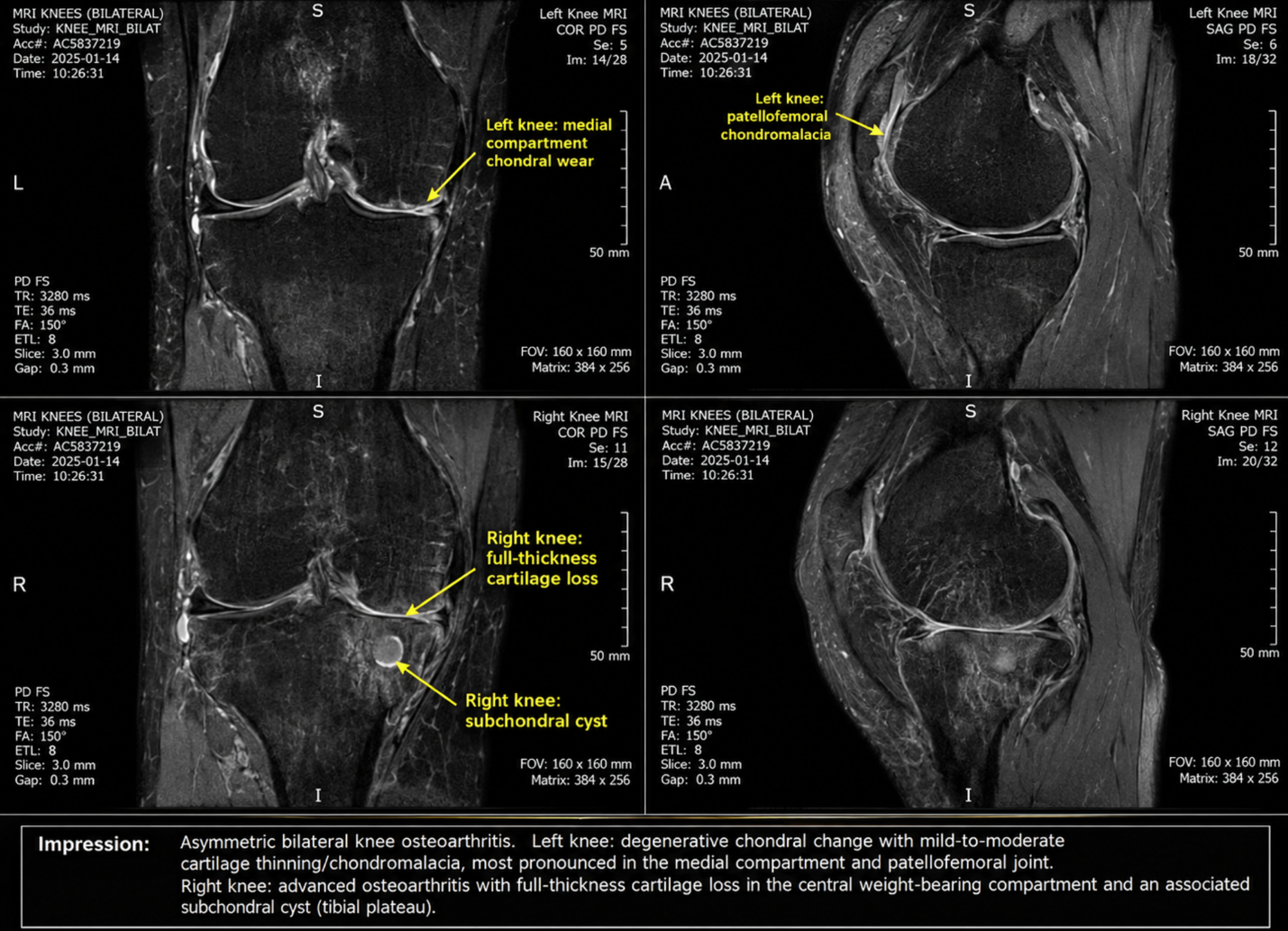
Figure 1: Bilateral Knee MRI Demonstrating Asymmetric Osteoarthritis with Advanced Right-Sided Cartilage Loss and Subchondral Cyst Formation
2. Diagnostic Imaging Review & Clinical Interpretation To precisely evaluate the mechanical and structural origins of the patient’s symptoms, the medical team reviewed her recent bilateral knee diagnostics. The findings revealed an asymmetrical progression of degenerative joint disease:
Clinical Interpretation: The advanced full-thickness loss in the right knee directly correlates with the severe pain experienced during weight-bearing activities (stairs). The patellar chondromalacia in the left knee restricts deep squatting mechanics. Furthermore, the presence of systemic small joint pain suggests an underlying systemic inflammatory burden,likely exacerbated by her overweight status and post-menopausal endocrine shifts.
3. Proposed Multimodal Supportive Protocol Given the combination of localized advanced cartilage loss and generalized systemic inflammation, the medical team designed a targeted, dual-pathway supportive cell therapy protocol:
4. Quality Control, Safety Documentation & Oncological Considerations A critical component of this intervention is stringent safety and quality assurance, particularly given the patient’s history of ER+ carcinoma in situ.
5. Medical Perspective and Recommendation The medical team advises that managing advanced bilateral osteoarthritis requires a comprehensive, integrative approach. Biological therapies cannot mechanically regrow full-thickness cartilage to its original state or fill in subchondral cysts overnight. However, by modulating the chronic inflammatory environment within the joint capsules and supporting systemic tissue homeostasis, cell therapy serves as a powerful adjunctive tool to improve mechanical comfort and delay the need for end-stage joint replacement.
Crucially, the medical team recommends that this biological protocol be paired with a structured weight management plan and joint-sparing physiotherapy. Reducing the mechanical load (overweight status) on the compromised central weight-bearing aspect of the right knee is strictly necessary to maximize and sustain the functional benefits of the supportive cell therapy.