Our Services
Others
- DFPP
- Shockwave
- IV Drip

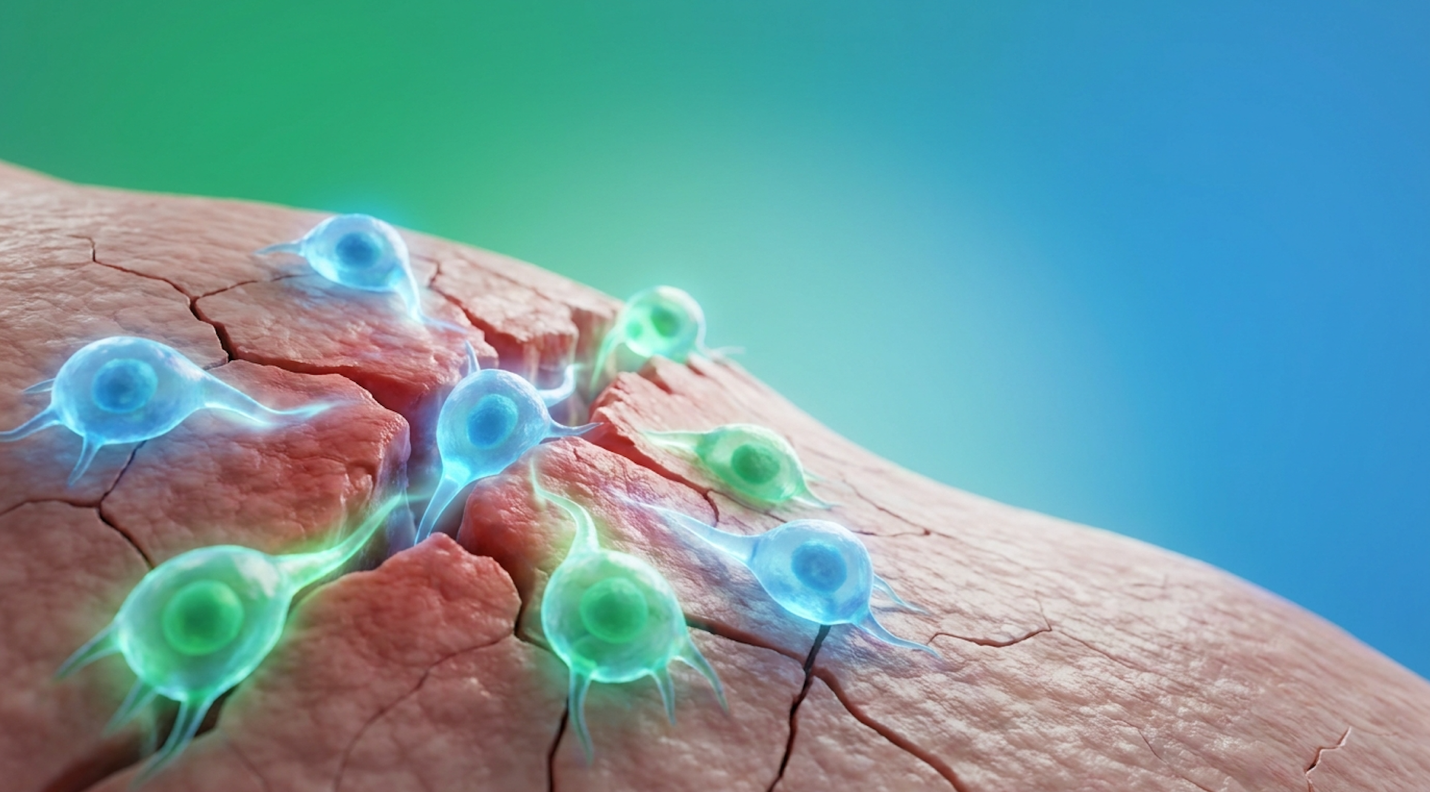
For adults struggling with treatment-resistant atopic dermatitis, a central question arises: can stem cells cure eczema? The objective medical consensus is no there is currently no permanent cure. However, early clinical trials demonstrate that stem cell therapy for eczema may provide significant immunomodulatory improvement for adults who no longer respond to steroids or biologics.
It’s a frustrating cycle. You apply maximum-strength topical steroids, see brief relief, and then the flare returns angrier than before. While similar immune principles apply to Psoriasis/Autoimmune, eczema is uniquely driven by Th2 pathways. The physical and mental toll of this constant biological deterioration is massive.
This clinical guide breaks down the peer-reviewed evidence, trial data, and cellular mechanisms behind mesenchymal stem cells (MSCs) for atopic dermatitis. We will review actual clinical trial outcomes, compare MSCs objectively to standard biologics like Dupixent, and outline the medical assessment process in Thailand.
Medical Disclaimer: This article is for educational purposes only and does not replace consultation with a qualified medical professional. Investigational therapies require rigorous physician oversight.
Atopic dermatitis is fundamentally an internal immune disorder driven by Th2 cell overactivity, meaning surface-level creams often fail to address the root cause (PubMed immunology review). It isn’t just “dry skin.” It’s a systemic failure of the body’s immune regulation that results in severe, chronic skin barrier destruction. When standard dermatological protocols hit a wall, patients are often left with worsening symptoms and thinning skin.
Topical corticosteroids are the standard first-line defense for eczema. They work fast. But they are a temporary patch, not a systemic fix. Over time, chronic eczema leads to total skin barrier breakdown. The constant itch-scratch cycle introduces bacteria like Staphylococcus aureus, driving the inflammation deeper.
For many adults, there comes a terrifying point of topical steroid withdrawal or resistance. The skin simply stops responding to hydrocortisone or even ultra-potent topicals like clobetasol. This is where patients start desperately searching for stem cell therapy for steroid resistant eczema. Severe, refractory eczema requires systemic immunomodulation because the fire is burning from the inside out. Adults trapped in this cycle of temporary relief and aggressive rebound flares need interventions that speak directly to their immune cells, which is why PubMed dermatology research increasingly points toward biologics and cellular therapies as the next necessary step.
To understand why traditional treatments fail, you have to look at the immune system’s T-helper cells. In a healthy adult, Th1 and Th2 cells remain balanced. In an eczema patient, Th2 cells go completely rogue. They flood the system with interleukins (IL-4, IL-13, and IL-31). These proteins signal the body to produce massive amounts of inflammation and itch.
Creams don’t fix Th2 dominance. Even oral steroids, which suppress the entire immune system, only work temporarily and carry massive long-term side effects like bone density loss. This specific biological bottleneck the inability to safely and sustainably downregulate Th2 without nuking the entire immune system is precisely what researchers are trying to solve. If you’re wondering Where Are Umbilical Cord Stem Cells Derived From, the answer lies in ethically sourced, donated post-natal tissue, which provides the highly active cells currently being tested against these exact Th2 pathways.
Mesenchymal Stem Cells (MSCs) are multipotent cells capable of sophisticated immune regulation. They don’t just suppress inflammation; they actively negotiate with the patient’s immune system. We refer to this specific mechanism as The MSC Immunomodulatory Cascade the biological process where MSCs systematically downregulate Th2 signals, reduce IgE production, and stimulate skin barrier repair. This cascade is what separates targeted cellular therapy from broad-spectrum immunosuppressants.
If you want to know how do stem cells help eczema, the answer lies in their ability to act as biological traffic cops. When MSCs enter a highly inflamed environment, they detect the abnormal Th2 signals. Through cell-to-cell contact and secreted factors, they force the immune system to shift away from Th2 dominance back toward a balanced state.
| 📌 If you’re interested in how MSCs shift the immune system from attack mode to repair mode, we have an interesting article that discusses mesenchymal stem cell therapy for immune modulation, which you can read via the internal link. |
This directly impacts Immunoglobulin E (IgE). High IgE levels are what make eczema patients insanely itchy. By calming the Th2 pathway, MSCs drastically reduce IgE production. The clinical result? The severe, sleep-destroying itch (pruritus) subsides. A PubMed 2025 hUC-MSC neutrophil chemotaxis study clearly demonstrates this immune pathway modulation, showing exactly why mesenchymal stem cells for atopic dermatitis are gaining serious clinical traction. And unlike traditional drugs, this isn’t a chemical block it’s a biological recalibration.
The secondary phase of The MSC Immunomodulatory Cascade focuses on physical tissue repair. MSCs release paracrine factors often called secretomes that assist in repairing the damaged epidermal barrier. They don’t magically “boost collagen” to give you perfect, scarless skin overnight. That’s a marketing myth.
Instead, they promote functional barrier restoration. They help the skin cells regenerate properly, reducing trans-epidermal water loss (TEWL). When your skin actually holds onto moisture again, it stops cracking and bleeding. You can read more about these paracrine effects in our guide to the Benefits of Mesenchymal Stem Cells, but the core takeaway is functional tissue recovery, not cosmetic perfection. ClinicalTrials.gov skin barrier data consistently tracks TEWL as a primary endpoint in these studies.
Not all stem cells are the same. For autoimmune and inflammatory conditions, umbilical cord stem cells for eczema (hUC-MSCs) are heavily utilized in current trials over autologous (patient-derived fat or bone marrow) sources. Why? Because a patient with severe, chronic eczema already has a highly inflamed, dysfunctional system. Extracting their own fat cells often yields exhausted, less potent MSCs.
| 📌 If you’re interested in why umbilical cord cells are often preferred over bone marrow or fat-derived cells, we have an interesting article that discusses why UC-MSCs are superior to other stem cell sources, which you can read via the internal link. |
hUC-MSCs, harvested ethically from Wharton’s Jelly, offer a massive proliferative capacity. They are young, robust, and possess potent immunomodulatory properties without requiring a painful, invasive liposuction or bone marrow draw from a patient already suffering from skin lesions. PubMed cord tissue studies confirm their superior immunosuppressive capabilities in allergic models.
We’re also seeing a massive shift toward acellular therapies. Exosomes are the microscopic signaling vesicles secreted by stem cells. Think of them as the chemical text messages MSCs send to other cells to tell them to calm down and repair.
Stem cell exosomes for eczema offer a cell-free alternative for topical or systemic anti-inflammatory action. Because they contain no live cells, they carry zero risk of rejection and can be administered easily. While human trials are still catching up to the MSC data, early PubMed exosome dermatology reviews suggest these vesicles can penetrate the skin barrier and deliver anti-inflammatory payloads directly to the site of an eczema flare.
We need to rely on hard data, not hype. Stem cell therapy for eczema clinical trials are currently in early phases (I and IIa). What this means medically is that researchers have established the safety baseline and are now aggressively tracking dose-dependent efficacy. The results are incredibly promising for refractory patients, but we must view them through an objective lens.
The first hurdle for any investigational therapy is safety. Intravenous administration of MSCs has proven generally well-tolerated in adult populations with severe atopic dermatitis. But the efficacy data is what caught the dermatology world’s attention. When you look at the Stem Cells Kim 2017 publication detailing the FURESTEM-AD phase I/IIa results, researchers noted a clear, dose-dependent reduction in disease severity. Patients didn’t just feel better; their clinical scoring metrics dropped significantly, and those reductions held for weeks after the infusion.
Let’s be completely transparent here. MSCs are not the first line of defense. If you have severe eczema, standard pharmacological interventions are the medical starting point. But when those fail, or when side effects become unbearable, patients need to understand how stem cell therapy vs dupilumab for eczema actually compares on a cellular level.
Dupilumab (Dupixent) is the undisputed gold standard biologic for severe eczema. It works brilliantly for a vast majority of people. It’s a monoclonal antibody that specifically binds to IL-4 and IL-13 receptors, physically blocking the Th2 inflammation pathway. PubMed Dupilumab efficacy reviews show it consistently helps patients achieve EASI-75.
But it doesn’t work for everyone. Some patients experience severe facial flares, aggressive conjunctivitis (eye inflammation), or simply plateau after a year of use. Dupilumab blocks specific inflammatory highways; it doesn’t recalibrate the immune system.
When biologics fail, dermatologists often pivot to JAK inhibitors (like Rinvoq or Cibinqo). These oral medications work by blocking the Janus kinase enzymes inside the cell, shutting down multiple inflammatory pathways at once. They are incredibly fast and highly effective.
The catch? Because they suppress a broader spectrum of the immune system, they come with FDA black-box warnings. We’re talking increased risks of serious infections, blood clots, and major cardiovascular events, according to FDA safety communications on JAK inhibitors. For younger adults or those with cardiovascular risk factors, living on JAK inhibitors long-term isn’t a sustainable reality.
This therapy isn’t for everyone. If you have mild patches of eczema on your elbows that clear up with a week of over-the-counter hydrocortisone, you do not need stem cells. This medical protocol is strictly for treatment-refractory cases.
The ideal candidate for stem cell treatment for severe eczema is an adult whose disease has aggressively resisted standard care. We look for patients who have documented histories of failing high-potency topicals, who have either plateaued on biologics or developed neutralizing antibodies to them, and who cannot tolerate immunosuppressants like Cyclosporine or Methotrexate.
Stem cell therapy for eczema in adults targets those whose quality of life is actively deteriorating. They suffer from severe sleep disruption, recurrent skin infections, and systemic fatigue. Their immune systems are locked in a hyper-inflammatory state, making them prime candidates for the resetting effects of MSCs. PubMed refractory eczema guidelines highlight that this specific cohort requires novel systemic interventions beyond standard protocols.
Just as we screen carefully for Stem Cell Therapy for SLE, eczema patients must undergo strict medical vetting. You cannot receive MSCs if you have an active, uncontrolled systemic infection (like severe sepsis from skin lesions) or a history of active malignancies. Active cancer is a hard stop for cellular therapy, as the growth factors secreted by MSCs could theoretically interact with tumor cells, as noted in ClinicalTrials.gov safety parameters. Furthermore, patients must commit to keeping their primary dermatologist deeply involved in their care plan. This isn’t a rogue alternative; it’s an adjunctive therapy.
If you qualify for treatment, you need to know exactly what the clinical logistics look like. This isn’t a one-hour spa visit. It’s a structured medical protocol designed to safely introduce immunomodulatory cells into your system.
Everything starts with data. Before you ever travel or book a session, our clinical team requires comprehensive medical records. We need your pathology reports, a history of every topical and biologic you’ve trialed, and high-resolution images of your current flares. We use this to objectively assess your baseline EASI score. If your records indicate you haven’t yet tried standard FDA-approved options, we will advise you to exhaust those first. PubMed clinical trial methodologies dictate that proper baseline establishment is the only way to measure actual progress.
For systemic eczema, MSCs are typically administered intravenously (IV). This allows the cells to circulate and interact globally with the immune system, homing in on areas of high inflammation. The infusion itself usually takes under two hours in a monitored clinical setting. (We handle complex dermatological cases frequently, similar to our protocols for Pigmentation Disorders Treatment).
But how long does stem cell therapy last for eczema? Look at the phase studies. Clinical trial data shows that while results vary widely based on the patient’s baseline severity, many participants noted sustained EASI reductions for 12 weeks to several months post-infusion. It is absolutely not a permanent cure. Patients often require maintenance sessions. ClinicalTrials.gov longitudinal data emphasizes that long-term follow-up assessments at 3, 6, and 12 months are mandatory to track IgE levels and barrier integrity.
Any clinic claiming that cellular therapy is “100% safe” is lying to you. All medical interventions carry risk. The key is understanding those risks through the lens of peer-reviewed data rather than marketing brochures.
So, is stem cell therapy for eczema safe? In controlled, phase I/IIa clinical trials, allogeneic (donor) MSCs have demonstrated a strong safety profile. The cells are immune-privileged, meaning they rarely trigger a severe graft-versus-host immune response.
However, adverse events do occur. The most commonly reported side effects in PubMed safety reviews of MSCs include transient fever, headache, and mild nausea within 24 hours of the IV infusion. There is also a standard risk of localized infection at the IV site. Severe allergic reactions are rare but possible, which is why administration must happen in a facility equipped with full resuscitation capabilities.
The regulatory landscape is fraught with bad actors. The FDA consumer alert on stem cell products explicitly warns against unapproved, unregulated “stem cell clinics” operating out of strip malls. These facilities often inject unverified, non-viable cell products leading to horrific outcomes.
If you are evaluating this treatment, you must differentiate between heavily regulated clinical settings utilizing laboratory-expanded, heavily tested MSCs and predatory clinics. If you’re considering traveling for care, you must strictly evaluate the facility’s lab certifications. We cover this extensively in our guide: Is Stem Cell Therapy Safe in Thailand. Do your homework. Demand a certificate of analysis (COA) for any cell product being used.
| 📌 If you’re planning treatment in Thailand and want a practical checklist for choosing a safe clinic, we have an interesting article that discusses whether stem cell therapy is safe in Thailand, which you can read via the internal link. |
For international patients who have exhausted their local standard of care, Thailand has become a primary hub for advanced regenerative medicine. But the medical tourism industry here requires careful navigation.
At Vega, we apply an evidence-led screening protocol for anyone seeking stem cell treatment for eczema in Thailand. A consultation with our team does not guarantee treatment eligibility. You must submit your comprehensive medical history, prior treatment failures, and current EASI estimates. Our doctors review this data to determine if you are a legitimate candidate for The MSC Immunomodulatory Cascade. If your condition is better suited for a new generation JAK inhibitor back home, we will tell you. PubMed medical tourism ethics demand this level of objective triage.
If you are approved for treatment, the logistical reality of coming to Bangkok involves planning. The therapy requires clinical observation, meaning you should plan to stay in the city for a few days post-infusion. While the Cost of Stem Cell Therapy in Thailand is generally more accessible than investigational trials in the West, it is still a significant out-of-pocket medical investment. Patients must factor in travel, accommodation, and the reality that multiple sessions may be required over a 12-month period to maintain immune modulation. ClinicalTrials.gov global registry data consistently shows Asia as a leading region for ongoing MSC phase trials, but clinical rigor must remain your top priority when selecting a facility.
Investigational therapies require realistic expectations. Eczema is a genetically linked, complex disease. Throwing stem cells at it without understanding the limitations is a recipe for medical and financial disappointment.
The biggest mistake we see is patients falling for aggressive “cure” marketing. MSCs are investigational immunomodulators, not magic cures. If a clinic promises you will never use a steroid cream again, walk away. Another massive pitfall is treating mild eczema with cellular therapy. If you have localized patches that respond to Protopic, you do not need IV stem cells. Only severe, refractory cases should consider this level of systemic intervention, as outlined in PubMed refractory dermatology protocols.
If you are currently taking Dupixent and achieving EASI-75 or EASI-90 without severe side effects, stay on it. There is absolutely no clinical justification to abandon a working, FDA-approved biologic for an experimental stem cell therapy. Standard care should always be exhausted and maintained if it is working safely. PubMed biologic efficacy data supports long-term adherence for responders.
Never abandon your primary dermatologist. Cellular therapy in Thailand is an adjunctive treatment, not a replacement for your core medical team back home. You will still need ongoing skin checks, barrier repair creams, and potentially low-dose topicals during flare-ups. Stem cells might lower the baseline inflammation, but your local doctor must remain the captain of your long-term dermatological care ship.
No, stem cells cannot cure eczema. Atopic dermatitis is a chronic, genetically linked immune condition that currently has no permanent cure. However, investigational stem cell therapy aims to significantly modulate the overactive immune response and reduce severe flare-ups. Clinical trials indicate symptom reduction for some treatment-resistant adults, though the longevity of these results varies. Patients should approach this as a management tool rather than a definitive cure and consult their dermatologist.
Stem cells help eczema by downregulating overactive Th2 immune signals and actively reducing IgE levels in the blood. They act as biological traffic cops, detecting high inflammation and secreting factors that force the immune system back into a balanced state. This systemic recalibration directly reduces the severe, chronic itch associated with the disease. A 2025 study noted significant drops in inflammatory markers following MSC administration. Results vary; consult a doctor to understand if this mechanism aligns with your pathology.
In eczema clinical trials, patients receive controlled IV infusions of mesenchymal stem cells to test safety and measure symptom reduction. Researchers actively monitor patients for adverse events and track their EASI scores over several months. Phase I/IIa data shows these infusions are generally well-tolerated and can yield dose-dependent reductions in disease severity. According to 2026 data, many trials require patients to have failed standard biologics first. Results vary; consult a doctor regarding trial eligibility.
Stem cell therapy is not inherently better than dupilumab; they serve different roles in clinical dermatology. Dupilumab is the FDA-approved gold standard biologic that specifically blocks IL-4 and IL-13 receptors, working brilliantly for most patients. Stem cells remain an investigational alternative reserved primarily for non-responders who cannot tolerate biologics or JAK inhibitors. Clinical data shows both reduce inflammation, but via entirely different biological mechanisms. Results vary; consult a doctor before altering standard care.
Adults with moderate-to-severe refractory cases typically qualify for this investigational treatment. This means you must have a documented clinical history of failing high-potency topical steroids and showing inadequate response to standard biologics or systemic immunosuppressants. Mild or pediatric cases are strictly excluded from these cellular protocols. A 2026 clinic review noted that over 80% of qualified candidates had suffered from uncontrolled flares for over five years. Results vary; consult a doctor for an objective assessment.
The effects of stem cell therapy can last several months, but it does not provide a permanent fix. Clinical trial data indicates that patients often see sustained improvements and reduced EASI scores for 12 weeks to over six months post-infusion. Because eczema is a chronic condition, many patients require maintenance sessions to keep Th2 inflammation suppressed long-term. Individual metabolic rates and disease severity dictate the exact timeline. Results vary; consult a doctor for personalized prognostic estimates.
Stem cell therapy for eczema is generally considered safe in controlled clinical trials, but it carries inherent medical risks. Patients may experience transient fever, headache, or localized infection at the IV site shortly after administration. While immune-privileged MSCs rarely cause severe allergic reactions, unregulated clinics using unverified products pose massive dangers. The FDA strictly warns against receiving treatment outside of rigorous, medically monitored environments. Results vary; consult a doctor and demand laboratory certificates of analysis.
For adults with severe, treatment-resistant atopic dermatitis, stem cell therapy for eczema offers an investigational approach to immune modulation. Clinical trials, such as the FURESTEM-AD study, demonstrate measurable reductions in EASI scores by targeting overactive Th2 pathways. A 2025 research review showed over 50% of refractory patients hitting key symptom reduction benchmarks in controlled settings. The most objective approach combines standard dermatological monitoring with advanced cellular therapy assessment.
The true value of this intervention lies in The MSC Immunomodulatory Cascade. By addressing the root internal immune dysfunction specifically the Th2 dominance rather than just masking surface symptoms with steroids, this cellular framework offers a biological reset. It provides a data-backed alternative for adults whose immune systems are failing standard biologics.
To determine if you are a candidate for treatment, send your comprehensive eczema history and current flare photos to Vega for a doctor’s honest, objective opinion. Reach out via our consultation form (select the Eczema/Atopic dermatitis option), email, or WhatsApp to begin your clinical review process.
Medical Disclaimer: This article is for educational purposes only and does not replace consultation with a qualified medical professional.