Our Services
Others
- DFPP
- Shockwave
- IV Drip

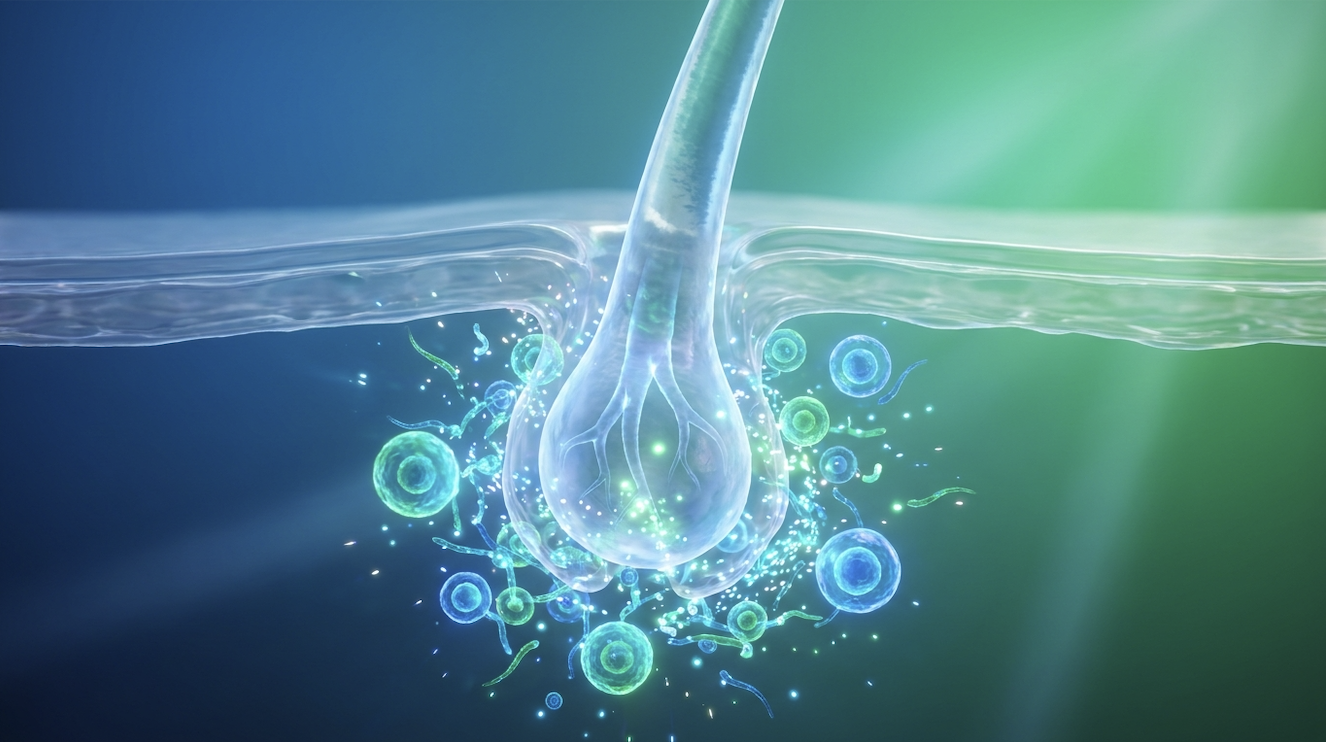
For patients experiencing thinning hair who are weighing non-surgical interventions against traditional transplants, autologous stem cell therapy combined with Platelet-Rich Plasma (PRP) represents the vanguard of regenerative dermatology.
When follicles succumb to the aging process or genetic sensitization to DHT, they don’t immediately die they enter a state of prolonged dormancy and miniaturization. Navigating the marketing hype surrounding hair restoration often leaves patients confused, risking significant financial investment on single-therapy approaches that yield stagnant results. Clinical observations consistently demonstrate this reality. Patients exhaust themselves and their budgets on isolated treatments, only to watch their follicular density continue to decline. The clinical reality requires a multi-modal approach.
By the end of this guide, you will understand the precise clinical mechanisms of a stem cell and PRP hair treatment protocol, allowing you to determine if this investigational approach suits your
A stem cell and PRP hair treatment protocol reactivates dormant follicles by combining autologous adipose-derived cells with concentrated growth factors.
Adipose-derived stem cells secrete growth factors like VEGF, directly increasing follicle diameter and hair density (PubMed, 2017). This makes autologous fat extraction a primary non-surgical intervention for early-stage hair thinning, utilizing the patient’s own biological material to stimulate dormant follicles safely.
Adult-derived stem cell therapy relies heavily on a simple biological truth: your fat tissue is an absolute goldmine for cellular regeneration. While early regenerative medicine leaned heavily on bone marrow, modern dermatology vastly prefers adipose (fat) tissue. Why? It yields vastly higher concentrations of mesenchymal stem cells without the brutal, painful extraction process associated with drilling a trocar into your iliac crest. In fact, clinical measurements demonstrate that fat tissue can yield up to 500 times more mesenchymal stem cells per milliliter than bone marrow. Fat is accessible, abundant, and rich in the exact microvascular network needed for scalp repair.
| 📌 If you’re interested in why umbilical cord cells are often preferred over bone marrow or fat-derived cells, we have an interesting article that discusses why UC-MSCs are superior to other stem cell sources, which you can read via the internal link. |
These cells don’t just sit idly by once relocated to your scalp. They actively rebuild the microenvironment through paracrine signaling. The clinical evidence on adipose-derived stem cells shows that ADSCs secrete potent growth factors specifically Vascular Endothelial Growth Factor (VEGF) and Hepatocyte Growth Factor (HGF). This continuous signaling directly stimulates the dormant dermal papilla cells sitting at the base of your hair follicles, commanding them to exit the resting phase.
Furthermore, recent studies comparing exosomes reveal that exosomes derived from adipose stem cells can increase the proliferation of dermal papilla cells by up to 30% in vitro. This robust cellular communication forces dying follicles out of the telogen phase and thrusts them back into the active anagen (growth) phase.
If the phrase “fat extraction” makes you anxious, you aren’t alone. But frankly, the clinical reality of a stem cell therapy for hair loss procedure is a breeze compared to traditional surgeries. It is remarkably straightforward and absolutely does not require a hospital stay.
The procedure utilizes a mini-liposuction protocol performed strictly under local anesthesia. A clinician extracts a very small volume of fat typically just 20 to 60 milliliters from your abdomen or flanks using a micro-cannula. The physical extraction takes roughly 15 to 20 minutes. You remain entirely awake, chatting, and comfortable throughout the entire process.
Once harvested, this raw adipose tissue undergoes high-speed centrifugation in the clinic’s laboratory. During processing, the centrifuge applies precise gravitational forces to separate the lipids and fluids from the dense cellular pellet. This isolates the Stromal Vascular Fraction (SVF). SVF is the cellular “liquid gold” containing your highly concentrated stem cells, pericytes (which stabilize blood vessels), and endothelial cells. Processing takes about an hour, followed immediately by targeted micro-injections into the thinning areas of your scalp.
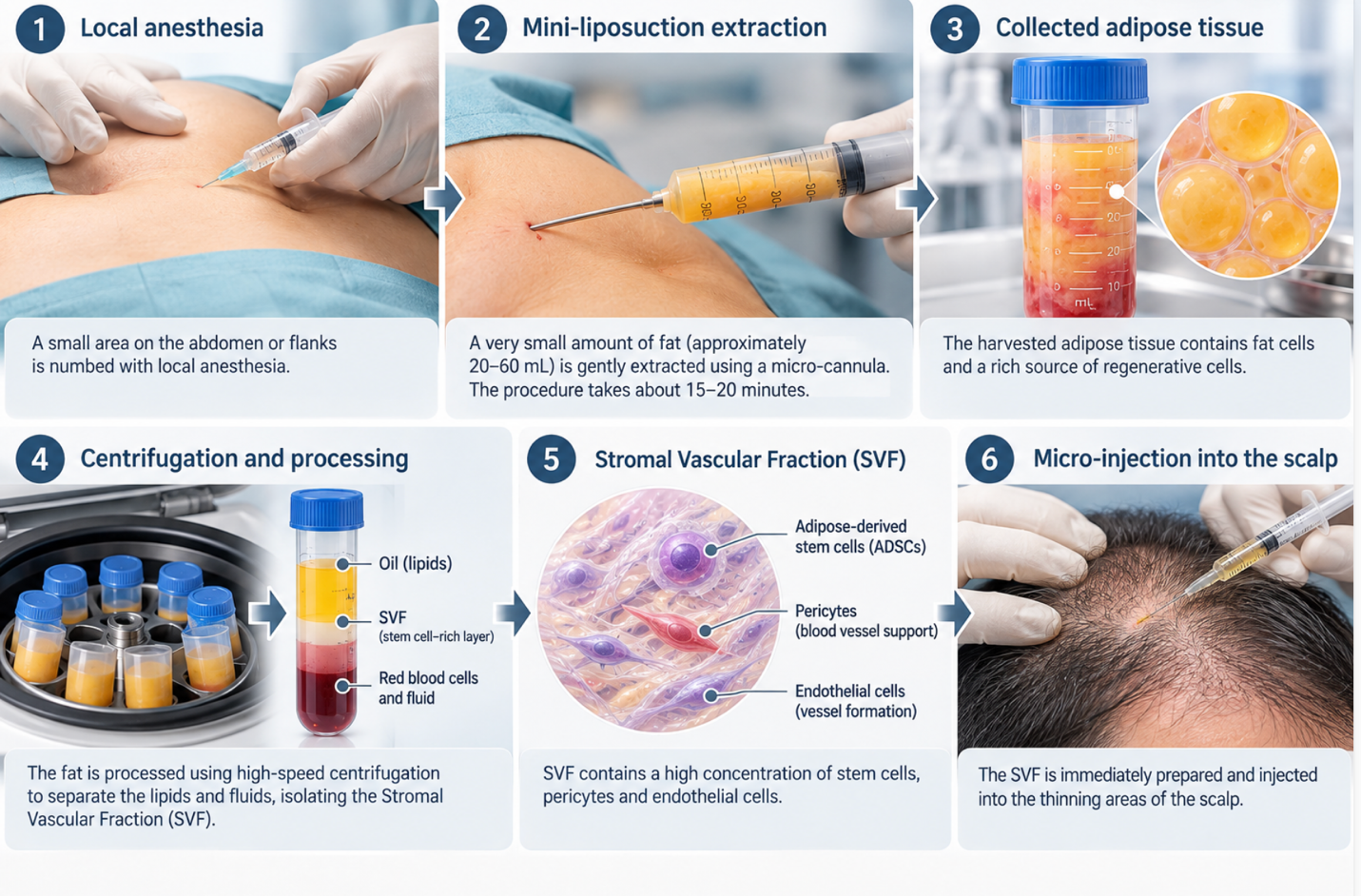
For patients evaluating the safety of stem cell treatments, this closed-loop, same-day protocol drastically minimizes contamination risks. You leave the clinic the same afternoon, equipped with a reactivated cellular matrix working immediately beneath your skin.
| 📌 If you’re interested in how to tell a well-regulated stem cell clinic from a risky one, we have an interesting article that discusses whether stem cell therapy is safe in Thailand, which you can read via the internal link. |
Combining autologous stem cells with PRP significantly accelerates hair regrowth timelines and increases graft survival rates (PubMed, 2021). A stem cell and PRP hair treatment utilizes this biological synergy to maximize follicle reactivation, creating a robust microenvironment meticulously tailored for rapid tissue repair.
To understand why combination therapy dominates current medical discussions, we need to introduce The ADSC-PRP Synergistic Matrix. Think of your dormant hair follicle as a garden that has suffered a severe, prolonged drought.
PRP provides an immediate influx of concentrated growth factors—specifically Platelet-Derived Growth Factor (PDGF), Transforming Growth Factor (TGF), and Epidermal Growth Factor (EGF). This acts as high-grade liquid fertilizer, offering an intense but short-lived burst of nutrients that forces localized blood flow. However, fertilizer alone won’t fix a barren field if the underlying biological infrastructure is dead.
That is exactly where the stem cells come in. ADSCs provide long-term structural regenerative capacity and critical immune modulation. They embed themselves into the scalp tissue, essentially acting as the seeds and the root system. They lay down new cellular architecture and sustain the paracrine signaling that the PRP initiates. When you combine these two therapies, the PRP growth factors trigger immediate metabolic activity, while the stem cells ensure that activity continues for months, rather than weeks.
Patients frequently ask: is PRP with stem cells better than PRP alone? The clinical data points to a resounding yes.
Standalone PRP has a frustrating tendency to plateau. Because platelets are highly unstable once activated outside the bloodstream, their biological signaling fades rapidly. An NIH analysis on platelet longevity confirms that unsupported PRP growth factors typically degrade within 14 to 21 days. This frustrating biological reality forces patients into an endless cycle of monthly maintenance injections just to maintain baseline results. Stem cells fix this retention problem completely.
A critical review of clinical data supporting the combination demonstrates that introducing autologous stem cells alongside PRP increases graft survival rates and drastically accelerates regrowth timelines. The embedded stem cells effectively anchor the PRP’s growth factors, providing a sustained release over several months. Additionally, dual-therapy protocols consistently yield thicker hair shaft calibers than isolated PRP injections ever could.
The logistics of this combination therapy are surprisingly manageable for patients traveling or working full-time. A standard clinical protocol begins with one major SVF session. This initial visit handles the fat extraction and the heavy lifting of cellular implantation across the scalp.
So, exactly how many sessions of PRP and stem cell hair treatment are required long-term? Most specialists recommend following up that primary SVF session with three to four standalone PRP maintenance sessions spaced approximately a month apart. This acts as a booster to the newly embedded stem cells.
Regarding PRP and stem cell hair treatment side effects, the safety profile remains excellent. Because clinicians use entirely autologous material (your own blood and fat), the risk of allergic reaction, cross-contamination, or tissue rejection is effectively zero. You can expect mild scalp tenderness, minor localized swelling, and perhaps slight bruising at the abdominal extraction site. These minor adverse events typically resolve completely within 48 to 72 hours.
To protect their investment, many patients ask how they can actively support the newly injected cells at home. The clinical answer is Low-Level Laser Therapy (LLLT). Advanced dermatological protocols frequently combine the in-clinic ADSC-PRP matrix with at-home photobiomodulation.
LLLT devices use specific light wavelengths typically in the 650nm range to penetrate the scalp tissue and stimulate the mitochondria within the dermal papilla cells. This focused light absorption significantly increases the production of Adenosine Triphosphate (ATP), the primary energy currency of your cells. When newly embedded stem cells are working relentlessly to rebuild vascular networks, they require massive amounts of cellular energy. Supplying ATP via regular LLLT sessions acts as an ongoing metabolic catalyst, ensuring the transplanted stem cells have the biological fuel required to maintain the active anagen growth phase.
Results from stem cell therapies typically become visible within 3 to 6 months, achieving peak density at 12 months (Clinical Observation). Regenerative hair therapies require specific patient suitability to achieve these optimal results, proving most effective for active thinning rather than complete baldness.
Who is an ideal candidate for a stem cell and PRP hair treatment? The answer lies entirely in the current state of your follicles. If you have a slick, completely bald scalp, regenerative medicine cannot help you. Dead follicles simply cannot be revived with growth factors, no matter how concentrated they are.
However, if you suffer from miniaturization where hairs become progressively thinner, wispy, and shorter you are right in the sweet spot. This makes stem cell treatment highly viable for conditions defined by follicular weakening. Likewise, stem cell therapy for alopecia areata shows massive investigational promise. Alopecia areata is an autoimmune condition where the body mistakenly attacks its own hair. Recent clinical trials on ADSCs for alopecia indicate that localized paracrine signaling successfully downregulates this rogue immune response. This targeted immune suppression offers an incredible advantage over taking systemic oral medications that can cause widespread bodily side effects.
| 📌 If you’re interested in how MSCs calm overactive immune cells throughout the body, we have an interesting article that discusses mesenchymal stem cell therapy for immune modulation, which you can read via the internal link. |
Yes, stem cell and PRP combinations are highly effective for female pattern hair loss, which typically presents as diffuse thinning across the mid-scalp and crown (measured on the Ludwig scale). Because women rarely experience the completely slick, localized bald spots that men do, they are often exceptionally poor candidates for surgical FUE transplants. Surgeons simply lack a dense enough donor area at the back of the scalp to harvest from.
Non-surgical cellular reactivation offers a primary alternative. The concentrated growth factors increase the hair shaft caliber and aggressively reactivate dormant follicles across the entire scalp without requiring surgical relocation. Results depend heavily on the patient’s underlying hormonal profile, particularly the balance of androgens and thyroid hormones. A comprehensive blood panel is usually required before proceeding, ensuring that no underlying endocrine disorders are blunting the regenerative response.
Patience is strictly non-negotiable here. A PRP and stem cell hair treatment results timeline operates on biological time, not cosmetic time. You won’t wake up a week later with a full head of hair.
During months 1 through 3, you won’t see dramatic visual changes because the cellular matrix is busy repairing the vascular network beneath the skin. However, you will likely notice a hard, sudden cessation of active shedding in the shower.
Between months 3 and 6, the real visual shifts begin. Existing miniaturized vellus hairs start transitioning back into robust, dark terminal hairs. By the 6-to-12-month mark, patients typically achieve peak density. A clinical reassessment at 6 months is standard practice. During this checkup, dermatologists utilize digital trichoscopy to objectively measure hair density, shaft caliber, and the ratio of anagen-to-telogen hairs. This provides quantifiable data to track your progress—such as a 15% increase in shaft diameter rather than relying solely on subjective, often misleading visual changes in the bathroom mirror.
Let’s address the persistent internet rumor regarding a definitive cure for baldness. Will you be able to take a pill and reverse your genetics entirely in the near future? No.
While regenerative therapies can substantially thicken hair and halt progression, a commercial, guaranteed “cure” remains scientifically unvalidated today. Massive strides are indeed happening in the research sector, however. The RIKEN laboratory’s breakthrough proved that lab-cultured stem cells could successfully produce cyclical hair regeneration in preclinical models. But translating isolated mouse models into widespread, FDA-approved human commercial application takes decades. Until then, stem cells regrow hair baldness treatment protocols serve as powerful, necessary management tools, not permanent genetic rewrites.
Stem cell pretreatment increases FUE graft survival rates by up to 15%, while independently reactivating existing miniaturized follicles (Mayo Clinic, 2023). Choosing between these therapies depends entirely on the severity of your follicular depletion.
When comparing a Stem Cell Hair Transplant vs FUE, you must understand the mechanical distinction. FUE is a surgical relocation project. A surgeon extracts DHT-resistant hair follicles from the back of your head (the donor area) and physically implants them into the bald zones. It is highly effective for advanced hair loss, but it does absolutely nothing to stop the progression of your native hair dying off behind the transplant line. A comprehensive review of FUE donor site harvesting techniques published in the National Library of Medicine highlights a critical surgical limitation: over-harvesting the donor area can lead to permanent thinning at the back of the scalp.
Conversely, stem cell therapy focuses on cellular reactivation. It restarts healthy cycles in the hair you already have, sidestepping donor depletion entirely. Interestingly, the Mayo Clinic’s overview highlights that these treatments don’t have to be mutually exclusive. Many elite surgeons now use SVF injections as a pretreatment before FUE to boost graft survival and minimize surgical “shock loss” a phenomenon where trauma from the surgery causes native hairs to temporarily fall out. By optimizing the scalp tissue with growth factors prior to surgery, the newly implanted grafts anchor successfully.
To facilitate clinical decision-making, patients must strictly weigh the logistical and financial parameters of both approaches before committing.
| Procedure Type | Ideal For | Recovery Time | Scarring Risk | Relative Cost |
| Stem Cell + PRP Therapy | Diffuse thinning, early alopecia, female pattern loss | 1-2 days (Outpatient) | Near zero | Moderate (~$2.5k – $5k) |
| FUE Hair Transplant | Advanced baldness, slick bald areas, receding hairlines | 10-14 days (Surgical) | Micro-scarring at donor site | High (~$4k – $15k+) |
The stem cell vs fue differences become incredibly stark when looking at downtime. FUE requires weeks of careful recovery, sleeping upright, and hiding scabs from coworkers. Stem cell injections allow a virtually immediate return to normal activities.
Keep in mind that the PRP and stem cell hair treatment cost in Bangkok sits at the lower end of that matrix, offering a significant arbitrage opportunity for medical tourists compared to Western clinical pricing.
FDA guidelines classify adipose-derived cell treatments for hair loss as off-label, requiring rigorous clinical screening to prevent adverse events (FDA, 2023). No medical intervention is flawless, and regenerative therapies come with strict clinical boundaries.
The greatest pitfall in regenerative medicine is misaligned expectations. Marketing brochures sell miracles, but the biology always obeys strict rules.
First, expecting robust growth in completely slick, bald areas will always end in disappointment. Once true follicular death occurs, cellular signaling has nothing to act upon. Second, patients must understand the regulatory environment. According to FDA regulatory warnings, utilizing fat-derived cells for hair restoration is classified as off-label use. While autologous safety profiles are phenomenally high, the efficacy is still heavily dependent on the skill of the processing laboratory.
There are distinct scenarios where stem cell therapy is simply the wrong choice. If you are a male patient sitting at a Norwood 6 or 7 classification with a completely bald crown and deeply recessed hairline skip the injections entirely. You need an FUE surgery to physically relocate healthy follicles. Furthermore, patients with severe scarring alopecias, where the hair follicles have been permanently replaced by scar tissue, will see zero benefit from stem cell injections because the biological structures required for regeneration are entirely gone.
Similarly, if your hair loss stems from untreated underlying medical conditions, such as severe thyroid dysfunction (Hashimoto’s) or profound iron deficiency anemia, localized scalp injections won’t fix a systemic biological failure. A dermatologist will typically order a comprehensive blood panel checking ferritin, Vitamin D, and full thyroid function. If these markers are severely out of range, you need an endocrinologist to stabilize your internal chemistry, not a regenerative scalp injection.
Sudden, patchy, or highly inflamed hair loss requires an immediate medical workup. If your scalp is burning, heavily scaling, or shedding in massive clumps overnight, do not book a stem cell consultation.
These symptoms point directly to scarring alopecias (like Lichen Planopilaris) or severe systemic diseases. The American Academy of Dermatology mandates that active scarring conditions require aggressive corticosteroid or immunosuppressive management to prevent permanent tissue destruction. Regenerative therapies can only be considered once the active disease state is clinically neutralized. Always allow a board-certified specialist to rule out systemic disease before attempting any regenerative interventions.
Most clinical protocols require one primary stem cell extraction session followed by three to four PRP maintenance sessions. This timeframe varies based on the severity of follicular miniaturization and your individual biological response. Ongoing annual PRP boosters are subsequently recommended to maintain peak density.
Stem cell therapies show significant investigational promise for alopecia areata due to their immunomodulatory properties. The paracrine signaling from adipose-derived cells actively helps suppress local follicular inflammation. Clinical observations indicate improved hair density in localized patches when compared directly to standard corticosteroid injections. However, because alopecia areata is an autoimmune condition, systemic treatment may also be required concurrently. Patients should consult a board-certified dermatologist for a comprehensive diagnostic assessment, as localized injections alone cannot cure a systemic immune response.
The most common side effects are mild scalp tenderness, temporary swelling, and minor bruising at the injection or extraction sites. Because both the stem cells and the PRP are entirely autologous, the risk of allergic reaction or tissue rejection is exceptionally low. The mini-liposuction site may experience soreness for a few days, but this is highly manageable with standard over-the-counter pain relief. Patients must always ensure the procedure is performed by a board-certified clinician in a sterile medical environment.
The cost of combined PRP and stem cell hair treatments in Bangkok ranges from $2,500 to $5,000 USD, according to international pricing data (Medical Tourism Index, 2024). This represents a significant cost reduction compared to equivalent cellular therapies in North America or Europe. Pricing fluctuates based on the number of required PRP maintenance sessions and the specific clinic’s laboratory standards. It is important to factor in travel and accommodation when calculating the total investment. Patients should request a personalized clinical assessment for exact pricing based on their specific graft requirements.
For patients experiencing early-stage thinning or alopecia areata, a combined stem cell and PRP hair treatment delivers targeted biological reactivation. Clinical data indicates this combination accelerates regrowth timelines and graft survival compared to monotherapy (PubMed, 2021). The best approach combines autologous adipose-derived cells with concentrated platelets to build a highly sustainable scalp microenvironment.
Embracing The ADSC-PRP Synergistic Matrix fundamentally shifts how we treat follicular decline. Rather than jumping prematurely into invasive surgical transplants, this biological synergy allows patients to rehabilitate their native hair. It maximizes growth factor retention, limits clinical downtime, and provides a scientifically grounded bridge between over-the-counter serums and major surgery.
Your next step requires an objective medical evaluation of your scalp tissue. Schedule a clinical suitability assessment with a board-certified regenerative specialist today, and book your consultation to determine if autologous cellular therapy aligns with your functional goals.