Our Services
Others
- DFPP
- Shockwave
- IV Drip

Rheumatoid Arthritis (RA) is a chronic and severe systemic disease that is autoimmunological in nature and predominately impacts the joints via synovial inflammation. There is damage to the joints and soft tissue that is progressive and results in permanent disability of the affected person and excruciating pain. It has a substantial effect on the activities of daily living and will often lead to permanent deformity of the affected person’s joints, taking away their independence. There is a constant struggle to balance systemic inflammation and joint mobility. A systemic review of the scientific literature demonstrates that advanced regenerative medicine is the most pressing need of the hour to cater for the immune system and the damaged connective tissues. Therapeutics that alter the course of the disease rather than masking the symptoms are of great interest. Cellular based therapies like UC-MSCs with the potential of disease modification are of great interest at a stem cell clinic Bangkok to achieve prolonged period of remission.
The treatment modalities that are available for Rheumatoid Arthritis at this time are a combination of NSAIDs, traditional DMARDs, and new biological therapies. The current staple therapies, leflunomide, methotrexate and TNF-alpha inhibitors only provide temporary relief for the suppression of the affected pathways, unlike UC-MSCs. There are considerable disadvantages of these therapies, which is why many patients seek alternative options at a stem cell clinic Bangkok.The chronic systemic use of these medications for Rheumatoid Arthritis brings numerous effects such as severe damage to the gastrointestinal tract, liver, and kidneys, as well as opportunistic infections due to suppression of the immune system. Moreover, these medications do not stop the deterioration of cartilage and do not help in the formation of new bone. Most patients develop a form of treatment resistance to the conventional medications and suffer severe flare ups of their disease when the medications are stopped. This has led to an intensive search for advanced cellular therapies utilizing UC-MSCs to overcome this therapeutic dead end, an approach often pioneered by a stem cell clinic Bangkok.
A recent review of prospective clinical trials, similar to the evaluations done at a stem cell clinic Bangkok, has provided additional evidence to support the use of UC-MSCs to treat autoimmune destruction of the joints in Rheumatoid Arthritis. One of the long-term studies described the clinical outcomes of a severely affected male patient aged 68 years. The patient had deformity and swelling of the joints and severe pain. Before the treatment, the patient had severe stiffness and collapsed structures of the hands. One study document total clinical remission of Rheumatoid Arthritis after six months for a patient treated with an infusion of UC-MSCs and personalized low-dose disease-modifying anti-rheumatic drug combination, a protocol often mirrored at a stem cell clinic Bangkok. During the three years of continual evaluation, the patient showed remarkable improvement, including recovery of structural joint deformity, softening of rheumatic nodules, and the ability to exercise freely, all without anti-rheumatic medications. Another patient, a 33-year old female, had dramatic improvement of her severe, debilitating, morning joint stiffness and swelling, by one week post treatment. By the third year of treatment and observation, this patient had complete resolution of joint swelling, allowing her to lead a very active lifestyle. These clinical observations attest to the impressive capability of advanced regenerative therapies.
Therapeutic UC-MSCs utilized at a stem cell clinic Bangkok are designed with complex mechanisms and immunomodulatory and paracrine capabilities. At the most primitive level, Rheumatoid Arthritis is characterized by the erroneous activation of fibroblast-like synoviocytes and highly aggressive autoreactive T-lymphocytes. These fibroblast-like synoviocytes contribute to the formation of harmful pannus while secreting matrix metalloproteinases 9, which cleave articular cartilage. UC-MSCs inhibit synoviocyte activity and expression of matrix metalloproteinase 9, via an intense local response. This response is characterized by the local secretion of indoleamine 2,3-dioxygenase, TGF-β1, and IL–10. The focus of UC-MSCs is to inhibit the harmful activities of these synoviocytes and to protect the tissue from further damage due to these harmful factors. At the same time UC-MSCs are changing the tissue environment as observed by specialists at a stem cell clinic Bangkok, they are inducing a significant and coordinated change in the cellular components of the host’s adaptive immune system in Rheumatoid Arthritis. They have ways of controlling T helper 1 and T helper 17 cells which secrete damaging cytokines, interferon-gamma and interleukin 17. UC-MSCs achieve a control state of T cell hyporesponsiveness through the release of prostaglandin E2, nitric oxide, and transforming growth factor-beta 1. A major benefit of this therapy, often highlighted by a stem cell clinic Bangkok, is the enhancement of the patient’s immune system to produce a large number of CD4+ Foxp3+ regulatory T cells. These regulatory T cells are vital to recovering natural immune tolerance to stop the immune system from damaging the synovial tissues in Rheumatoid Arthritis. A comprehensive review shows this therapy creates a positive shift in the immune system away from harmful inflammatory M1 macrophages to beneficial anti-inflammatory M2 macrophages. It effectively halts the spread of inflammation in the body and creates an environment suitable for the restoration of tissues.
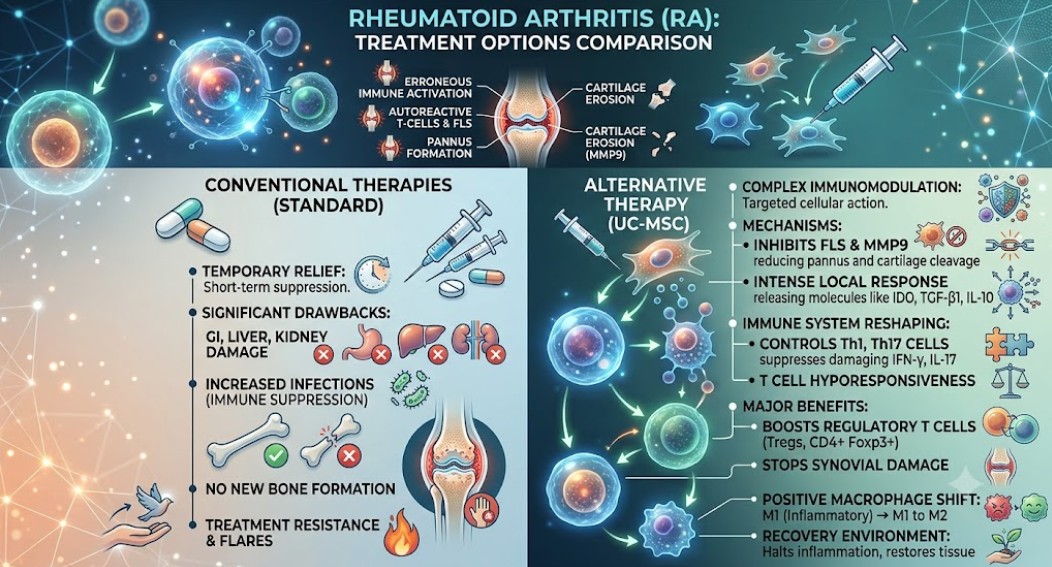
Figure 1: Standard Care vs. Cellular Therapy for Rheumatoid Arthritis
The future of regenerative medicine in Southeast Asia is bright and Thailand is likely to be a major new center of biomedical research. A leading stem cell clinic Bangkok is integrating high-quality research lab work and clinical care. Transitioning from broad, conventional, and chronic autoimmune condition management of Rheumatoid Arthritis to active restoration of the immune system using UC-MSCs is a major breakthrough in modern medicine. Future research will certainly study the optimization of various cell culture conditions, the advancement of targeting mechanisms, and the standardization of treatment protocols throughout various healthcare institutions. A stem cell clinic Bangkok offers patients the first and most dependable opportunity to receive these therapies when optimizing regenerative therapies. While the scientific community studies and conducts a continuous review of the cellular treatment protocols for UC-MSCs, the integration of regenerative medicine will change the standard of care of chronic debilitating autoimmune diseases like Rheumatoid Arthritis.