

Stem cell therapy has attracted worldwide interest as a novel approach in regenerative medicine for numerous ailments. One of the most frequently asked queries patients ask is: Why stem cell therapy in Thailand tends to be very cost effective compared to other countries and can results still be on par with the best?
Popularly known as an international Medical Destination, Thailand is particularly renowned for regenerative medicine. All of the above has gained it a good reputation in recent times due to its cost efficiency, clinical infrastructure and integrated patient care. Patients contemplating foreign treatment must grasp pricing disparities and controlling factors behind different results.
Why Stem Cell Therapy in Thailand Is More Affordable
Another main reason stem cell therapy in Thailand is way more affordable has to do with global healthcare economics as opposed to inferior quality.
There are a number of important reasons for this:
- Lower operational costs
- Financing clinical operations, staffing and facilities are usually significantly lower than in the Western countries.
- Reduced administrative overhead
- Some countries have healthcare systems that cost more in insurance and regulatory costs (which contribute to treatment costs).
- Local laboratory infrastructure
- Regional cell processing or in-house facilities eliminate reliance on outside biological products.
- Medical tourism ecosystem
With a robust infrastructure catering to foreign patients, logistics are easier and cost-effective in Thailand.
- Cost of living differences
- Its a fraction of the price as far as Accommodation, transport and recovery costs compared to places like America or parts of Europe.
Importantly, affordability does not mean lower standards, it is reflective of different economic structure.
Clinical Infrastructure and Medical Expertise
In the last few decades, Thailand has poured a large amount of resources into healthcare infrastructure and biotechnology. Many care closer to modern facilities and multidisciplinary teams.
Key strengths include:
- Humanized access to niche regenerative medicine programs
- Clinician and laboratory team collaboration
- Experience in managing international patients
- Combining treatment with rehabilitation and follow-up care
These contribute to create a frame treatment environment, which is necessary for patient security and stability.
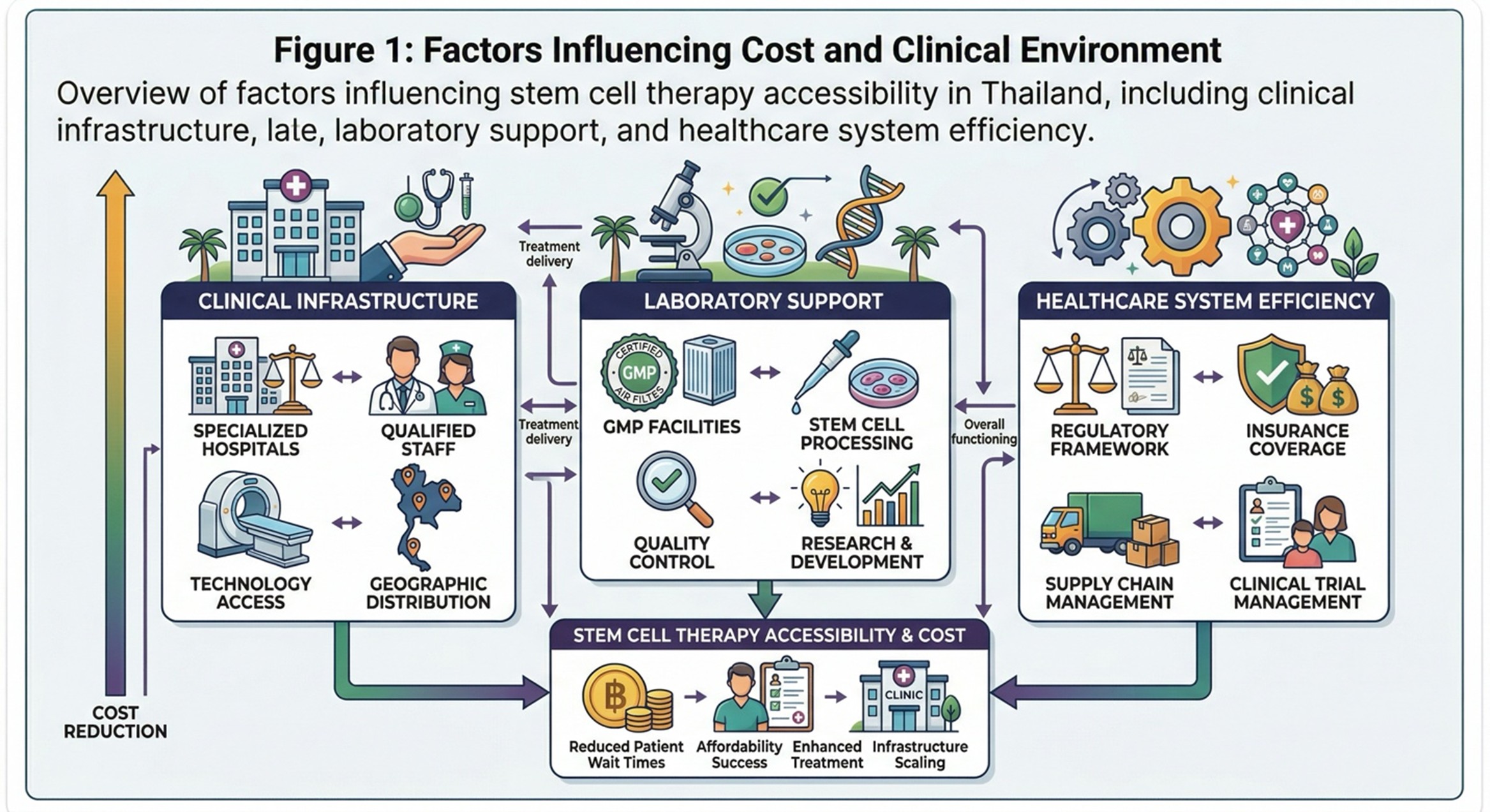
Overview of factors influencing stem cell therapy accessibility in Thailand, including clinical infrastructure, laboratory support, and healthcare system efficiency.
What Influences Treatment Outcomes
Treatment outcomes depend on many factors besides location, and although cost is an important consideration across all medical specialties, there are some significant differences in treatments between countries.
There are several key factors that can impact the outcomes:
- Patient condition and disease stage : Early-stage diseases may respond differently than advanced cases.
- Treatment protocol and personalization :Tailored approaches based on individual health profiles are often more effective than standardized protocols.
- Cell quality and handling processes : The laboratory standards, viability, and quality control are very important.
- Combination with supportive therapies : Rehabilitation, nutrition and follow-up care can all affect overall outcomes.
- Patient adherence and long-term care : Results require active management and long-term commitment.
There is no treatment that will work for everyone, and results may vary from patient to patient.
Why Patients Consider Thailand
In the end, many patients select Thailand for treatment not just because of cost but also for a holistic approach to therapy.
Common considerations include:
- Setup of a formal structure to ensure access to advanced therapies
- Care coordination from consultation to recovery
- Less waiting time than some healthcare systems
- Environment supportive of recovery with medical treatment
For many patients, the choice is one of value rather than cost alone weighing affordability against access to comprehensive care.
Conclusion
Stem cell therapy in Thailand is generally more cost-effective because of the variety in health economics, operational expenditure, and medical tourism ecosystem. This lower cost doesn’t indicate less quality, just a better working process.
Conversely, the success of treatments is affected by several elements like patient status, treatment strategy as well as clinical benchmarks. Although stem cell therapy is still an emerging industry, Thailand has established itself as a hub for affordable and organized regenerative treatment.
For patients themselves the imperative is to be well informed while assessing both medical and practical factors, with realistic expectations about outcome, keeping a broad view on what constitutes quality of care.