Our Services
Others
- DFPP
- Shockwave
- IV Drip

Kidney disease is one of the heaviest health burdens facing the world today, affecting millions of people and often progressing into serious complications like Chronic Kidney Disease (CKD) and End-Stage Renal Disease (ESRD). Traditional treatment has largely focused on slowing disease progression, managing symptoms, or replacing kidney function altogether through dialysis or transplantation. What these approaches don’t do is address the actual root cause of the damage, or encourage lost tissue to regenerate.
Over the past several years, UC-MSC therapy (Umbilical Cord-derived Mesenchymal Stem Cell therapy) has started to look like it could meaningfully shift how kidney disease is managed. These cells bring tissue-regenerating properties, strong anti-inflammatory effects, and immune-modulating capabilities and both preclinical research and early clinical trials have been reporting encouraging, consistent results.
Mesenchymal Stem Cells (MSCs) are progenitor cells capable of transforming into several tissue types bone, fat, or connective tissue among them. When sourced from umbilical cord tissue specifically, these cells show a higher capacity to divide and stronger immune-modulating properties compared to stem cells from other sources.
UC-MSCs can be administered to patients in several ways intravenous infusion, local injection, or even during a kidney transplant procedure with the aim of stimulating tissue repair while simultaneously rebalancing the immune response.
In the context of kidney disease, the main goal of UC-MSC therapy is to restore a delicate balance within the kidney’s internal environment. Kidney damage is typically accompanied by chronic inflammation, fibrosis, and oxidative stress all three of which gradually destroy nephrons, the microscopic filtering units that are the kidney’s core functional component. UC-MSCs work against these destructive processes by secreting bioactive molecules that promote repair, regulate immune reactions, and improve the survival rate of remaining kidney cells.
Multiple clinical trials have shown UC-MSCs to be safe and practically feasible for patients with advanced kidney conditions, including those awaiting or recovering from transplantation. When used alongside standard immunosuppressive medication, UC-MSCs have been associated with better graft tolerance, reduced inflammation, and improved long-term kidney function.
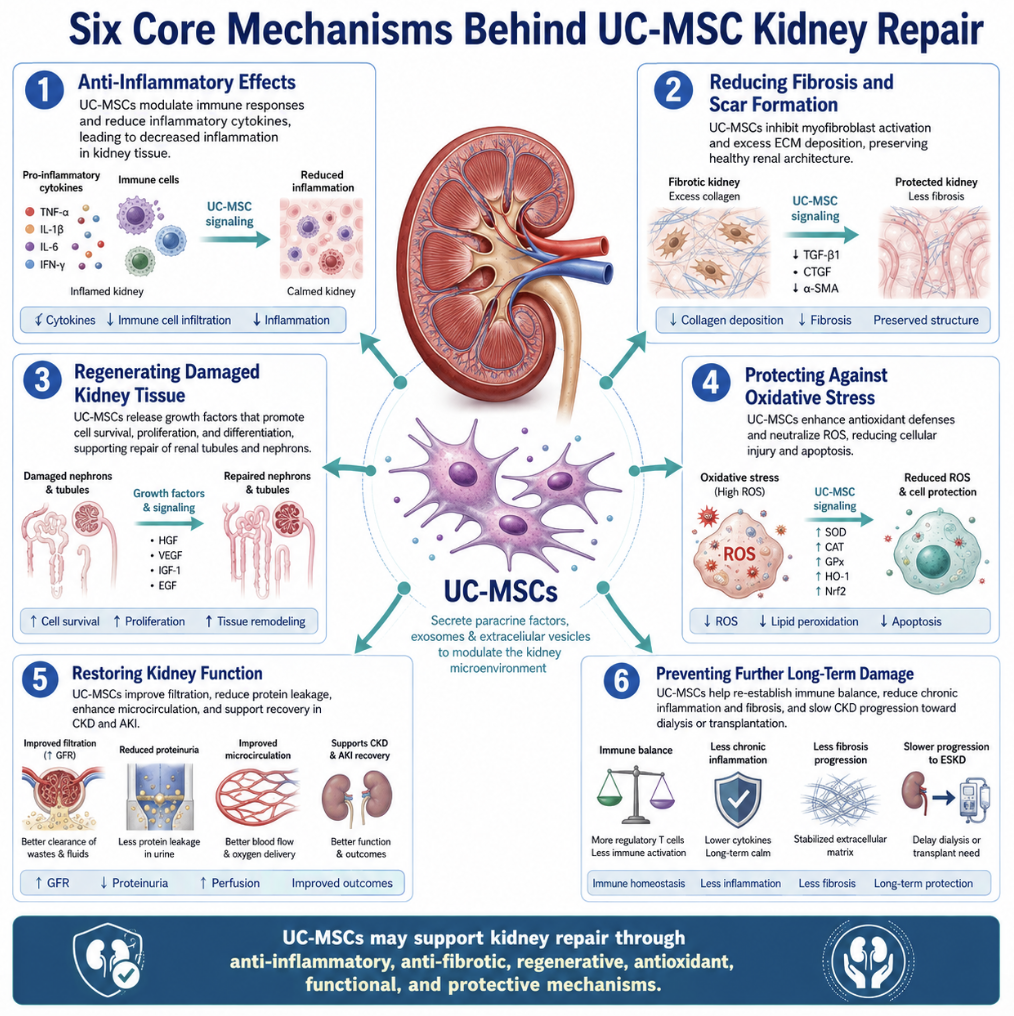
Inflammation is a central driver of both acute kidney injury and chronic kidney disease, contributing to tissue damage and progressive fibrosis. UC-MSCs exert anti-inflammatory effects by modulating immune system activity secreting cytokines that suppress excessive immune reactions, calming inflammation within the kidney, and preventing further tissue destruction.
UC-MSCs also encourage a shift in immune cell behavior, promoting the development of regulatory T cells while reducing the activity of pro-inflammatory cells. This rebalancing helps protect remaining kidney structures and creates an environment more conducive to healing.
Fibrosis is the gradual buildup of scar tissue that replaces healthy kidney cells over time. Once fibrosis takes hold, kidney function tends to decline quickly. UC-MSCs can inhibit this process by regulating fibroblast activity and preventing excessive collagen deposition, which helps slow the progression of scarring and preserve normal tissue architecture.
UC-MSCs stimulate the proliferation of existing kidney cells and help restore damaged structures. While UC-MSCs don’t permanently transform into kidney cells themselves, they enhance the organ’s natural repair capacity through signaling molecules and growth factors. These factors activate local stem cells and encourage tissue remodeling, gradually improving the kidney’s ability to filter blood and clear waste.
Oxidative stress results from an excess of reactive oxygen species (ROS) in tissue. UC-MSCs secrete antioxidants and protective enzymes that neutralize ROS, preventing cellular damage and cell death. By maintaining a healthier oxidative balance, they improve the survival and function of remaining kidney cells and support the overall healing process.
Patients with CKD or Acute Kidney Injury (AKI) typically show a decline in glomerular filtration rate (GFR) and increased protein leakage into the urine both signs of impaired kidney function. UC-MSC therapy has shown some ability to improve these parameters by reducing inflammation, promoting regeneration, and restoring normal microcirculation within the kidney.
Beyond repair, UC-MSCs may also offer long-term protective benefits. By stabilizing immune function and reducing chronic inflammation, they may help prevent kidney disease from progressing further and delay the need for dialysis or transplantation
In AKI, the kidneys lose function suddenly, often due to toxins, infection, or restricted blood flow. UC-MSC therapy for acute kidney injury may help accelerate recovery by reducing inflammation, minimizing cell death, and promoting tissue repair.
In CKD, damage accumulates slowly over time, gradually eroding kidney function. UC-MSC therapy for chronic kidney disease may help slow that progression by reducing fibrosis, restoring blood flow within the kidney, and supporting cellular-level repair.
For patients in the advanced stages of kidney failure, UC-MSCs may be used as a supportive treatment alongside dialysis or transplantation, potentially improving quality of life and reducing complications related to rejection or inflammation.
UC-MSCs following kidney transplantation may help lower the risk of graft rejection by modulating the immune response, improving graft tolerance, and potentially reducing the required dose of immunosuppressive drugs. Some case studies have reported patients receiving UC-MSCs post-transplant showing better kidney function and fewer immune-related complications.
One question patients often ask is why choose stem cells from umbilical cord tissue over cells sourced from bone marrow or adipose (fat) tissue.
Umbilical cord-derived mesenchymal cells offer several advantages compared to other sources. They’re “younger” cells, collected without any invasive procedure on the donor, and show a higher capacity for both proliferation and differentiation. UC-MSCs also carry fewer ethical concerns and a lower risk of immune rejection, thanks to their low immunogenicity. Their naturally abundant supply of growth factors and cytokines makes them well-suited to regenerative medicine applications, kidney repair included.
UC-MSC therapy opens up a genuinely notable frontier in kidney disease treatment. By reducing inflammation, inhibiting fibrosis, countering oxidative stress, and promoting tissue regeneration, this approach targets the root mechanisms behind kidney decline directly. Whether used to treat chronic kidney disease, acute injury, or as a supportive therapy alongside kidney transplantation, UC-MSCs continue to show meaningful therapeutic potential.
Early results across several studies are encouraging, and with Thailand’s growing investment in regenerative medicine and increasingly sophisticated clinical facilities, UC-MSC therapy for kidney disease may soon become an important part of comprehensive kidney care offering renewed hope for patients looking for options beyond dialysis and conventional medication.
That said, it’s worth remembering this treatment is still under active research. Patients should always consult a nephrologist before making any decision to pursue treatment.
This article is for informational purposes only and does not constitute medical advice. Anyone considering cellular therapy for kidney disease should consult both a nephrologist and the treating clinic directly regarding candidacy, risks, and expected outcomes.