

UC-MSC stem cell therapy is a potential treatment in the area of Immune Thrombocytopenia (ITP) which is an autoimmune disease, where the immune system attacks against platelets resulting into low platelet counts and increased risk of bleeding. Moreover it is known that current treatments like steroids, immunosuppressants and splenectomy may help with managing the problem but also come with lot of side effects and are not always effective in achieving long term remission. What the use of UC-MSC treatment in this case advocates is a novel approach that addresses the root of immunologic dysfunction in ITP.
Below is an overview of how UC-MSC stem cell therapy may benefit this population in the following ways:
Modulation of the Immune System
- The cause of ITP is an overreactive immune response that mistakenly targets and destroys platelets with antibodies. UC-MSC stem cell therapy secrete immunomodulatory agents to help rebalance the immune system.
- UC-MSC stem cell therapy might also inhibit the destruction of platelets by stimulating the expansion of its progenitor cells through inhibition of autoreactive T and B cell hyperactivity leading to activated Tregs.
Inflammation Reduction
- In ITP, inflammatory cytokines play a major role in the breakdown of platelets. In order to promote the settings for platelet survival, UC-MSC stem cell therapy secrete anti-inflammatory factors that help decrease inflammation within the environment.
- Reducing inflammation leads both to greater platelet stability and numbers by decreasing production of harmful antibodies that destroy platelets.
Bone Marrow Support and Regeneration
- A subgroup of patients with ITP have involvement of bone marrow as part of autoimmunity or side effects of drugs. Due to their regenerative capabilities, UC-MSC stem cell therapy may contribute to a healthy bone marrow microenvironment through stimulating the production and maturation of platelets and other blood cells.
- Gradually (in a month or two), UC-MSC stem cell therapy may increase platelet levels through the secretion of growth factors that foster tissue healing and provide a good environment for blood cell production in bone marrow.
Fading need for traditional treatment
- Corticosteroids and immunosuppressive agents, well known therapies for ITP, can have severe adverse events like hepatic impairment, osteoporosis or increased risk of infection. UC-MSC stem cell therapy, a naturally modulating immune strategy may reduce the need for long-term drugs.
- UC-MSC stem cell therapy could serve as a long-lasting, safer and effective solution for patients who had poor response to standard therapies.
Minimal Immune Rejection Risk
- UC-MSC stem cell therapy have a very low immunogenicity and least likely to induce an immune reaction. Thus, they are ideal for use in autoimmune diseases like ITP when it is crucial to prevent immune responses that could lead to further platelet destruction.
- UC-MSC stem cell therapy are ethically sourced from umbilical cord tissue, making them accessible and easily obtainable as well as having a good safety record, which could potentially make for an affordable therapeutic.
Benefits of UC-MSC Therapy for Increased Platelet Counts in ITP:
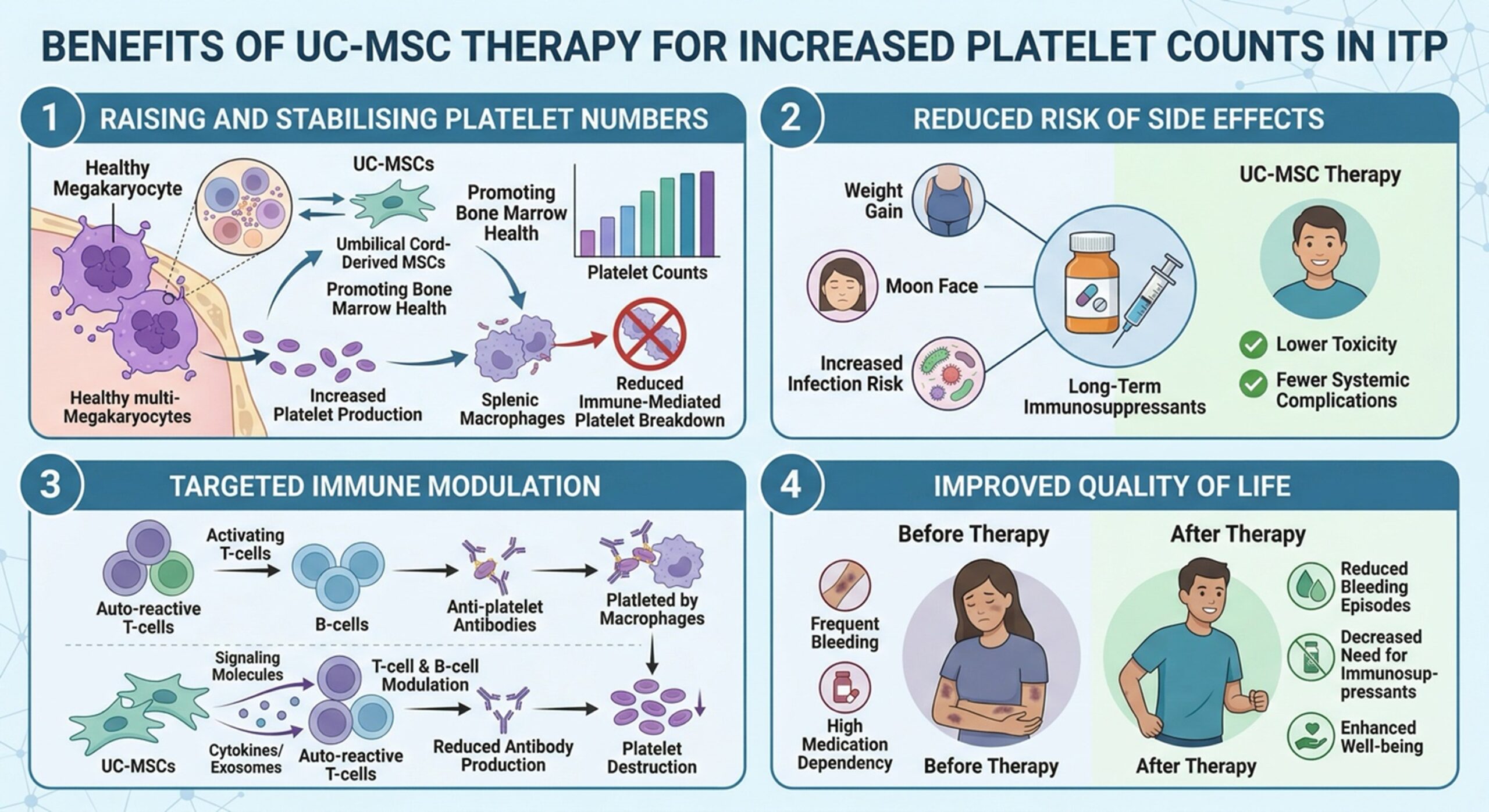
- UC-MSC stem cell therapy aids platelet increase and stabilization via promoting bone marrow health as well as reducing immune mediate breakdown.
- Lowered Side Effect Risk: Compared to long-term immunosuppressive medications, UC-MSC stem cell therapy may offer a safer alternative.
- Specific Immune Modulation: UC-MSC stem cell therapy offer a specific approach to ITP therapy by selectively modulating the immune cells responsible for platelet destruction.
- Enhanced Quality of Life: UC-MSC stem cell therapy can potentially benefit ITP patients, as it may lessen the number of bleeding episodes and their use of immune-suppressing medications.
In conclusion
UC-MSC stem cell therapy represents a new promising option for ITP in targeting the immunological dysregulation leading to low platelets. The potential for UC-MSC stem cell therapy to modulate immune responses, decrease inflammation and enhance bone marrow function may lead them to allow long-term relief from symptoms in patients who are less reliant on traditional drugs, potentially leading to more stable outcomes over the long haul. Although further studies are needed to establish a uniform protocol, UC-MSC stem cell therapy could be an effective option for patients with ITP.