

Long-lasting hair loss improvements hinge more than ever on more than oily scalp gunk. Now in present-day regenerative trichology, alopecia has been perceived as an aberrancy in the follicular microenvironment, wherein growth-supportive signaling systems deteriorate. Instead of treating hair thinning as just a cosmetic problem, new studies characterize it as an organic regression in dermal papilla function, stem-cell support and vascular supply and immune equilibrium in the scalp. In this context, umbilical cord-derived mesenchymal stem cells (UC-MSCs) have emerged as important cellular candidates to promote the recovery of follicular health due to their immunomodulatory and trophic signaling capabilities. While these cells are being combined inside the specialized regenerative clinics in Thailand into a specific program intended to reactivate the biological process of healthier hair cycling.
- Biological Basis of Follicular Regression
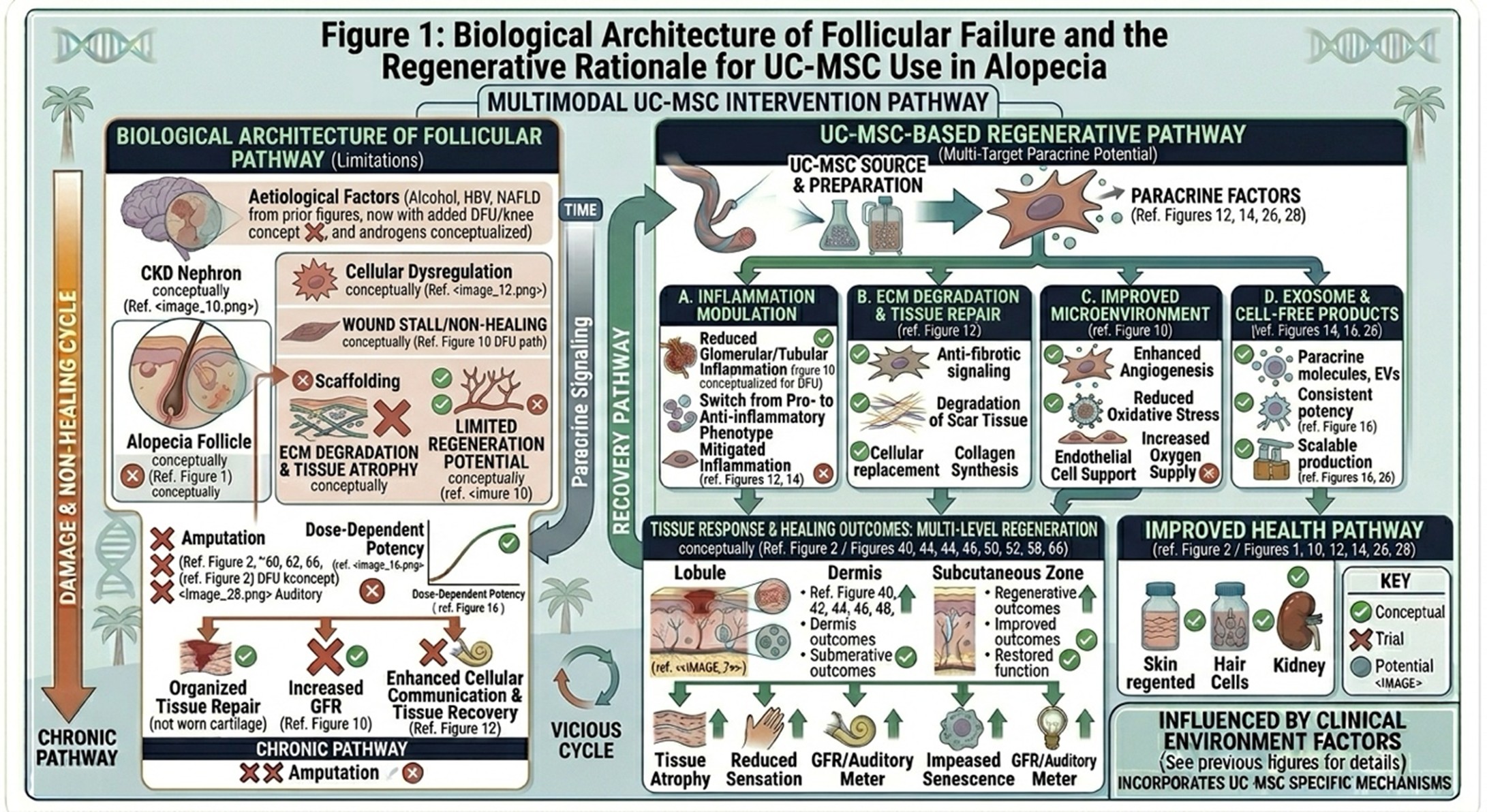
Alopecia is not just the obvious loss of hair shafts. At the tissue level, follicles miniaturize gradually, with each successive hair cycle becoming shorter and less productive. In androgen-sensitive types of alopecia, the hormone DHT can induce this decrease by triggering inflammatory and remodeling signals to the scalp landscape. Over time, this could compromise the supportive niche surrounding the follicle and diminish the activity of cells required for continued regeneration. With progression of disease, the scalp micropiloscopy could become increasingly less ideal for regulating of normal hair cycling due to cumulative perifollicular fibrosis, reduced vascular support, or decreased biochemical communication in each follicle as a unit. In this environment, neighboring cells may stop receiving the signals they need to return to a vigorous growth phase. This also helps explain why conventional therapies that mainly target hormonal pathways may not adequately reverse structural and microenvironmental deterioration. In contrast, UC-MSC-based strategies can deliver bioactive cues and hence are under consideration for establishing local regenerative niches.
- Regenerative Relevance of UC-MSCs in Hair Biology
UC-MSCs are particularly interesting for regenerative hair medicine because cells harvested from newborns have been suggested to retain potent proliferative and signaling capacity. These cells are often considered to have a more active secretory profile and lower biological age than many of the adult-derived cell sources. No wonder the practical aspect gained traction focusing on their utility as an adjunctive therapeutic tool in diseases caused by impaired tissue repair signaling.
The translational application of UC-MSCs in regenerative clinics in Thailand is commonly associated not only with the cells, themselves but also the method they are processed and characterized prior to preservation for therapeutic use. The goal is to keep them viable and secretory, so they can secrete trophic signals into the scalp milieu. This is particularly relevant in the context of alopecia because hair restoration, potentially, could benefit to a great extent from restoring a biologically favorable niche instead of simply inhibiting one specific pathway.
- Signaling Reactivation and Follicular Re-Entry into Growth
Among molecular pathways in hair regeneration, the Wnt/beta-catenin signaling axis has been most extensively discussed and plays prominent roles in both activation of follicles and induction into the anagen or active-growth phase (Caldero et al., 2022). Like a sunburn, but on the other side of that network, this signaling may become inactive when scalp tissue begins to thin or age —again leading to lowered follicular output and thus weaker hair as well.
UC-MSCs have been found capable of releasing a slew of signaling agents which could potentially reactivate quiescent processes in follicles. Through paracrine signaling, these cells might regulate dermal papilla dynamics and induce supportive microenvironments for hair-cycle re-entry. The hope, with respect to the regeneration goal, is not just hair shafts growing, but a more functional follicular unit that can produce thicker, better terminal hairs longer term. This molecular reactivation is still one of the key concepts driving advanced cell-based therapies to alopecia.
- Immunological Modulation of the Scalp Environment
The hair loss of many patients is not purely hormonal, but due to inflammatory and immune-related processes that exert stress at the level of hair follicles. And activated immune cells and inflammatory mediators in the scalp also create a hostile local environment that hinders nutrient delivery, disrupts cell signaling and leads to prolonged dysfunction of hair follicles. When this happens chronically, follicles linger in dysfunctional states and never fully regain their normal cycling behavior.
UC-MSCs have great interest, particularly due to their immunomodulatory profile. Instead of just being passive support cells, these release mediators that likely help tilt tissue conditions away from chronic inflammation and towards one of tighter regulation. This is significant in the context of regenerative care for alopecia as recovery of follicular performance may depend not merely on growth stimulation but also the reduction in inflammatory burden around the follicle. So, in that respect, immune recalibration of the scalp is considered to be such an integral factor for durable regenerative support.
- Vascular Repair and Restoration of Follicular Support
Healthy follicles need adequate oxygen, nutrition and metabolic support, all of which depends on a microvascular network surrounding them. In progressive alopecia, diminished capillary density may occur with follicular miniaturization as well, thus further compromising the scalp’s capacity to support active growth. As such, without adequate vascular input, even follicles that are architecturally present may not be biologically competent.
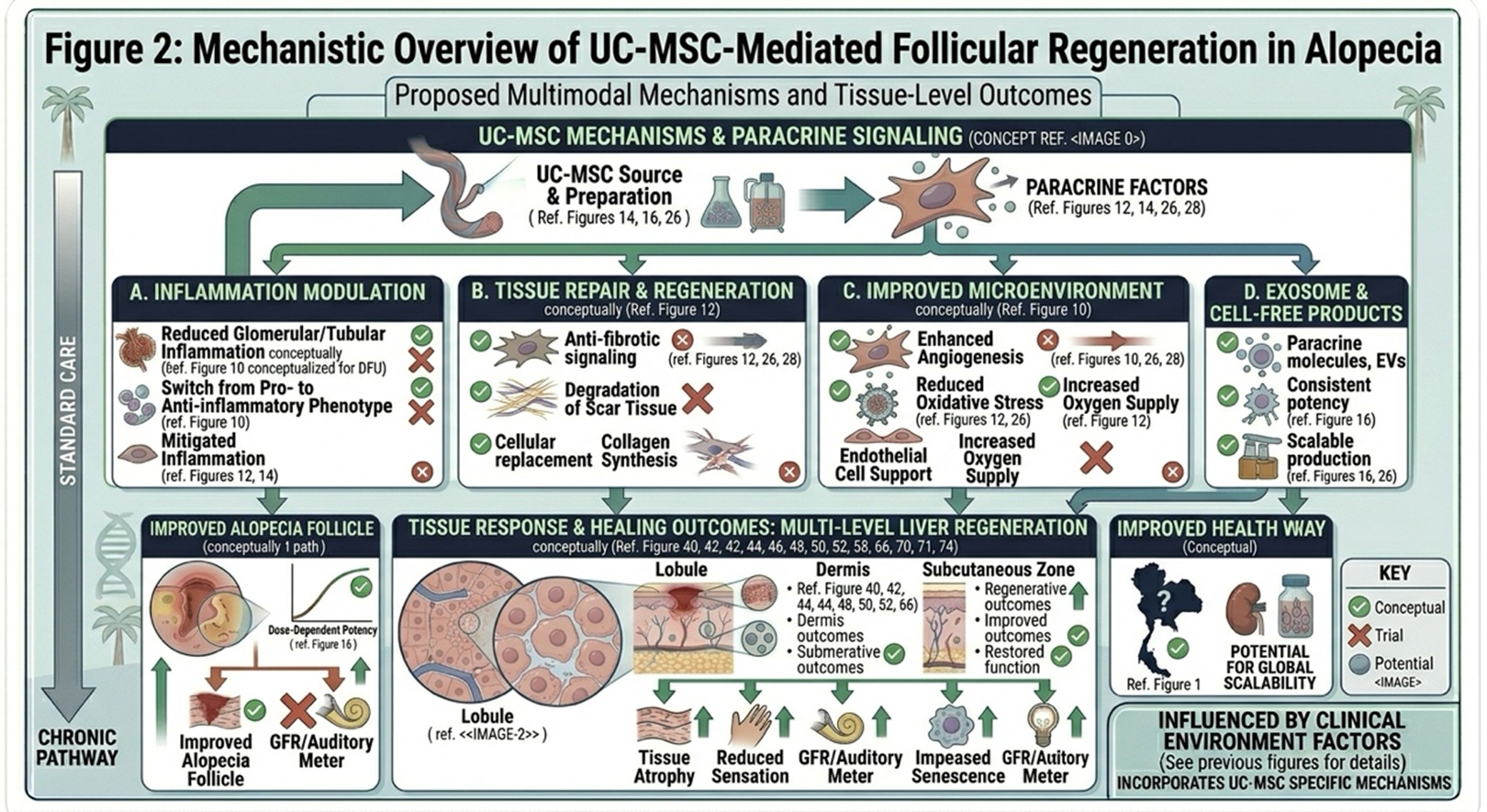
UC-MSCs have been investigated for their angiogenic signaling in terms of blood-vessel-forming and endothelial-supportive factors. Indeed, the regenerative protocols can stimulate toward better vascularization within the scalp to reconstruct the supportive framework for more stable follicular activity. In addition, the role of MSC-derived exosomes is broadly highlighted for their potential carrying regulatory molecules that may provide tissue protection from oxidative and inflammatory stress. High follicular survival rate with increased hair density and natural regrowth will be the combined results of these processes, supporting the hypothesis that an effective restoration requires not only replacing what nature has delivered or introducing new stems cells to the microenvironment but establishing new “ecosystem” in terms of vascularization and correct biochemical pathway activity.
- Concluding Perspective
The employment of UC-MSCs in the treatment of alopecia exemplifies a larger trend in regenerative medicine: transitioning from symptom-driven cosmetic repair to biotargeted reestablishment of tissue functioning. UC-MSC-based strategies provide a more integrated rationale for hair recovery through amelioration of pathological features such as inflammatory signaling, follicular dormancy, impaired vascular support and microenvironmental failure.
This strategy is further complemented by specialized processing systems and an expanding experience about regenerative applications within advanced clinical settings in Thailand. Even so, a responsible approach of communication is still paramount. The UC-MSC-based therapy should be described as a supportive regenerative treatment in active clinical development and not an absolute or guaranteed cure. Under rigorous design and medical supervision, though, it can deliver a science-baked path to improved follicular health, scalp quality and all of the other conditions that matter long term for sustained hair density.