

Knee pain rarely begins like event. But for most of the people it starts with something small that easy to dismiss like toughness after sitting, discomfort when going up stairs, or a knee that doesn’t feel good like part of the year. The small thing like this is the small signs of Osteoarthritis that you ignore, especially when simple daily activities begin to feel more tiring or painful. This is one reason why Osteoarthritis often goes unnoticed in its early stages, even though knee pain and short periods of stiffness after rest are among its common features.
At first, many people assume the problem is just part of getting older or the result of overuse. That’s true, but not entirely Osteoarthritis is not something that simple like this. As symptoms began to affect mobility, confidence, and quality, once problems started to arise, people began looking for solutions. People often start looking beyond temporary relief and asking deeper questions about what is actually happening inside the joint. And some answer that you’re going to get is “stem cell for knee pain”. This topic is beginning to attract more and more attention and interest from people.
Why knee pain often become a longer-term problem???
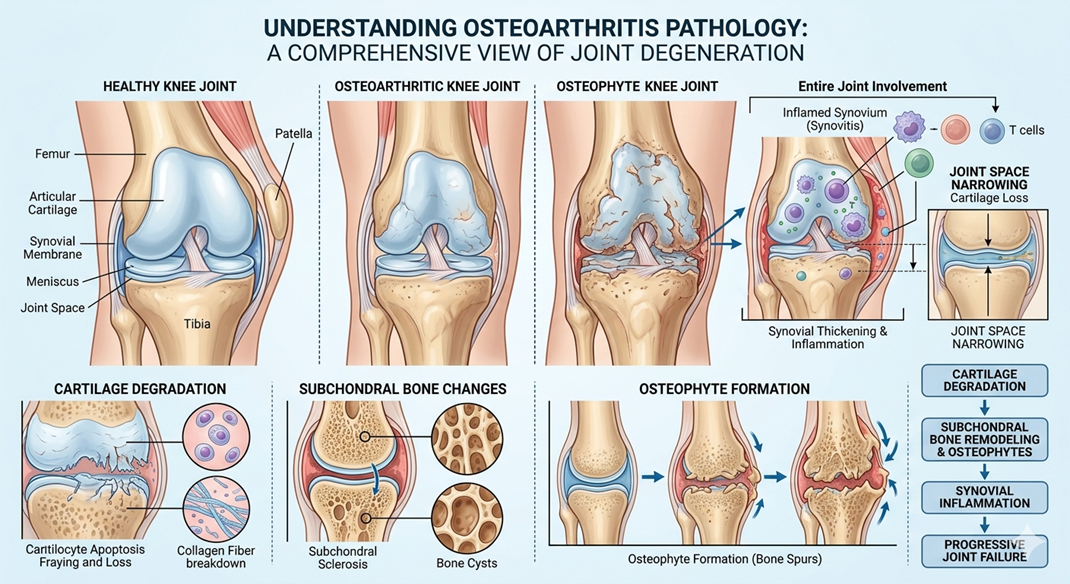
For many people, knee pain is not simply the result of one bad step or after busy day of walking. In many cases, it develops because the joint has been slowly changing over time. This is why Osteoarthritis becomes important. Osteoarthritis was described as “Deterioration,” but that word is antiquated. Current understanding of the condition that affects the entire joint, including the cartilage, the underlying bone, the joint lining, and the surrounding structures. When these tissues change, pain, arduousness, inflammation, and reduced movement can become more visible, especially during weight-bearing activities Regardless of walking, standing, or climbing stairs.
On the other hand of osteoarthritis is that it usually slowly getting worse. At first, your knee might just feel unbending after resting or a bit sore after a long day. As time passed, the discomfort could happen more often, longer, or feel difficult when moving. Because the changes occur gradually, many people therefore neglect to get tested early on, thinking they will go away on their own. But these early signals mean osteoarthritis has begun. Knowing how the condition progresses help explain why some people move from simple self-care to seeking more support, such as learning about stem cell clinics or new treatments like stem cell therapy for knee pain.
What Most People Try First
Most people with knee problem will start with simple conservative treatment before considering anything else. This is particularly so when the symptoms are still mild or erratic. For the majority of Osteoarthritis patients, their first measures to address the deterioration that has taken place in a living joint will be home-based exercise, physical therapy, weight control, changes to work or leisure activities, as well as strategies for both relieving pain and taking medication orally or topically when appropriate. However these remain key strategies and most professional guidelines still emphasize daily exercise, efforts at self-help, and weight reduction in very obese patients as essential parts of Osteoarthritis management rather than as optional extras.
It matters because a number of patients are benefited by the conventional methods too at least in part. Strengthening the muscles around a knee joint can provide greater support and function in general. At the same time, taking off that extra body weight will reduce the load on the joint when you’re moving your limb around all day long. For certain patients, supportive measures such as braces, walking aids or even a structured rehabilitation can also make symptoms easier to cope with. In many cases, these early steps are not just temporary measures. They form the foundation of care and often remain important even when treatment later becomes more advanced. This is also the stage where some patients begin asking whether a stem cell clinic may have a role in the next phase of treatment, especially when they start looking into newer options such as stem cell for knee pain. Even then, conservative care usually remains an important part of the broader management plan.
When Conventional Care No Longer Feels Like Enough
Conservative care remains the footing of treatment for many people with knee pain and Osteoarthritis. Whether it’s exercise, weight control, self-management program, and suitable pain relief can make a meaningful difference, and for some patients this is enough to control their symptoms. But this wasn’t enough for everyone. Some people still feel pain, toughness, swelling, or a growing sense that the knee is limiting daily life despite following a structured conservative plan. Treatment guidelines also know that treatment is not one-size-fits-all, and that some patients may require extra or different approaches depending on symptom severity, function, and response to treatment.
This the main point will change here. Instead of asking only how do we cope with symptoms, Why don’t ask about whether there are options that might be treating the joint pain or help delay more invasive phases. That shift in thinking helps explain why interest in newer regenerative methods is steadily increasing, especially among people searching for stem cell for knee pain. It is also why the role of a stem cell clinic becomes more relevant at this stage: not simply as a place offering a procedure, but as a setting where persistent symptoms, disease stage, and treatment goals can be evaluated more carefully before moving forward.
A More Realistic Way to Think About Stem Cell for Knee Pain
As knee pain starts to get worse, people with Osteoarthritis begin to look beyond short-term pain relief and ask whether newer options may have a place in their long-term care. That is one reason why interest in stem cell for knee pain continues to grow. At the same time, a realistic opinion is important. Knee osteoarthritis doesn’t look the same in every patient, and treatment choices should not be based on keywords alone. Major plans still place strong emphasis on exercise, weight control, self-management, and other non-surgical strategies as the foundation of care, even when symptoms are bothersome or ongoing.
This is where the role of a stem cell clinic should be understood wisely. A good clinic should not only offer a procedure because knee pain is present. It should help measure whether the pain is truly coming from osteoarthritis, how advanced the condition appears to be, what treatments have already been tried, and whether expectations are representative for the next phase. That is to say, the value of a cell treatment unit should lie in assessment and decision-making, rather than merely doing the treatment. With many such surveys out there you have probably heard mixed results Often times these differences are large enough that even official studies disagree. At the moment there is hope in such an approach to treating knee osteoarthritis with UC-MSC. Recent systematic reviews and meta-analyses describe increased pain and function scores on average. However, they too bring out striking differences in cell source, dosage, protocols, follow-up, and study quality—which only trouble all results as equal partners for anything like guidelines.
Therefore, to summarize, stem cell therapy for knee pain may not be the first option for everyone, and it doesn’t mean it’s a complete refutation. It is better understood as a possible next step for carefully chosen patients within a broader treatment plan for Osteoarthritis. Patients should also know that the U.S. FDA has not approved regenerative medicine therapies for orthopedic conditions such as osteoarthritis or knee pain, which is an important reminder to distinguish scientific interest from established regulatory approval.
In the end, the goal is not simply to chase the newest treatment. It is to understand why the knee hurts, how much the joint has changed, and which options make the most sense at that stage of the problem. For some patients, standard conservative care may remain the right path. For others, a discussion with a stem cell clinic may become part of a more advanced strategy. The key is that stem cell therapy for knee pain should be approached as part of thoughtful osteoarthritis care, not as a shortcut around proper evaluation.