
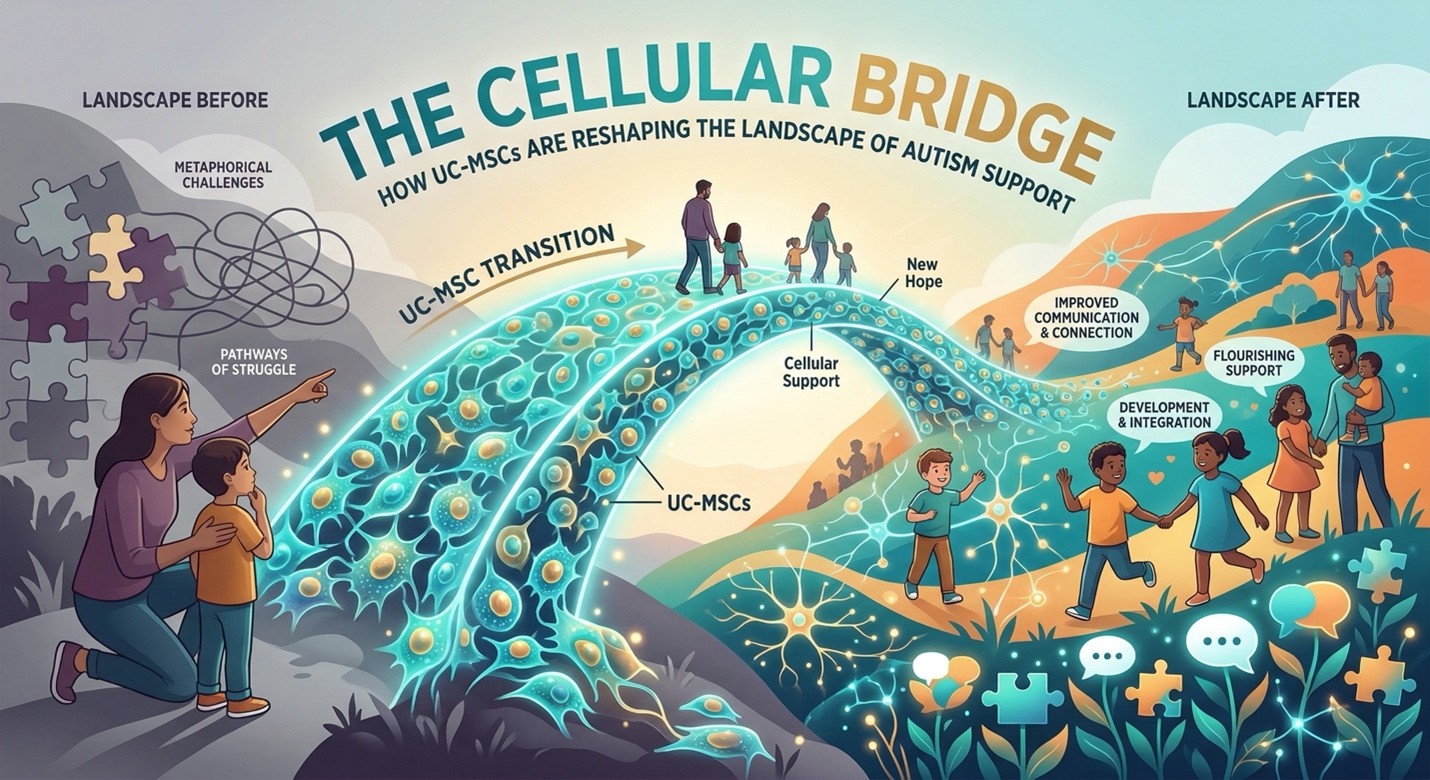
Autism Spectrum Disorder is a complex neurodevelopmental condition characterized by a wide range of differences in social communication, sensory processing, and repetitive behaviors. While the “wiring” of the autistic brain is a natural part of human neurodiversity, many individuals on the spectrum also deal with physiological challenges: chronic brain inflammation, gut-brain axis disruption, and an overactive immune system.
Traditional interventions such as speech therapy or ABA focus on behavioral adaptation. However, Umbilical Cord-Derived Mesenchymal Stem Cells (UC-MSCs) represent a biological approach. They don’t seek to change who a person is; they seek to optimize the internal “biological environment” so that the brain can process information with less “interference.”
- Cooling the “Internal Fire”: Addressing Neuroinflammation
One of the most consistent findings in ASD research is the presence of microglial activation. Microglia are the brain’s resident immune cells. In many autistic individuals, these cells stay in a “permanently on” state, creating a low-grade, chronic inflammatory environment. This “noise” can interfere with how neurons communicate, leading to sensory overload and anxiety.
UC-MSCs are world-class anti-inflammatory powerhouses. When introduced, they release specialized signaling molecules called cytokines and exosomes that act like a biological “coolant.” By signaling the microglia to return to a resting state, stem cells may help reduce the “static” in the brain. For many, this translates to a calmer nervous system, improved focus, and a higher threshold for sensory triggers.
- Rebalancing the Immune System
There is a profound connection between the immune system and the developing brain. Many children with autism show signs of immune dysregulation, such as unusual cytokine profiles or a higher prevalence of autoimmune-like responses. This systemic imbalance can lead to “brain fog” and irritability.
UC-MSCs are “immunomodulators,” meaning they don’t just suppress the immune system—they re-tune it. They can help shift the body from a pro-inflammatory state to an anti-inflammatory one. By normalizing the immune response, UC-MSCs may reduce the systemic “stress” the body is under, allowing the individual to engage more effectively with their environment and therapies.
- Repairing the “Social Highway”: Synaptic Connectivity
The way neurons connect at the synapse is fundamental to how we process social cues and language. In some cases of ASD, there is an imbalance in how these connections are pruned or maintained. Growth factors are essential for healthy “synaptic plasticity” the brain’s ability to form and strengthen new pathways.
UC-MSCs are known to secrete neurotrophic factors, such as Brain-Derived Neurotrophic Factor (BDNF). These factors act like “brain fertilizer,” supporting the health of existing neurons and encouraging the formation of new, healthy connections. This doesn’t “cure” autism, but it may improve the efficiency of the brain’s “wiring,” potentially leading to better outcomes in language acquisition and social responsiveness.
- Improving Cerebral Blood Flow (Oxygenation)
Research using SPECT scans has often shown areas of hypoperfusion (reduced blood flow) in certain regions of the autistic brain, such as the temporal lobes. When brain tissue doesn’t receive optimal oxygen and nutrients, it cannot function at its peak, which can impact speech and emotional regulation.
UC-MSCs promote angiogenesis the formation of new micro-vessels. By improving the “plumbing” of the brain, stem cell therapy can enhance blood flow to under-active regions. Improved oxygenation can lead to better metabolic activity in the brain, which often manifests as “brightening” a term parents often use to describe an increase in alertness and engagement following treatment.
- The Gut-Brain Axis: Healing from the Inside Out
It is no secret that many people with autism struggle with severe gastrointestinal (GI) issues. We now know that the gut and the brain are in constant communication via the vagus nerve. An inflamed, “leaky” gut sends distress signals to the brain, which can exacerbate behavioral symptoms and anxiety.
UC-MSCs have a high “homing” capability, meaning they often migrate to areas of inflammation, including the GI tract. By helping to repair the intestinal lining and reducing gut inflammation, stem cells can improve nutrient absorption and reduce the “toxic load” sent to the brain. When the gut is at peace, the brain is often more settled as well.
- Safety and Ethics: Why Umbilical Cord Stem Cells?
The use of UC-MSCs is particularly advantageous for the pediatric population for several reasons:
- Non-Invasive: Unlike bone marrow-derived cells, UC-MSCs are harvested from the umbilical cord after a healthy, live birth. There is no pain or risk to the donor or the recipient.
- “Young” Cells: These cells are chronologically young and haven’t been exposed to the environmental toxins or aging processes that adult stem cells have, making them more potent.
- Low Immunogenicity: UC-MSCs are “immune-privileged,” meaning they are highly unlikely to be rejected by the recipient’s body, even without a perfect “match.”
- The Synergy of Therapy and Biology
It is important to view UC-MSC therapy not as a standalone “magic bullet,” but as a biological facilitator. By reducing inflammation and improving brain metabolism, stem cells create a “window of opportunity.” When a child’s brain is less inflamed and more oxygenated, they are often able to get much more out of their speech and occupational therapy sessions. The biology supports the behavior, and the behavior reinforces the new biological pathways.
Conclusion: A Future of Possibilities
The study of UC-MSCs in autism is about quality of life. The goal of this research is to empower individuals on the spectrum by removing the physiological “anchors” that hold them back—chronic pain, sensory overload, and neurological “noise.”