

Osteoporosis is a progressive bone disease which sees bones weaken, mainly due to the break down of bone density and microstructure. This condition causes bones to be fragile and at great risk for fractures which in turn affect the hips, spine, and wrists the most. We see that traditional treatments which include drugs to put the brakes on bone loss and also changes in lifestyle like diet and exercise. But also in the recent past we have seen the introduction of stem cell therapy into the field which may be the game changer in how we manage and treat osteoporosis.
The Concept of Using Stem Cells in Bone Health Restoration
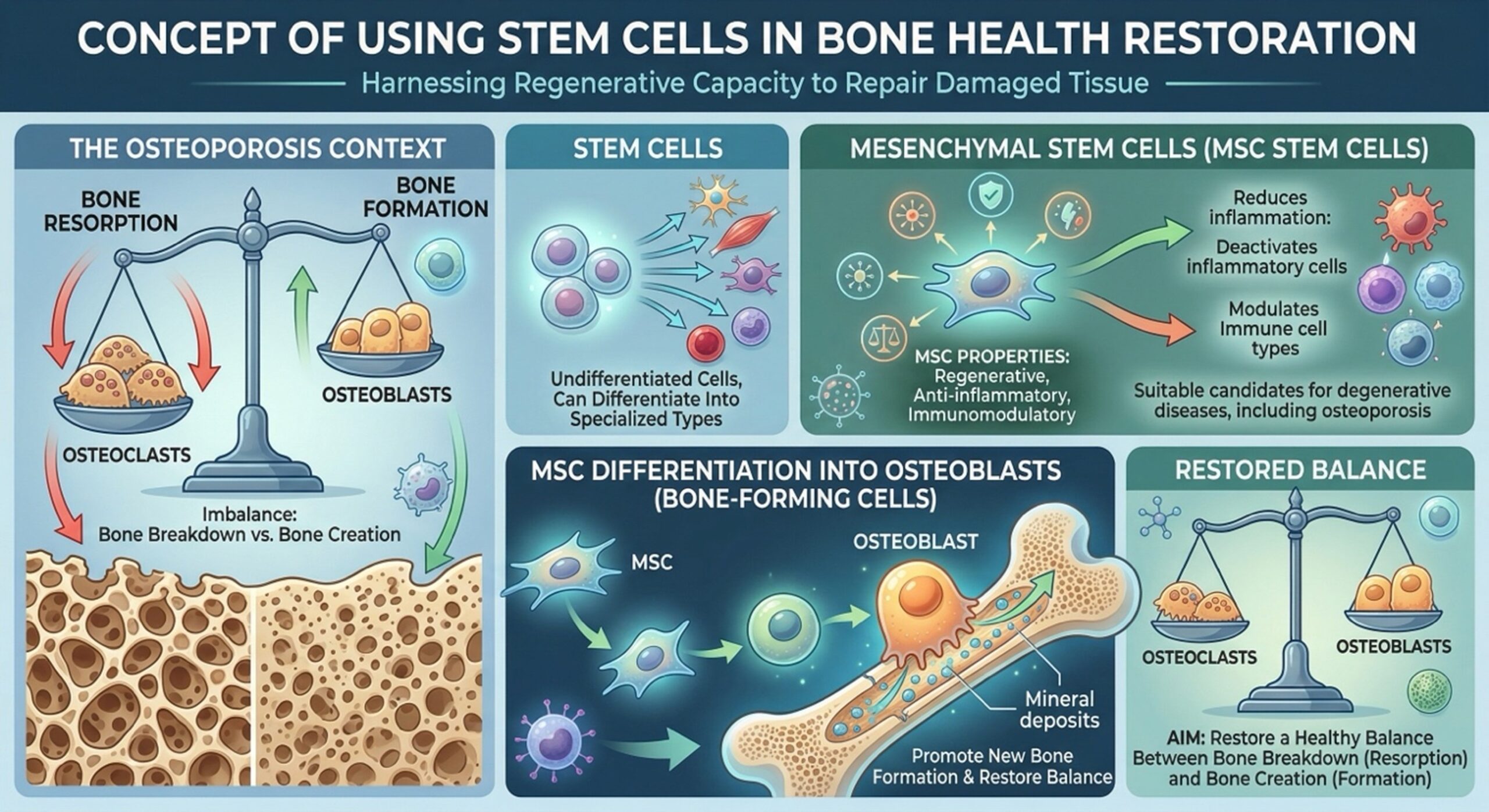
Stem cell therapy what we do is tap into the body’s ability to heal itself in order to repair damaged tissues and restore normal function. In the case of osteoporosis our goal is to stimulate new bone growth and to restore that which is lost in the process of bone breakdown (resorption) and bone creation (formation).
Stem cells are un specialized cells that turn into many different cell types. Of the most studied are mesenchymal stem cells (MSC stem cells) which transform into osteoblasts the cells that cause bone formation. MSC stem cells also have it in them to be regenerative, anti-inflammatory, and immun modulatory which makes them good for the treatment of a wide range of degenerative diseases which include osteoporosis.
How stem cell therapy may benefit osteoporosis patients
Stem cells may play a role in improving many areas of bone health. Here’s what they may do:.
- Once in the body stem cells have the ability to differentiate into osteoblasts which are the main players in bone formation. Osteoblasts produce collagen and other key proteins which make up the bone matrix thus creating the structure for stronger more dense bones.
- In osteoporosis what we see is that bone resorption by osteoclasts out goes bone formation which results in a net loss of bone mass. MSC stem cells may help restore this balance by reducing osteoclast activity or altering the signaling pathways that lead to excessive bone resorption.
- Improving the bone bioactive molecules that support beyond the formation of new bone elements MSC stem cells put out bioactive substances that better the local environment. These paracrine actions also include that of stimulating growth of new blood vessels (angiogenesis) which is very much so for proper nutrient delivery and tissue repair.
- Chronic inflammation is a factor in bone loss. Stem cells have natural anti-inflammatory properties which may put a break on inflammation in bone tissues, which in turn may slow disease progress and improve healing after microfractures.
Sources of Stem Cells for Therapy
In many fronts of stem cell research we are seeing what works best for osteoporosis which present different benefits.
- Umbilical Cord-Derived MSC stem cells (UC-MSC stem cells): which are at a very early stage of development, very potent and from a source which is ethical post childbirth. UC-MSC stem cells also show great regenerative capacity and have low tendency to cause immune response.
Clinical Report and Present Status
In the early stages of clinical research and preclinical studies we have seen very good results in the use of MSC stem cells for bone regeneration. In the lab and in animal models we report increased bone mass and strength in models which were treated with stem cells. Human trials are out to determine safety, efficacy, and the long term results. Also some small scale studies report improvements in bone density and reduction in fracture risk in patients that received stem cell based interventions.
However at present stem cell therapy for osteoporosis is a developing treatment which also includes that we are still in the process of determining standard protocol elements like cell dose, frequency of adminstration and method of delivery.
Benefits of Our Osteoporosis Treatments Over Conventional
Unlike drugs which either put a stop to bone resorption (as bisphosphonates do) or which stimulate bone production (as does teriparatide) stem cell therapy goes after the primary causes of bone breakdown. It presents a living as well as a very possibly permanent solution which is to actually rebuild bone tissue and restore balance to bone metabolism.
Additional benefits include:
- Fewer side effects compared to long-term pharmaceutical use
- Personalized treatment options
- Potential to reverse, rather than just manage, bone loss
Future Trends and Issues
As we see the growth of regenerative medicine stem cell therapy is becoming a key element in the treatment of osteoporosis. With more clinical research and regulatory approval of these therapies they may be put into the main stream of care especially for patients which do not respond to traditional drugs or are at high risk for fractures. That which said not all patients are appropriate for stem cell therapy. Issues like age, stage of osteoporosis, general health, and access to specialized treatment centers play a role in results. Also it is of great importance that we do a through medical evaluation before jumping into this therapeutic option.
Summary
Stem cell therapy is a progressive approach to the issue of osteoporosis which we are putting to use at the biological base of the disease. We use Mesenchymal Stem Cells from bone marrow, fat tissue, or umbilical cord in this approach which is aimed at increasing bone density, improving bone structure and in turn the balance between bone formation and resorption. As we see research develop and tech advance in this field stem cell based therapies which are on the horizon have the chance to transform how we as a world deal with bone health and aging which is very good news for the many that suffer from osteoporosis.