Our Services
Others
- DFPP
- Shockwave
- IV Drip

For men and women dealing with early thinning or pattern hair loss, the gap between applying daily topical medications and undergoing invasive hair transplants is significant. Stem cell therapy for hair growth is frequently positioned as the ideal middle ground. But if you spend five minutes looking at clinic websites, you’ll quickly realize the clinical reality is heavily obscured by marketing hype.
I’ve reviewed hundreds of patient cases, and the amount of misinformation out there is staggering. Far too many clinics are selling painful liposuction procedures (autologous fat harvesting) or making biologically impossible claims about “hair cloning.” It doesn’t work that way.
This guide strips away the sales pitch. We’re going to break down the clinical evidence behind lab-tested umbilical cord cells. You’ll get a transparent look at how growth factors actually behave in your scalp, a realistic 0–12 month results timeline, and an unfiltered comparison against minoxidil and FUE.
If you’re tired of guessing whether you’re a viable candidate, you need hard data. Here’s exactly what the science says and what it doesn’t.
Stem cell therapy for hair growth utilizes concentrated growth factors to biologically support struggling hair follicles, rather than surgically implanting new hair.
Umbilical cord-derived mesenchymal stem cells secrete high concentrations of growth factors that stimulate dormant hair follicles without the need for painful surgical fat extraction (PMC10174680, 2023). Unlike older procedures requiring bone marrow drilling or aggressive liposuction, modern regenerative protocols rely on ethically sourced, lab-expanded UC-MSCs. This maximizes biological potency while completely eliminating donor-site morbidity.
A staggering number of Western clinics still rely on autologous fat transfer. They literally perform liposuction on your abdomen, spin the fat in a centrifuge, and inject whatever cells survive back into your scalp. It’s painful, highly invasive, and completely unnecessary for modern cellular medicine.
So, Where are umbilical cord stem cells derived from?
They come from donated human umbilical cords post-birth, sourced ethically from healthy full-term deliveries.
The Vega UC-MSC Protocol explicitly utilizes these umbilical cord tissues. This means absolutely no donor site on your body, zero surgical extraction pain, and access to a massive concentration of active, young progenitor cells.
| 📌 If you’re interested in why umbilical cord cells are often preferred over bone marrow or fat-derived cells, we have an interesting article that discusses why UC-MSCs are superior to other stem cell sources, which you can read via the internal link. |
To ensure quality, these cells undergo rigorous lab testing for specific viability markers. If you’ve read any CD90 article you know that checking for surface proteins like CD90 ensures the mesenchymal cells are live, active, and capable of tissue repair. A patient undergoing painful liposuction rarely gets this level of cellular verification. They just get a sore abdomen and unpredictable cell counts.
Let’s address the biggest lie in the hair restoration industry. Injected stem cells do not magically differentiate and turn into new hair follicle cells. There is zero human evidence supporting that claim.
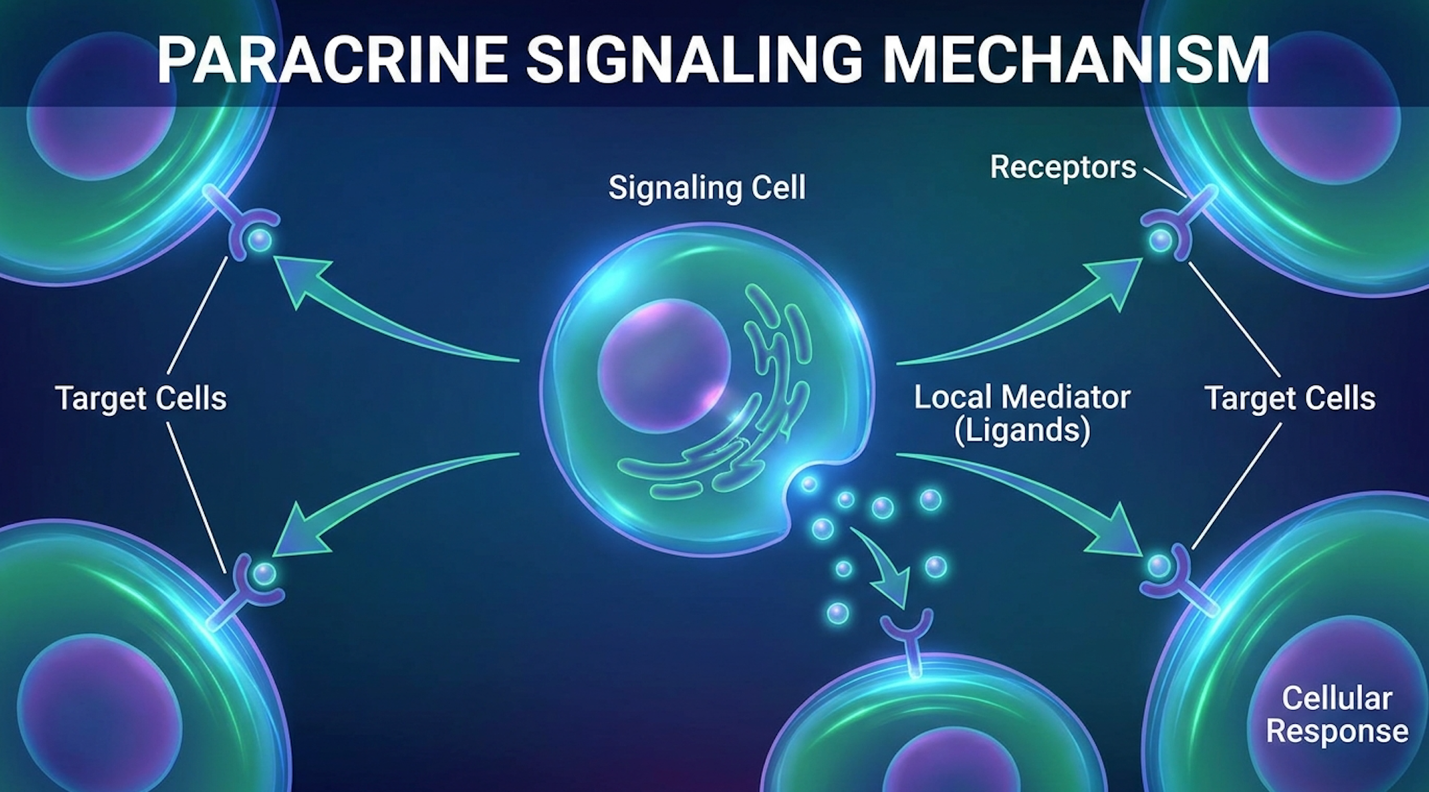
Instead, they work through a mechanism called paracrine signaling. Think of the injected UC-MSCs as biological factories. Once they enter your scalp, they immediately begin secreting a highly concentrated stem cell conditioned medium for hair growth. This “medium” is packed with epidermal and vascular growth factors.
These growth factors instruct local endothelial cells to form new blood vessels (angiogenesis). This floods the dying, oxygen-starved follicle with nutrients, pushing the miniaturized hair back into the active anagen (growth) phase. As documented by researchers, the regenerative ability is a direct result of this paracrine signaling rather than cellular differentiation.
Understanding how do stem cells stimulate hair growth means looking closely at how they are handled before they ever reach a syringe.
Cells are incredibly fragile. If a clinic cuts corners on their Lab processing standards the UC-MSCs will die before they can release a single growth factor. Premium facilities culture these cells in highly controlled environments, optimizing them specifically for tissue regeneration. This ensures that when the umbilical cord stem cells for hair growth are finally injected, they possess the metabolic energy required to actually alter the immune microenvironment of your scalp.
| 📌 If you’re interested in why the percentage of living cells matters so much at the time of treatment, we have an interesting article that discusses the importance of cell viability in UC-MSC stem cell therapy, which you can read via the internal link. |
While the biological mechanisms are heavily documented in medical literature, translating these cellular actions into visible clinical results requires strict adherence to safety and realistic timelines.
Clinical improvements from stem cell therapy for pattern hair loss typically become visible between months 3 and 6, as miniaturized follicles transition back into the active growth phase. Because human hair only grows about half an inch per month, immediate visual density changes are biologically impossible. Patients must commit to a long-term monitoring protocol to see real returns.
We need to be brutally honest about regulatory frameworks. Stem cell injections and exosomes are still being studied and are not FDA approved for the treatment of hair loss in the United States. Period.
However, medical tourism hubs operate under different frameworks. If you look at Thailand regulatory guidelines, clinics operating in Bangkok must adhere to rigorous laboratory standards to ensure patient safety. So, is stem cell therapy for hair growth safe?
The data is highly encouraging. Utilizing lab-expanded UC-MSCs in a sterile, clinical environment drastically minimizes immune rejection. A comprehensive review of safety analyses confirms an absence of significant adverse immunity-related events when using appropriately screened UC-MSCs. You aren’t dealing with synthetic chemicals; you’re dealing with naturally occurring biological proteins.
Impatience is the enemy of regenerative medicine. At week six, almost every patient panics because they don’t look like a shampoo model yet.
You have to let the growth factors do their job. The follicle has to shed its weak hair, rest, and build a thicker hair shaft from scratch. Understanding this timeline is absolutely crucial when you start comparing regenerative medicine to daily topical treatments and surgical interventions.
Unlike daily medications like minoxidil that require lifetime application to maintain results, FUE transplants permanently relocate hair follicles, while stem cell therapy biologically supports existing struggling follicles without surgery. Choosing the correct intervention depends entirely on the severity of your follicular degradation and your willingness to undergo surgery.
Let’s look at the standard pharmaceutical route. Minoxidil acts primarily as a vasodilator, artificially forcing blood flow to the follicle. Finasteride is a systemic DHT blocker. They both work. But here’s the catch they demand strict, lifelong daily adherence. The day you stop taking them, you lose all the hair you gained.
Stem cell injections for hair growth take an entirely different route. Administered in clinical sessions, they fundamentally alter the local immune microenvironment and reduce tissue fibrosis long-term. You aren’t chemically forcing blood flow; you are biologically repairing the vascular network.
| 📌 If you’re interested in how MSCs calm overactive immune cells throughout the body, we have an interesting article that discusses mesenchymal stem cell therapy for immune modulation, which you can read via the internal link. |
Sometimes, stem cells aren’t enough. If an area of your scalp is completely bald meaning it is shiny, smooth, and the follicle structure has entirely died stem cells cannot grow new hair there.
In these cases, Follicular Unit Extraction (FUE) is your only viable path. FUE surgically removes healthy, DHT-resistant follicles from the back of your head and implants them into the bald zones. If you are comparing FUE and transplant solutions against regenerative medicine, remember that surgery moves hair, while stem cells rescue dying hair.
Savvy clinicians rarely view these treatments as mutually exclusive. I’ve seen extraordinary results when patients combine FUE with UC-MSC injections. The stem cells flood the surgical site with vascular growth factors, drastically improving the survival rate of the newly transplanted grafts while protecting the remaining native hair from future thinning.
Once the correct clinical pathway is identified, patients must navigate the financial realities of advanced medical treatments.
The cost of advanced regenerative treatments varies widely based on the cell source, laboratory standards, and clinical geography. Because stem cell therapy for hair growth success rates depend entirely on rigorous patient selection, reputable clinics require a comprehensive remote assessment before ever quoting exact treatment protocols or accepting patients for travel.
Let’s talk numbers. Globally, comprehensive stem cell hair treatments range from $3,500 to $15,500 per session.
Where does that massive price swing come from? The premium you pay is strictly for the rigorous laboratory expansion of the UC-MSCs, CD90 viability testing, and sterile clinical administration. You are paying for high-grade biological material, not for a surgeon’s time spent harvesting your belly fat. The processing of human tissue is extraordinarily expensive. Reviewing the pricing for alopecia types and sessions reveals why medical tourism is booming. Hubs like Bangkok offer access to tier-one cellular therapies at much more accessible price points compared to Western markets. You get the exact same lab standards without the artificial domestic markups.
Stem cell therapy cannot cure complete baldness. It is designed to biologically support and thicken miniaturized hair follicles in patients experiencing early thinning or pattern hair loss. Once a hair follicle has completely died and the scalp is entirely smooth, cellular injections cannot generate a new follicle from scratch. Patients with advanced, complete baldness require surgical interventions like FUE transplants.
Modern stem cell hair treatments utilizing lab-derived UC-MSCs involve minimal discomfort compared to older methods. Because the procedure uses ethically sourced umbilical cord cells, patients completely avoid the painful surgical liposuction or bone marrow extraction required in autologous therapies. The scalp injections themselves are performed using ultra-fine needles, often accompanied by local anesthetics to ensure patient comfort during the brief session.
For patients experiencing early thinning, stem cell therapy for hair growth delivers massive biological support through paracrine signaling. Research indicates that lab-expanded UC-MSCs secrete specific growth factors that efficiently transition miniaturized follicles back into their active growth phases. The most clinically effective approach utilizes these specialized cells to entirely avoid the trauma of surgical fat extraction, focusing strictly on regenerative biology rather than invasive harvesting.
This is exactly why The Vega UC-MSC Protocol exists. By relying on an evidence-led, remote assessment process, the protocol protects patients from unproven miracle claims. It ensures that these highly potent cellular treatments are only administered to viable candidates who still possess the dormant follicles required to achieve a cosmetically significant result.
Stop guessing if you are a viable candidate. Take clear, brightly lit photos of your scalp’s thinning areas and send them directly to the Vega medical team via WhatsApp or email. You will receive a free, no-obligation clinical assessment to determine if your hair follicles can actually benefit from advanced regenerative medicine.