

Vision impairment caused by eye diseases remains a significant challenge in modern healthcare, particularly when the damage affects delicate structures that cannot naturally repair themselves. Disorders such as age-related macular degeneration (AMD), diabetic retinopathy, glaucoma, inherited retinal conditions like retinitis pigmentosa, and corneal injuries often lead to gradual or permanent loss of sight. Conventional treatment methods—including medications, laser procedures, and surgical interventions—primarily aim to control symptoms or delay disease progression rather than restore damaged tissues.
In contrast, regenerative medicine is opening new possibilities. Umbilical cord–derived mesenchymal stem cells (UC-MSCs) are emerging as a promising tool in ophthalmology, offering the potential to repair or even replace injured cells within the eye. In Thailand, advanced medical centers are increasingly exploring these therapies under carefully regulated clinical frameworks, positioning the country as a growing hub for innovative eye care solutions.
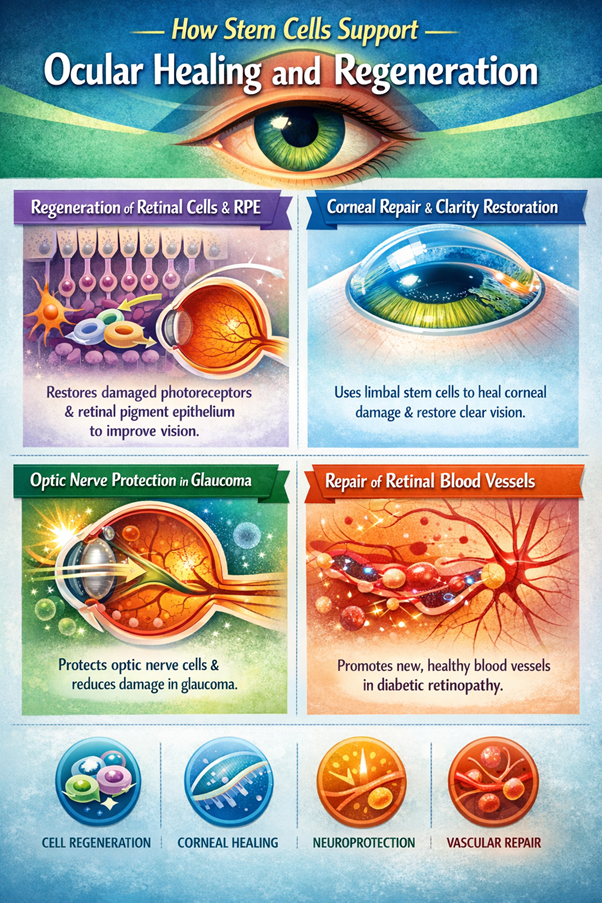
How Stem Cells Support Ocular Healing and Regeneration
- Regeneration of Retinal Cells and Retinal Pigment Epithelium
The retina is a highly specialized tissue located at the back of the eye, responsible for converting light into signals that the brain interprets as vision. Two key components of this system are photoreceptors—rods and cones—and the retinal pigment epithelium (RPE), which supports their function. In diseases such as AMD and retinitis pigmentosa, these cells progressively deteriorate, leading to vision loss.
Stem cell-based strategies aim to replace or support these damaged cells. Under controlled conditions, certain stem cells can be guided to develop into RPE cells or photoreceptor-like cells. When introduced into affected areas of the retina, these cells may integrate with existing structures and contribute to restoring visual processing.
In addition to direct replacement, stem cells release beneficial signaling molecules known as trophic factors. These substances can help protect surviving retinal cells, enhance their function, and slow further degeneration.
- Repair of the Cornea and Restoration of Clarity
The cornea is the transparent outer layer of the eye that plays a critical role in focusing light. Damage to the cornea—whether from injury, infection, or genetic disorders—can result in scarring or surface irregularities that impair vision.
A key element in corneal repair is the presence of limbal stem cells, which reside at the boundary between the cornea and the sclera. These cells are responsible for maintaining and regenerating the corneal surface. In cases where limbal stem cells are deficient or damaged, vision can deteriorate significantly.
Modern regenerative techniques involve harvesting and expanding limbal stem cells, either from the patient or a donor, and transplanting them back onto the eye. This approach can restore the integrity of the corneal surface, improve transparency, and enhance visual clarity. Compared to traditional corneal transplants, this method may reduce reliance on donor tissue and lower the risk of rejection.
- Protection of the Optic Nerve in Glaucoma
Glaucoma is characterized by progressive damage to the optic nerve, often associated with increased intraocular pressure. As nerve cells deteriorate, vision gradually declines, and current treatments primarily focus on lowering eye pressure to slow this process.
Stem cell therapy introduces a different strategy by aiming to protect and support existing nerve cells. Stem cells can secrete neuroprotective factors that help shield neurons from damage, reduce inflammation, and limit oxidative stress within the optic nerve environment.
This neuroprotective effect may help preserve remaining vision. Future advancements may further enhance the ability of stem cells to promote nerve regeneration and improve neural connectivity.
- Repair of Retinal Blood Vessels in Diabetic Retinopathy
Diabetic retinopathy develops as a result of prolonged high blood sugar levels, which damage the small blood vessels in the retina. This can lead to leakage, swelling, bleeding, and reduced oxygen supply to retinal tissues.
Stem cell-based therapies may help address both vascular and neural damage. Certain stem cells, including mesenchymal stem cells and endothelial progenitor cells, can contribute to the formation of new blood vessels and the repair of damaged capillaries. This process, known as angiogenesis, may improve blood flow and oxygen delivery to the retina.
Additionally, the signaling molecules released by these cells can stabilize existing blood vessels, reduce abnormal permeability, and limit inflammation. Together, these effects may slow disease progression and, in earlier stages, potentially reverse mild damage.
Advantages of Stem Cell Therapy in Eye Care
- Potential for Tissue Restoration: Unlike conventional therapies that primarily aim to prevent further damage, stem cell treatments may help rebuild lost or damaged structures, offering the possibility of improved vision.
- Reduced Dependence on Donor Material: In procedures such as corneal repair, stem cell techniques can minimize or eliminate the need for donor transplants, addressing issues related to availability and immune rejection.
- Multiple Therapeutic Effects: Beyond replacing cells, stem cells provide anti-inflammatory, anti-scarring, and neuroprotective benefits, supporting overall eye health and function.
- Customized Treatment Approaches: Different eye conditions may benefit from specific types of stem cells or targeted therapies, allowing for more personalized and effective treatment strategies.
Conclusion
Stem cell therapy represents an exciting advancement in the field of eye care, offering a shift from symptom management to true tissue regeneration. By targeting the underlying causes of vision loss—whether through replacing damaged retinal cells, restoring corneal integrity, protecting the optic nerve, or repairing blood vessels—stem cells provide a comprehensive and multifaceted treatment approach.
The progress seen in clinical research continues to build optimism. In Thailand, where regenerative medicine is rapidly advancing, stem cell–based therapies are becoming an increasingly attractive option for individuals seeking innovative solutions for vision restoration.
As research continues and technologies improve, stem cell therapy may play a transformative role in helping patients not only preserve their vision but potentially regain it.