Our Services
Others
- DFPP
- Shockwave
- IV Drip

Current search trends reveal a rapid clinical transition away from invasive surgical transplants toward advanced non-surgical regenerative therapies, yet most patients lack the biological data to compare these options accurately. Choosing between a lifetime of pharmaceutical dependency and high-ticket regenerative treatments based on slick marketing brochures usually leads to mismatched clinical expectations. And frankly, financial waste.
This evidence-informed guide provides a direct biological comparison of stem cell therapy vs minoxidil, finasteride, PRP, and surgical transplants. We aren’t looking at glossy before-and-after photos here. Our analysis evaluates the exact mechanisms of action, head-to-head clinical efficacy, emerging global exosome technologies, and strict timelines for biological response.
This article is for educational purposes only and does not replace consultation with a qualified medical professional.
When evaluating stem cell therapy vs minoxidil, success depends heavily on follicular viability and the patient’s specific stage of androgenetic alopecia. Mesenchymal stem cells increase local vascularity by 41% restoring critical blood flow to starving, viable follicles.
Stem cell therapy for hair loss operates by altering the biological microenvironment of the scalp rather than temporarily masking shedding. By utilizing stem cell hair injections, clinicians target senescent dermal tissues to promote the synthesis of the extracellular matrix proteins collagen type I and elastin. This cellular signaling directly addresses the underlying vascular degradation responsible for follicular miniaturization.
The true regenerative power of Mesenchymal Stem Cells (MSCs) multipotent adult stem cells derived from various tissues doesn’t actually come from their ability to physically transform into hair follicle cells. It comes from paracrine signaling.
Think of MSCs as cellular biological directors. Once injected into the scalp, they secrete a highly concentrated soup of bioactive molecules, including epidermal, vascular, and basic fibroblast growth factors. This triggers angiogenesis, the physiological process of forming new blood vessels from pre-existing vessels. By increasing local blood microcirculation, MSCs effectively end the starvation of miniaturized follicles, according to clinical research indexed by the NIH. This means thicker, darker hair shafts for the patient over time. Vega Stem Cell protocols consistently target this vascular pathway to optimize outcomes.
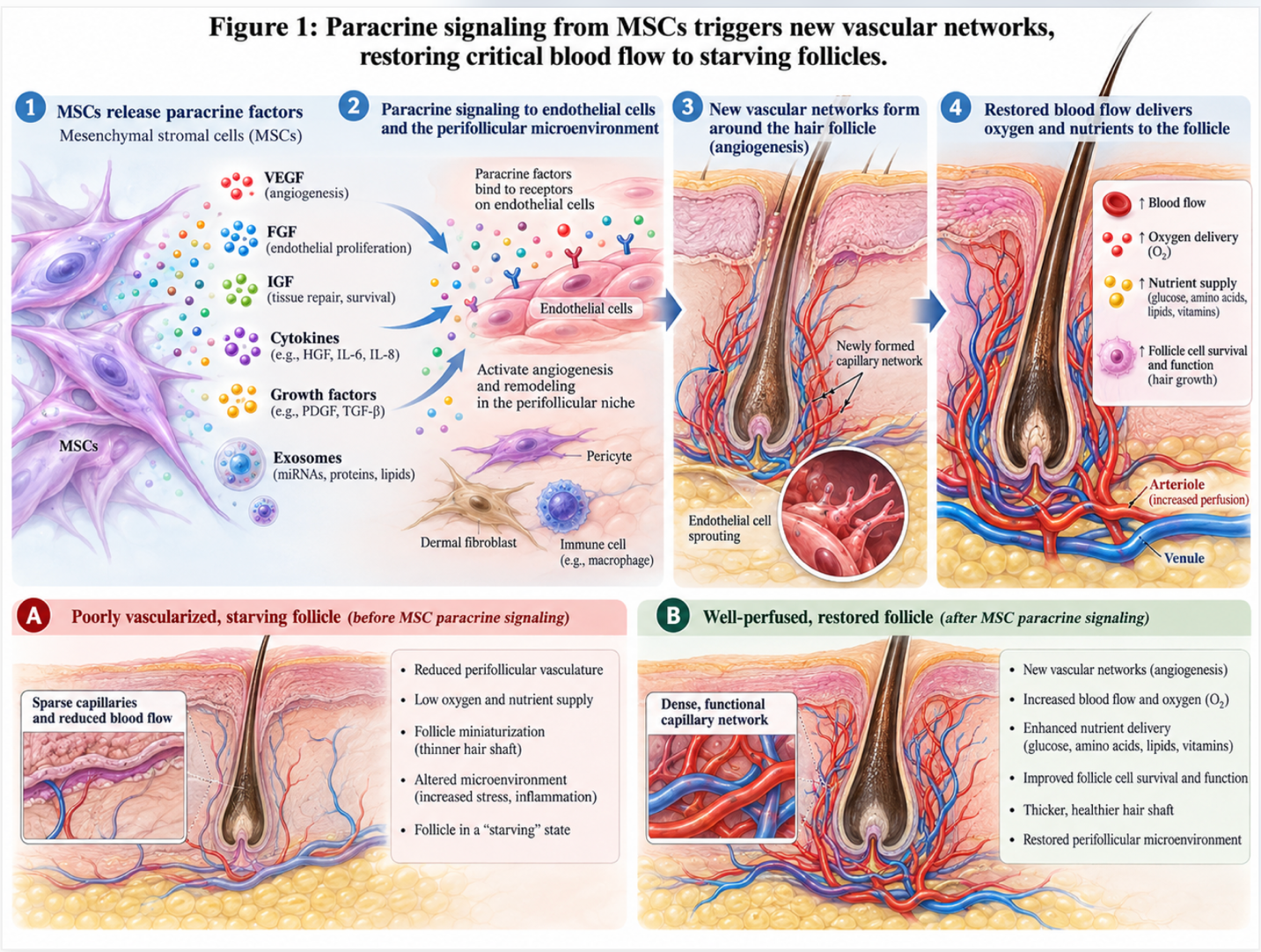
Figure 1: Paracrine signaling from MSCs triggers new vascular networks, restoring critical blood flow to starving follicles.
This brings us to a proprietary conceptual framework we use to evaluate patient candidacy: The Follicular Viability Matrix.
The Follicular Viability Matrix is a clinical framework evaluating whether a patient’s follicles are dormant (viable for regeneration) or fully fibrotic and scarred (unviable). Stem cell therapies cannot create brand-new follicles on completely barren scalp tissue. They rescue, optimize, and reverse senescence in existing, miniaturized follicles.
If a patient’s scalp shows heavy fibrosis meaning the follicles are completely dead and scarred over injecting stem cells won’t yield cosmetic density. Understanding this biological dependency is critical when comparing cellular therapy against pharmaceutical interventions. You have to match
Beyond blood flow, biological hair regeneration relies heavily on the extracellular matrix (ECM). When we evaluate the structural scaffolding of your skin, the biological degradation in androgenetic alopecia is stark. The ECM becomes rigidly fibrotic, literally strangling the follicle.
According to advanced dermatological tissue engineering studies, mesenchymal stem cells actively stimulate dermal fibroblasts to produce high-quality collagen type I and elastin, reversing this rigidity. Cellular therapies actively synthesize these new structural proteins, restoring the physical, hydrated environment required for a healthy hair cycle. This matrix remodeling is why patients often notice profound improvements in overall scalp health, significantly reduced inflammation, and better tissue elasticity months before actual hair thickening becomes visible.
Evaluating a stem cell therapy vs anti hair loss treatment requires comparing cellular regeneration against symptom suppression. While Minoxidil requires continuous lifetime application to maintain vasodilation, cellular therapies aim for sustained biological alteration of the follicular microenvironment. The optimal choice depends entirely on a patient’s specific pathology and their willingness to adhere to lifelong routines.
Minoxidil, an antihypertensive vasodilator used topically to stimulate hair growth, and Finasteride, an oral 5-alpha-reductase inhibitor, remain the gold standards of traditional dermatology. But the biological differences between stem cell hair treatment vs finasteride are vast.
Key Specs: ~$30-$80/month | High Dependency | Symptom Management Focus
Real-World Usage In daily practice, real-world compliance is arguably the biggest hurdle with pharmaceuticals. Applying a greasy foam twice a day ruins hair styling and becomes a frustrating chore. Quitting triggers massive telogen effluvium a profound rebound shedding event where patients rapidly lose all therapeutically retained hair. As documented in clinical evaluations of vasodilator dependency, patients often end up with less cosmetic density than their baseline if they forget their medication for just a few weeks. Finasteride side effects, meanwhile, cause immense psychological hesitation. These treatments manage the symptom beautifully, but the moment you stop, the biological clock fast-forwards.
When comparing a stem cell therapy vs anti hair loss treatment, we have to look closely at Platelet-Rich Plasma (PRP) an autologous concentration of human platelets used for tissue repair.
Key Specs: ~$600-$1,200/session | Autologous | Moderate Dependency
Real-World Usage Our clinical teams consistently observe PRP yielding fantastic results in healthy 25-year-olds, while completely failing in 55-year-olds with metabolic issues. Why? Because PRP relies on the platelets you currently have. If you are older or inflamed, your platelets are too. Mesenchymal stem cells offer a standardized dose of youthful progenitor cells. Stem cells actively inhibit Toll-like receptor signaling to reduce local inflammation, supported by recent macrophage phenotyping data, whereas PRP can sometimes provoke variable, unpredictable inflammatory responses depending on the patient’s baseline hematological health.
| 📌 If you’re interested in why umbilical cord cells are often preferred over bone marrow or fat-derived cells, we have an interesting article that discusses why UC-MSCs are superior to other stem cell sources, which you can read via the internal link. |
Surgical relocation is entirely different from biological regeneration.
Key Specs: ~$8,000-$15,000+ | Surgical | Permanent Relocation
Real-World Usage Transplants are structural, not regenerative. They move healthy hair from the back of your head to the front. But here’s the reality many clinics downplay: a transplant does absolutely nothing to stop the underlying degenerative biological process killing the native hairs surrounding the new grafts. Patients often end up needing multiple surgeries. We increasingly see stem cells used adjunctively with transplants to dramatically improve graft survival rates and mitigate post-surgical dermal scarring, a protocol supported by extensive surgical outcome data.
Stem cell therapy is biologically superior to minoxidil for long-term tissue repair, though it requires a much higher initial investment. While minoxidil acts as a temporary vasodilator that requires lifelong daily application, stem cell treatments utilize paracrine signaling to permanently alter the follicular microenvironment. Clinical data shows cellular therapies significantly upregulate collagen and elastin production in senescent dermal tissues. This makes stem cell interventions ideal for patients seeking sustained biological improvements without daily pharmaceutical dependency.
The application of exosomes for hair loss represents the absolute latest advancement in regenerative medicine, moving beyond whole-cell therapies to isolate pure cellular communication vehicles. These new signaling factors and growth factors offer highly targeted delivery of regenerative proteins, actively mitigating the excessive fibrosis that is so often associated with inflammatory hair loss conditions.
Exosomes nanoscale extracellular vesicles responsible for cell-to-cell communication are essentially the ‘payload’ of a stem cell, isolated completely from the actual cell body.
Using exosomes delivers the exact bioactive molecules, known as the secretome, required for follicular regeneration, but without introducing live foreign cells. This standardizes treatment efficacy on a completely different level. You don’t have to worry about whether a fragile, live stem cell will survive the physical injection process; you are simply delivering the raw chemical instructions directly to the dying hair follicles. According to recent exosome regenerative studies, this drastically reduces the potential for adverse immune reactions while heavily upregulating cellular proliferation in the dermal papilla.
| 📌 If you’re interested in why the percentage of living cells matters so much at the time of treatment, we have an interesting article that discusses the importance of cell viability in UC-MSC stem cell therapy, which you can read via the internal link. |
Asia currently dominates the clinical application and perfection of these specific technologies. A standard Korean hair loss treatment typically integrates advanced topical exosome delivery via precise medical microneedling, deliberately paired with clinical scalp purification.
This initial purification process is critical. It actively removes calcified sebum plugs and inflammatory debris before the exosomes are ever applied, ensuring maximum dermal penetration. By combining microneedling’s structural micro-trauma with the highly concentrated growth factors of exosomes, clinics can dramatically shorten the timeline to visual density.
Conversely, Japanese hair loss methods frequently focus on rigorous, uncompromising laboratory standards and phenotypic macrophage reprogramming. Instead of just stimulating growth, these protocols seek to resolve deep-seated scalp inflammation before any regenerative signaling is attempted.
| 📌 If you’re interested in how MSCs shift the immune system from attack mode to repair mode, we have an interesting article that discusses mesenchymal stem cell therapy for immune modulation, which you can read via the internal link. |
If you’re considering medical tourism for these advanced therapeutics, strict regulatory compliance is absolutely paramount. For patients navigating these international waters, verifying the safety of international stem cell therapies in Thailand or South Korea requires interrogating the laboratory isolation protocols, not just blindly trusting the clinic’s aesthetic appeal or Instagram marketing. The source and purification methodology of the exosomes dictate the entirety of the clinical outcome.
Establishing a clinically accurate regrow hair timeline requires understanding that cellular therapies do not yield overnight cosmetic results. Because biological interventions must synchronize with the natural anagen (growth) phase of the follicular cycle, patients attempting to reverse hair thinning will typically observe initial structural changes only after 12 to 24 weeks. Biological hair regeneration requires 3 to 6 months to display visible density changes simply due to human biology.
Real biology takes time. If a clinic promises you a full head of hair in 30 days, run. Based on established dermatological growth cycles published by the AAD, realistic expectations follow a strict curve.
Months 1-3: You won’t see much in the mirror. The action is entirely microscopic. Cellular signaling initiates a reduction of local inflammation. You might actually experience temporary shedding as senescent, weak hairs are pushed out to make room for new anagen growth. Months 4-6: The upregulation of VEGF results in new vessel formation. You’ll begin to notice the thickening of existing miniaturized shafts. Months 7-12: This is when visible cosmetic improvements in density and tissue hydration finally peak.
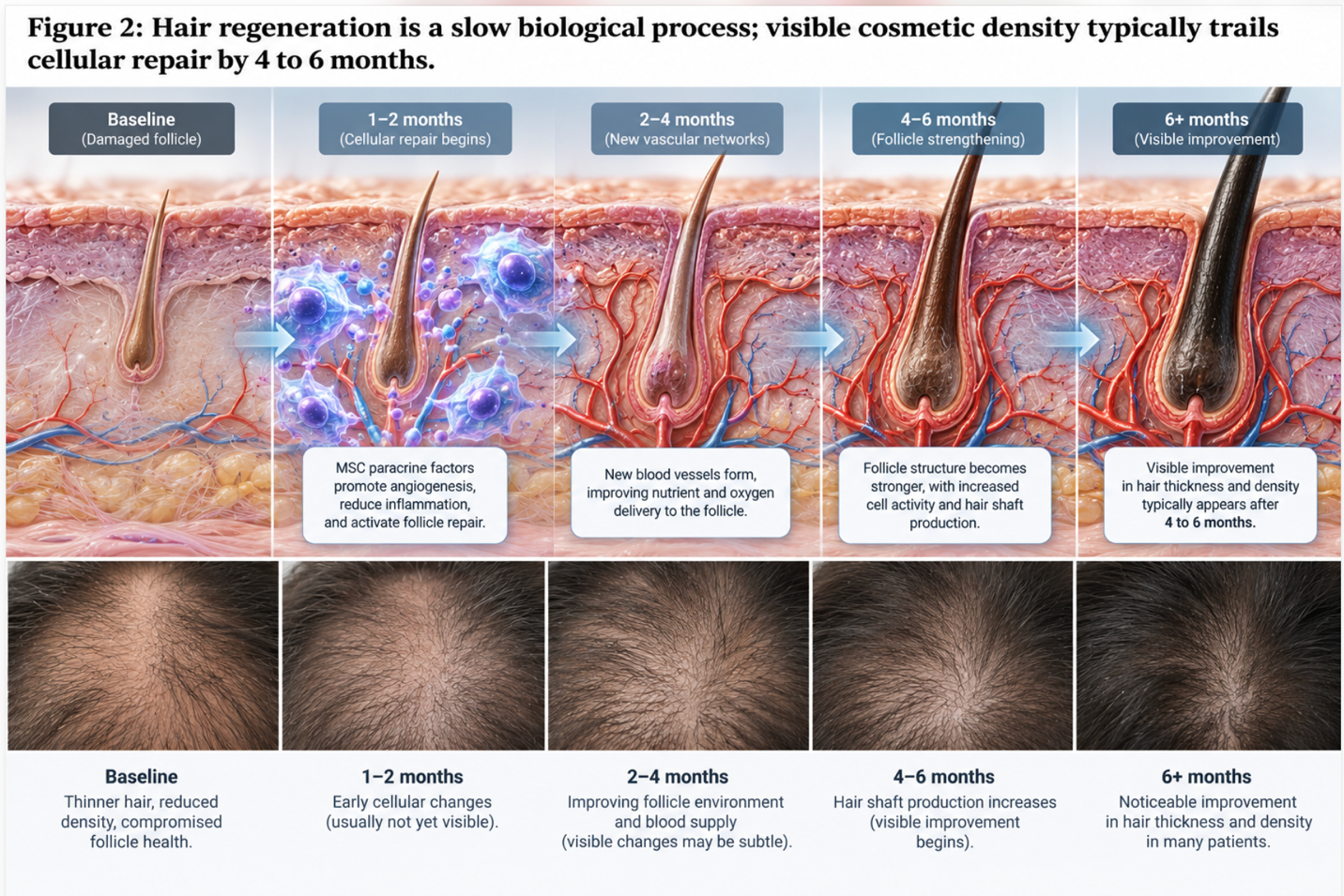
Figure 2: Hair regeneration is a slow biological process; visible cosmetic density typically trails cellular repair by 4 to 6 months.
Let’s address the elephant in the room: an ultimate cure for hair loss does not exist in evidence-based medicine. Androgenetic alopecia is a progressive, genetic condition.
Falling back on The Follicular Viability Matrix, cellular therapies manage and reverse senescence in viable follicles, but they require ongoing biological maintenance. You are resetting the biological clock, not smashing it. The difference between biological improvement (restoring tissue health and delaying the balding process by years) and guaranteed aesthetic outcomes (looking like you did at 18) must be clearly understood before spending thousands of dollars.
The biological improvements from stem cell hair treatments can last 12 to 18 months per session, whereas minoxidil effects cease within weeks of stopping application. Stem cells promote new blood vessel formation and phenotypic macrophage reprogramming, leading to
Yes, minoxidil can be safely and effectively used in conjunction with stem cell therapy under clinical supervision. The mechanisms are highly complementary: stem cells repair the underlying cellular microenvironment, while minoxidil provides immediate, sustained vasodilation to deliver systemic nutrients to the newly formed blood vessels. According to dermatological guidelines on combination therapies, many regenerative clinics prescribe topical vasodilators as adjunctive care to maximize graft survival and follicular stimulation. This combination approach often yields faster visible density improvements than monotherapy. Always consult your prescribing clinician before combining active therapeutics.
Stem cell hair treatments require a high upfront investment ranging from $3,000 to $10,000 per session, whereas minoxidil costs approximately $30 to $50 monthly. Over a 10-year period, the cumulative cost of daily minoxidil, alongside necessary medicated shampoos and clinical checkups, often aligns closely with the cost of spaced cellular therapy sessions. The price of stem cell treatment reflects the complex laboratory processing of biological materials, including precise cell characterization and viability testing required by strict federal medical boards and regulatory frameworks. Patients must weigh immediate affordability against long-term convenience and biological efficacy.
Anti-hair loss shampoos effectively optimize scalp hygiene but cannot biologically regenerate miniaturized or dormant hair follicles. Most over-the-counter formulations remove excess American Academy of Dermatology, topical shampoos lack the molecular ability to penetrate the dermis and stimulate the extracellular matrix or initiate angiogenesis. For true structural repair, advanced biological therapies or proven pharmaceuticals are clinically necessary.
For individuals suffering from progressive thinning, comparing stem cell therapy versus minoxidil comes down to cellular repair versus symptom management. Clinical observations demonstrate that mesenchymal stem cells actively promote new vessel formation and inhibit tissue-destructive inflammation, increasing local vascularity by 41% in viable targets. The optimal approach relies on objective clinical diagnostics rather than generalized cosmetic promises.
Utilizing The Follicular Viability Matrix ensures that patients only pursue regenerative therapies when their follicles are dormant but viable, avoiding financial waste on fully scarred tissue. Biological interventions excel at reversing senescence, but they absolutely must be applied at the correct stage of follicular degradation to yield measurable results.
The critical next step is securing an evidence-informed suitability assessment. Schedule a consultation with a qualified regenerative medicine clinician who can review your specific medical history, conduct thorough scalp diagnostics, and determine if cellular therapy directly aligns with your functional goals.