

Parkinson’s is a gradually progressing neurological disease that interferes with movement, balance, muscle function and life quality. Patients commonly suffer from movement symptoms (e.g., tremor, stiffness, slowness of movement, difficulty walking and postural instability), while they can also develop non-motor aspects that include fatigue, constipation, sleep disturbance mood changes as well as cognitive decline. While existing treatment can alleviate symptoms in the short term, it does not fully halt disease progression. This is among the reasons why regenerative medicine has received so much attention. To highlight it UC-MSCs (umbilical cord mesenchymal stromal cells) are currently one of the focus points to be investigated as a potentially supportive treatment in neurological care.
- Understanding the biological basis of Parkinson’s disease
Parkinson’s disease is more than a disease of dopamine deficiency. This is accompanied by a dynamic condition of inflammation, oxidative stress and escalating damage to the nervous system. Dopamine-producing neurons decrease over time and the surrounding neuronal condition may be less supportive of cell survival and repair. The disease process itself is multi-faceted, and the treatment itself is not necessarily going to be attributed to a single mechanism. It’s a more generalized degenerative state that alters how brain cells work, communicate and respond to stress.
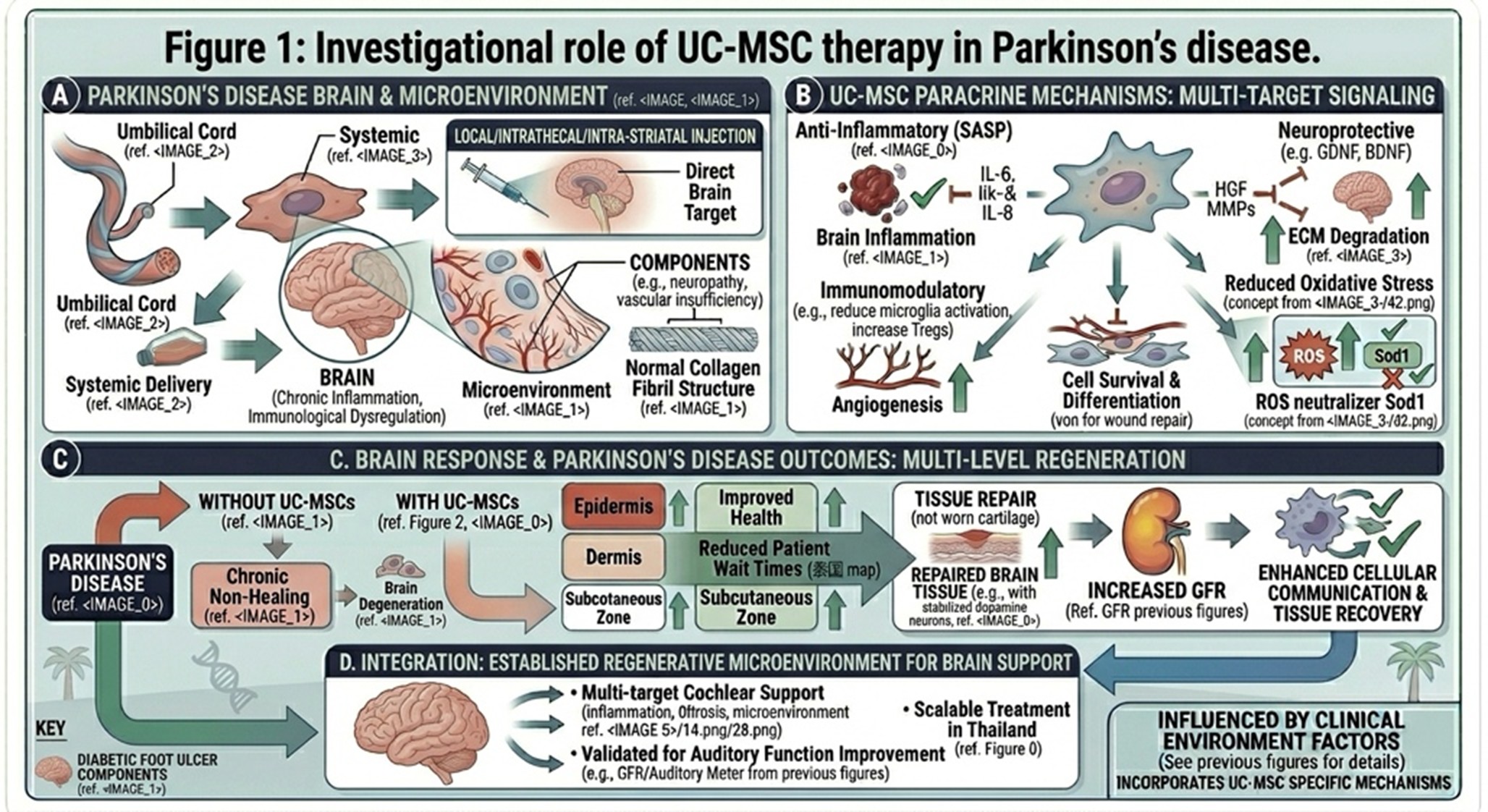
And this is where we begin to care about UC-MSCs. These cells are not primarily being researched as direct substitutes for lost neurons. Instead, they are under investigation because they could potentially promote the healing of the disrupted neural condition via anti-inflammatory, immunomodulatory, and regenerative signaling. Simply put, the aim is less to replace tissue than help make a healthier environment for cells that are already there.
- Why conventional treatment still matters
Standard treatment for Parkinson’s is still the mainstay of care. Medications can be extremely effective for tremor, stiffness and movement control, particularly in the early stages. Rehab is also important physical therapy, gait training, balance work and strength support to prevent falls. Patients may also require speech therapy, nutritional support and close neurological follow-up as symptoms evolve over time.
But, while those approaches are often successful at controlling symptoms, they don’t completely stop the underlying degeneration from continuing. As time goes on, some patients may notice that their medication is not as effective or they experience greater variations in function. This is when many individuals start looking for alternatives. A responsible stem cell clinic in Thailand should openly state that UC-MSC therapy is not meant to supplant conventional neurological treatment. Rather, it ought to be described as an investigative regenerative strategy that might be used in any number of combination with standard care in select cases.
- Why UC-MSCs are being explored in Parkinson’s disease
UC-MSCs are of interest because they produce diverse biologically active signaling molecules that potentially help facilitate tissue repair, dampen deleterious inflammation, and foster a more stable cell microenvironment. In Parkinson’s disease, this has raised interest in whether such cells might help to defend vulnerable neurons and improve the overall microenvironment of the nervous system.
Well, that doesn’t mean UC-MSCs are a proven treatment. Current scientific interest stems from the potential role they play in support. This is an extremely important distinction for communicating with patients. A good clinic article should explain that regenerative treatment for Parkinson’s disease is still being researched and the inevitable misunderstanding will have to be tempered with realistic expectations. The potential of UC-MSCs does not reside in exaggerated promises of recovery, but instead in their neuroprotective and supporting properties.
- What a stem cell clinic in Thailand should explain clearly
A stem cell clinic in Thailand discussing UC-MSCs for Parkinson’s disease should focus on clarity, safety, and realistic treatment goals. Patients must appreciate that Parkinson’s care still needs proper diagnoses, medical evaluations, neurological monitoring and an individual rehabilitation scheme. Regenerative therapy cannot be marketed as a quick-fix or an isolated solution.
A trustworthy clinic explanation should also mention that protocols in this area are still evolving. The different investigational programs may have used different routes, e.g., intravenous or intrathecal delivery, and dosing strategies remain to be standardized. This indicates that the field is still in its infancy. This makes patient selection very critical. Peak Disease Status, General Health and Mobility, Response to Prior Medications and Overall Neurological Stability are all considerations when determining whether a particular patient may be an appropriate candidate for advanced regenerative approach.
- Why Thailand attracts attention in regenerative medicine
The growing prominence of Thailand in regenerative medicine is credited to the maturity of its medical tourism industry, which has allowed the country to develop modern clinical facilities and practical experience with advanced supportive therapies. A lot of foreign patients come to Thailand because they need specialist-driven treatment, tailored treatment planning, and a more integrated approach to wellness and recovery.
For Parkinson’s disease, this also presents an important opportunity for clinics to provide thoughtful science-based communication. This stem cell clinic in Thailand should not sell hope. It should also outline what UC-MSCs might bring to the table, what remains unknown and where treatment fits into more of a long-term care plan. Such a balanced approach builds more trust and serves patients and families better in the end.
- Final perspective
So, the safest way to broach this subject is as Stem Cell Clinic Thailand Using UC-MSCs for Parkinson’s Disease being a genuine area of scientific inquiry, but not a fixed or standardized treatment. UC-MSCs are considered for their potential beneficial effects to the nervous system by regenerative signaling, anti-inflammatory properties and neuroprotective mechanisms. Yet Parkinson’s disease still needs conventional neurological care as the primary base of treatment.
So the strongest clinic message is one of cautious optimism. UC-MSC therapy may eventually play a role within an adjunctive approach in select subjects, but discussion should always be accompanied by medical honesty, judiciousness and attainable expectations. That attitude is more professional, more ethical and helps more patients who are seeking advanced care in Thailand.”