

Strategic Rejuvenation via UC-MSCs for Aging at a Stem Cell Clinic Thailand
Senescence represents a universal decline in physiological integrity, leading to impaired function and increased vulnerability. This process is characterized by losing regenerative potential within tissues, driven by the exhaustion of endogenous progenitor cells. In the modern era, age-related degeneration extends beyond physical frailty, impacting cognitive health and overall quality of life. As the global population shifts toward an older demographic, the burden of managing chronic conditions has become a critical challenge. Traditional interventions focus on symptom management rather than addressing cellular root causes. This is why innovative therapeutic frontiers are necessary. Modern research highlights the potential of UC-MSCs as a cornerstone for systemic rejuvenation. By leveraging these youthful cells, a Stem Cell Clinic Thailand can aim to reset the cellular clock, providing biological restoration for Aging that conventional medicine has struggled to achieve.
1.The Cellular Cascades of Biological Aging and Systemic Impact
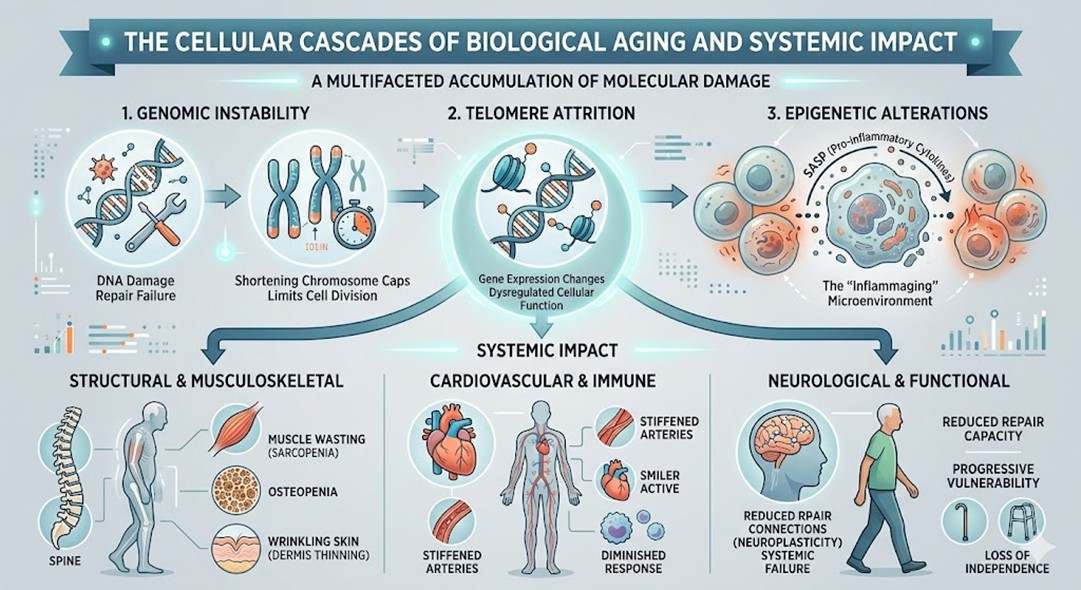
Aging is not a single event but a multifaceted accumulation of molecular damage. At its core, the mechanism involves genomic instability, telomere attrition, and epigenetic alterations. As cells divide, the protective caps on chromosomes shorten, eventually triggering cellular senescence—a state where cells stop dividing but remain metabolically active, secreting pro-inflammatory cytokines known as the Senescence-Associated Secretory Phenotype or SASP. This inflammaging creates a toxic microenvironment that damages neighboring healthy cells and degrades the extracellular matrix.
The physical manifestations of these deep-seated changes are profound. Symptoms range from sarcopenia and osteopenia to the thinning of the dermis and reduced neuroplasticity. The severity of this decline manifests as a loss of independence, increased risk of cardiovascular events, and a diminished immune response. Impacting life on every level, biological aging reduces the body’s ability to repair itself after injury or illness, creating a cycle of progressive vulnerability that eventually leads to systemic failure.
2.Conventional Approaches to Longevity and Current Constraints
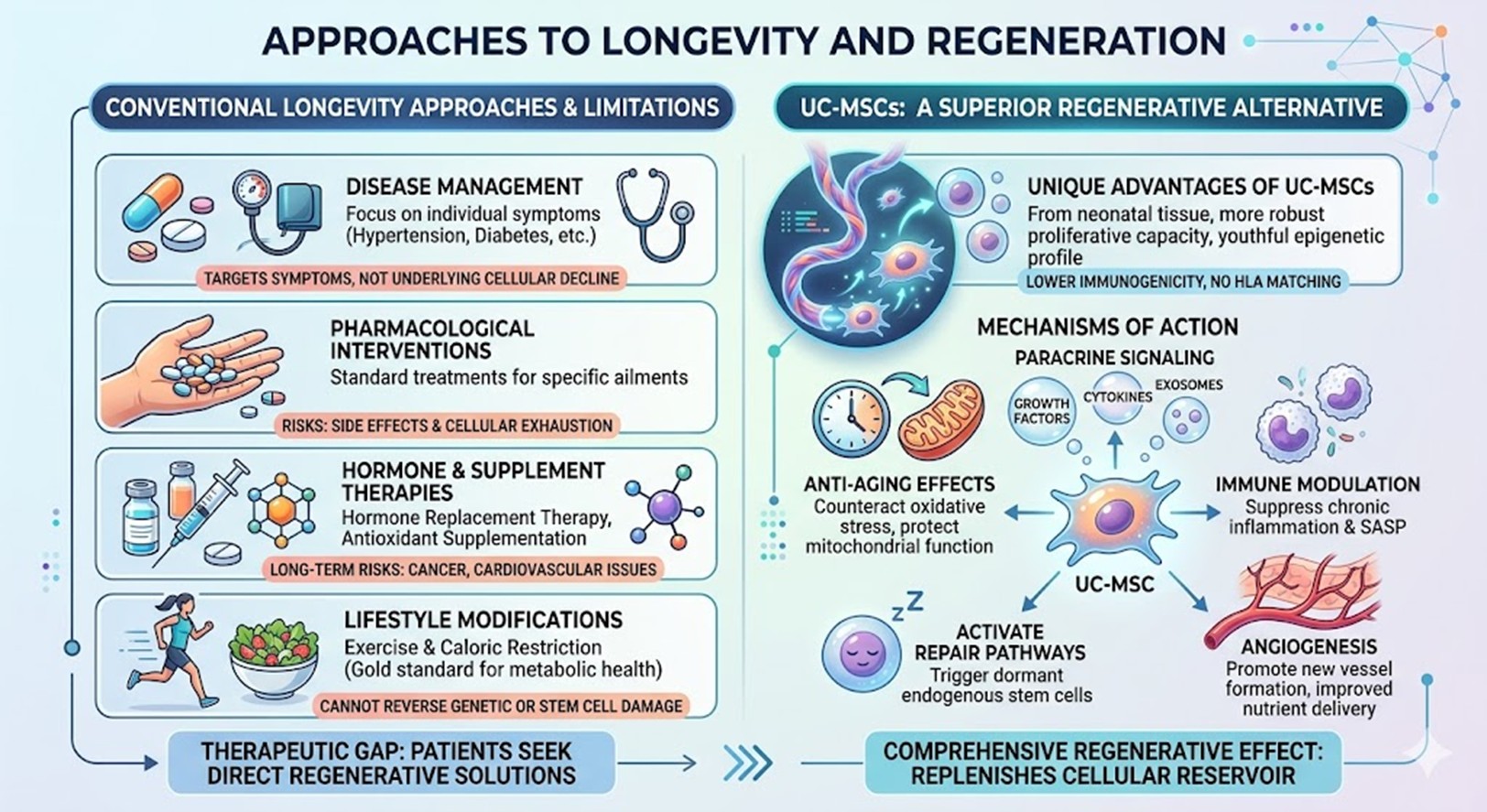
Historically, the medical community has approached aging through the lens of individual disease management. Standard treatments typically involve pharmacological interventions for specific ailments like hypertension, diabetes, or arthritis. Hormone replacement therapy and antioxidant supplementation have also been utilized to mitigate certain symptoms of hormonal decline and oxidative stress. Additionally, lifestyle modifications including caloric restriction and rigorous exercise regimens remain the gold standard for maintaining basic metabolic health.
However, these traditional methods possess significant limitations. Most pharmaceutical drugs target the symptoms of a disease rather than the underlying mechanism of cellular exhaustion. Hormone therapies carry risks of oncogenesis and cardiovascular complications when used long-term. Furthermore, lifestyle changes, while beneficial, cannot fully reverse the genetic and epigenetic damage already sustained by the body’s resident stem cell populations. These constraints have created a therapeutic gap where patients seek more direct, regenerative solutions that can actually replenish the body’s cellular reservoir rather than just slowing its depletion.
3.Why UC-MSCs Offer a Superior Regenerative Alternative
The shift toward stem cell therapy is driven by the unique biological advantages of Umbilical Cord-derived Mesenchymal Stem Cells. Unlike adult-derived cells, UC-MSCs are harvested from neonatal tissue, meaning they possess a more robust proliferative capacity and a more youthful epigenetic profile. These cells are essentially primed for rapid expansion and exhibit lower immunogenicity, making them ideal for therapeutic use without the need for complex HLA matching.
The mechanisms involved in UC-MSCs therapy are diverse and potent. Primarily, these cells operate through paracrine signaling, releasing a vast array of growth factors, cytokines, and extracellular vesicles like exosomes into the systemic circulation. These signals modulate the immune system, suppressing the chronic inflammation associated with SASP. Furthermore, UC-MSCs promote angiogenesis—the formation of new blood vessels—which improves nutrient and oxygen delivery to ischemic tissues. They also activate endogenous repair pathways, waking up the body’s own dormant stem cells. By directly counteracting oxidative stress and protecting mitochondrial function, UC-MSCs address the fundamental pillars of aging, offering a comprehensive regenerative effect that traditional pills or topicals simply cannot replicate.
4.The Future Landscape of Regenerative Medicine in Thailand
The trajectory of using MSCs for anti-aging and degenerative conditions in Thailand is exceptionally promising. The nation has positioned itself as a global leader in biotechnology, particularly within the niche of regenerative wellness. A premier Stem Cell Clinic Thailand offers a sophisticated infrastructure that combines cutting-edge laboratory processing with specialized clinical expertise. Thailand’s regulatory framework for medical tourism and innovative therapies provides a structured environment where patients can access advanced cellular treatments that might still be restricted or prohibitively expensive in other regions.
The reason Thailand stands out as the primary destination for this therapy is the synergy between high-level medical technology and a culture of holistic care. Research facilities in Bangkok and other major hubs are actively participating in clinical trials to further validate the efficacy of UC-MSCs for age-related indications. As the technology matures, the integration of genomic testing with MSC therapy will likely become a standard protocol in the Thai medical landscape, providing a personalized roadmap for longevity. Choosing Thailand ensures that patients receive care within a system that prioritizes both the scientific rigor of cellular processing and the comfort of world-class hospitality.
In conclusion, the fight against the biological decline of aging has evolved from simple symptom masking to the direct restoration of cellular health. The integration of UC-MSCs into the therapeutic arsenal provides a transformative pathway to address the molecular drivers of senescence. By neutralizing chronic inflammation and stimulating systemic repair, these cells offer hope for extending the human health span. As conventional treatments continue to show their limitations, the role of a dedicated Stem Cell Clinic Thailand becomes increasingly vital for those seeking evidence-based rejuvenation. The future of medicine lies in the ability to replenish what time has taken away, and through the sophisticated application of mesenchymal cell biology, that future is now accessible. This paradigm shift ensures that aging is no longer viewed as an inevitable collapse, but as a manageable biological process that can be navigated with precision and scientific innovation.