

Osteoporosis is a long-term skeletal disorder that gradually weakens bones, making them fragile and more susceptible to fractures. It is particularly common among older adults and postmenopausal women, although it can affect individuals of various ages. The condition is defined by reduced bone density and the deterioration of bone structure, which significantly increases the likelihood of fractures in areas such as the hips, spine, and wrists. These injuries often lead to chronic pain, reduced mobility, and a decline in overall quality of life.
At its core, osteoporosis develops due to an imbalance in the body’s natural bone remodeling process. In healthy individuals, bone formation and bone breakdown occur at a balanced rate. However, in osteoporosis, the activity of osteoclasts—cells responsible for breaking down bone—surpasses that of osteoblasts, which are responsible for building new bone. This imbalance results in a gradual loss of bone mass and structural strength over time.
Conventional treatments for osteoporosis, including bisphosphonates, hormone replacement therapy, and nutritional supplementation with calcium and vitamin D, are widely used to slow bone loss and reduce fracture risk. While these approaches can be effective in managing the condition, they do not restore damaged bone or reverse the underlying degeneration. In contrast, regenerative medicine offers a new direction by focusing on repairing and rebuilding bone tissue. Among these emerging therapies, stem cell-based treatments—particularly those using umbilical cord-derived mesenchymal stem cells (UC-MSCs)—have gained increasing attention for their potential to address the root causes of osteoporosis.
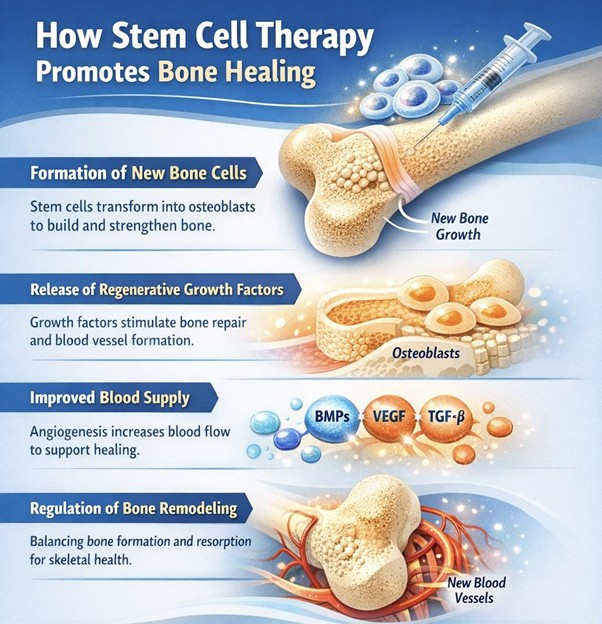
How Stem Cell Therapy Promotes Bone Healing
Once administered—either through targeted injections or systemic delivery—stem cells begin to exert their therapeutic effects through several biological mechanisms:
- Formation of New Bone Cells: A primary function of these stem cells is their ability to transform into osteoblasts. These newly formed cells produce bone matrix and facilitate mineralization, helping to rebuild weakened bone and improve density.
- Release of Regenerative Growth Factors: Stem cells secrete a variety of important growth factors that play a role in bone healing. These include bone morphogenetic proteins (BMPs), which stimulate bone formation; vascular endothelial growth factor (VEGF), which promotes the development of new blood vessels; and transforming growth factor-beta (TGF-β), which supports tissue remodeling. Together, these factors create a regenerative environment that enhances bone repair and structural stability.
- Improved Blood Supply: The formation of new blood vessels, a process known as angiogenesis, is critical for delivering oxygen and nutrients to healing tissues. By promoting vascular growth, stem cells help ensure that regenerating bone receives the resources it needs for proper development and strength.
- Regulation of Bone Remodeling: One of the most promising aspects of stem cell therapy is its ability to restore balance in the bone remodeling cycle. Stem cells can release molecules that inhibit excessive osteoclast activity, thereby reducing bone resorption. At the same time, they enhance osteoblast function, encouraging new bone formation. This dual action helps reestablish equilibrium in bone turnover, which is essential for maintaining long-term skeletal health.
Stem Cell Therapy Benefits Compared to Traditional Treatments for Osteoporosis
Regenerative Capability: Unlike medications that primarily aim to prevent further bone loss, stem cell therapy actively stimulates the growth of new bone tissue. This opens the possibility of partially reversing existing damage.
Reduced Fracture Risk: By strengthening bone structure and improving density, stem cell therapy may significantly lower the likelihood of fractures, especially in high-risk areas such as the hips and spine.
Enhanced Bone Quality: The bone formed through regenerative processes often demonstrates improved strength and resilience, contributing to better long-term outcomes.
Sustained Results: Because stem cell therapy targets the underlying mechanisms of osteoporosis, its benefits may persist longer than those of treatments that only address symptoms.
Fewer Side Effects: Compared to some medications that can cause gastrointestinal discomfort or hormonal side effects, stem cell-based therapies are generally well tolerated and associated with a lower risk of systemic complications.
Thailand’s Growing Leadership in Regenerative Medicine
Thailand has become an increasingly important destination for regenerative healthcare, including stem cell therapies for osteoporosis. The country offers a combination of modern medical infrastructure, experienced healthcare professionals, and cost-effective treatment options, making it attractive to both local and international patients.
Hospitals and specialized clinics in Thailand are equipped with advanced technologies and adhere to strict quality standards in stem cell processing and administration. Many medical professionals have received international training and possess extensive experience in regenerative treatments. Additionally, Thailand’s supportive regulatory environment encourages responsible innovation while maintaining patient safety.
Another advantage is the integration of stem cell therapy into comprehensive care programs. These programs often include physical rehabilitation, nutritional guidance, and lifestyle modifications designed to enhance treatment outcomes and support long-term bone health.
A New Era in Osteoporosis Management
The emergence of stem cell therapy represents a significant shift in the way osteoporosis is treated. Instead of focusing solely on slowing disease progression, this approach aims to repair damaged bone, restore structural integrity, and rebalance the body’s natural remodeling processes. By addressing the root causes of bone degeneration, regenerative medicine offers a more comprehensive and potentially transformative solution.
As scientific research continues to advance and clinical experience expands, stem cell therapy is expected to play an increasingly central role in osteoporosis care. For individuals living with fragile bones and the constant risk of fractures, this innovative treatment offers renewed hope for stronger bones, improved mobility, and a better quality of life.
In Thailand and beyond, regenerative medicine is redefining the future of bone health—turning the concept of true bone regeneration from a distant possibility into an emerging clinical reality.