

Integrating Advancements in Mesenchymal Stem Cell Technology and PhytoCellTec Technology to Combat Photo-aging
- General Remarks
Ultraviolet (UV) radiation causes structural, functional, and metabolic damage to dermal cells. By repeatedly attacking the same skin, patients suffer from extreme dermal atrophy and deep rhytides. This skin condition, extreme faux aging, is detrimental to the skin and a significant psychological burden to the patients, as it can lead to social anxiety. Current skin rejuvenating procedures are not able to repair the damage at the cellular level. New regenerative approaches are needed. PhytoCellTec Technology has the potential to repair cellular damage caused by senescence and give dermal cells a youthful look. The goal for the future of treating Photo-aging is to allow for the highest level of dermal care.
- Pathological Processes and Mechanisms
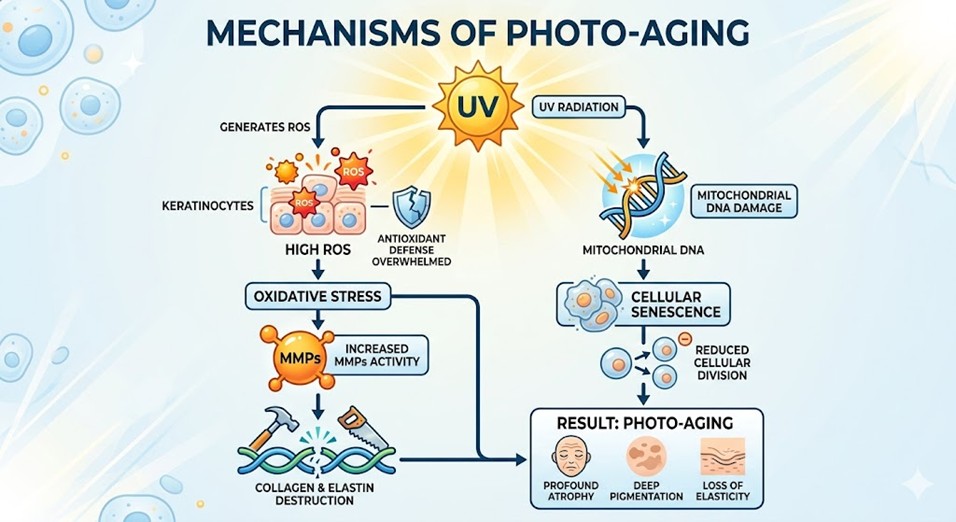
Photo-aging is primarily a result of oxidative stress. This is what PhytoCellTec Technology tries to resolve. Injury from UV radiation generates an abundance of ROS which overwhelms the skin’s existing antioxidant defense system. This oxidative stress is also responsible for the increased activity of matrix metalloproteinases (MMPs) which result in the destruction of collagen and elastin in the connective tissue. UV radiation also injures the mitochondrial DNA of dermal fibroblasts, and this injury increases the tendency for cellular senescence and reduces the number of cells that can be stimulated to divide. The result is profound atrophy, deep pigmentation, and loss of elasticity in the skin. Without intervention such as PhytoCellTec Technology, the quality of the skin’s protective barrier further declines as it increases the risk of infection and it deteriorates the quality of life.
- Conventional Treatments
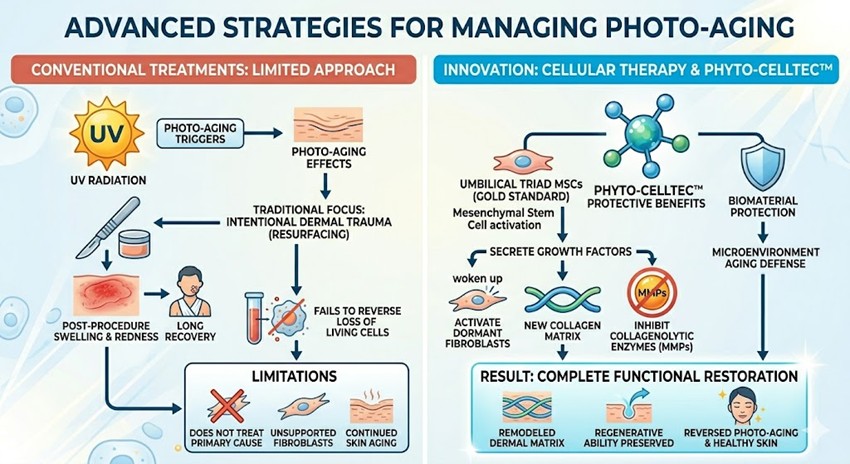
The traditional approach to Photo-aging treatment places emphasis on skin resurfacing and topical treatments, such as chemical peels and retinoids, to stimulate the formation of a new dermal layer. Although these treatments may improve skin appearance, they still leave many defects. Resurfacing can result in post-procedure redness and swelling, requiring a longer recovery period. Most traditional approaches focus on dermal intentional trauma to initiate repair, and do not provide a full treatment for a range of skin issues. Secondary infections as a result of treatment may result in non-compliance. Traditional approaches also do not treat the primary issue of Photo-aging and due to a lack of use of PhytoCellTec Technology, fail to reverse the loss of living precursor cells. Therefore, skin continues to suffer.
- Innovations in Cellular Therapy
Developing new restorative treatments for Photo-aging skin has implications for the utilization of advanced biological materials. The combination of PhytoCellTec Technology with umbilical triad stem cells presents a new option for dermal restoration. In skin regeneration, Mesenchymal Stem Cells are considered the gold standard. When these cells are in contact with a damaged dermal environment, they are able to elicit a response that results in secretion of a broad range of growth factors, which included the activation of dormant fibroblasts to produce new collagen matrices, as well as a potent inhibitory response to collagenolytic enzymes. The mesenchymal-derived PhytoCellTec Technology provides synergistic protective benefits. PhytoCellTec Technology along with the proprietary developed biomaterial protect the microenvironment from aging. The combination of engineered mesenchymal stem cells with PhytoCellTec Technology results in the remodeling of the skin dermal matrix. In combination with the biological restoration of the impaired cells due to Photo-aging, the complete functional ability of the cells is restored. The existing endothelial cells which are the source of the remaining pluripotent cells, with preservation of the necessary Epithelium Cells preserves the regenerative ability of the cells. It is the combination of these dual technologies that will be the foundation for managing advanced Photo-aging.
- Future Trends in Thailand
Excessive ultraviolet rays and rapid skin Photo-aging cellular degeneration and its advanced phototherapy developments has positive implications in Thailand’s tropical skin phototyping. Thailand has also introduced cutting-edge digital -clinical technology that is at the forefront with the integration of biological therapeutics and innovation in medical tourism. The combination of regional cellular sciences and holistic wellness is the basis of clinical studies. The region’s regulatory supportive frameworks for clinical translations of cellular therapies integration within the region will support therapeutic developments. The combination of PhytoCellTec Technology and human cellular products will establish Thailand as a global leader in Regenerative dermatology. Thailand’s localized protocols for the management of photo-ageing will be the first of its kind in skin restoration in extreme environments.
- Final Thoughts
Effective management and restoration of skin Photo-aging as a result of persistent and chronic sun exposure require more advanced approaches than basic cosmetic techniques. The full scope of biological knowledge and mechanisms involved is crucial in the development of restorative techniques. The dual combination of PhytoCellTec Technology and human cellular derivatives is the first of its kind and is expected to significantly improve therapeutic interventions. The combination will resolve a long-standing and extremely difficult clinical challenge of achieving dermal reconstruction while safeguarding the upper dermal cell progenitors. There is a growing optimism in the region for the improvement of anti-Photo-aging strategies. The use of PhytoCellTec Technology will bring to the clinic the long-awaited rejuvenation of the dermis.