

Alzheimer’s disease is one of the most challenging neurological disorders affecting modern society. As the most common cause of dementia worldwide, it gradually damages memory, thinking ability, behavior, and the capacity to perform everyday activities.
Current medical treatments for Alzheimer’s disease remain limited in their effectiveness. Most available medications are designed to manage symptoms such as memory loss or confusion and may temporarily slow cognitive decline.
One of the most promising areas of investigation is regenerative medicine, particularly the use of stem cells. Among the different types of stem cells studied for neurological disorders, umbilical cord–derived mesenchymal stem cells (UC-MSCs) have gained growing attention. Scientists are examining whether these cells could play a supportive role in protecting neurons, reducing inflammation, and promoting repair processes within the brain.
Potential Ways Stem Cells May Support Alzheimer’s Treatment
Supporting Neural Repair and Brain Plasticity
Stem cells may help support neural plasticity, which refers to the brain’s ability to adapt and reorganize its neural connections. By releasing growth factors and signaling molecules, stem cells may help strengthen existing neural pathways and encourage the formation of new connections between neurons. Although this process does not completely replace lost cells, it may allow the brain to compensate for damage and maintain certain cognitive functions for longer periods.
Production of Neuroprotective Growth Factors
Stem cells are known to produce several important neurotrophic factors that help maintain neuronal health. In Alzheimer’s disease, levels of these protective molecules often decline. By increasing their availability, stem cells may help protect vulnerable neurons from damage and support the repair of synaptic connections. This neuroprotective environment may contribute to improved brain resilience.
Reduction of Chronic Neuroinflammation
Stem cells release anti-inflammatory molecules that can help regulate immune activity in the brain. By calming excessive inflammatory responses, stem cells may help prevent further neuronal injury and slow the progression of neurodegeneration.
Promoting the Removal of Toxic Protein Accumulations
Stem cells may help enhance the brain’s natural waste-clearing systems. By modulating the activity of immune cells involved in debris removal, stem cells may help improve the clearance of toxic proteins. This effect could reduce their damaging influence on brain cells.
Enhancing Cerebral Blood Flow
Stem cells can stimulate angiogenesis, the biological process through which new blood vessels form. Increased vascular growth may improve blood flow and oxygen delivery to affected regions of the brain, supporting neuronal metabolism and overall brain function.
Long-Term Effects Through Cellular Signaling
One of the most intriguing aspects of stem cell therapy is the concept of paracrine signaling. This process involves stem cells releasing beneficial molecules that influence surrounding cells and tissues. Through these signals, stem cells may activate protective and regenerative pathways within the brain. Importantly, these beneficial effects may continue even after the stem cells themselves are no longer present in the tissue. This signaling mechanism is believed to play a significant role in the long-term therapeutic potential of stem cell treatments.
Potential Advantages of Stem Cell Therapy in Alzheimer’s Care
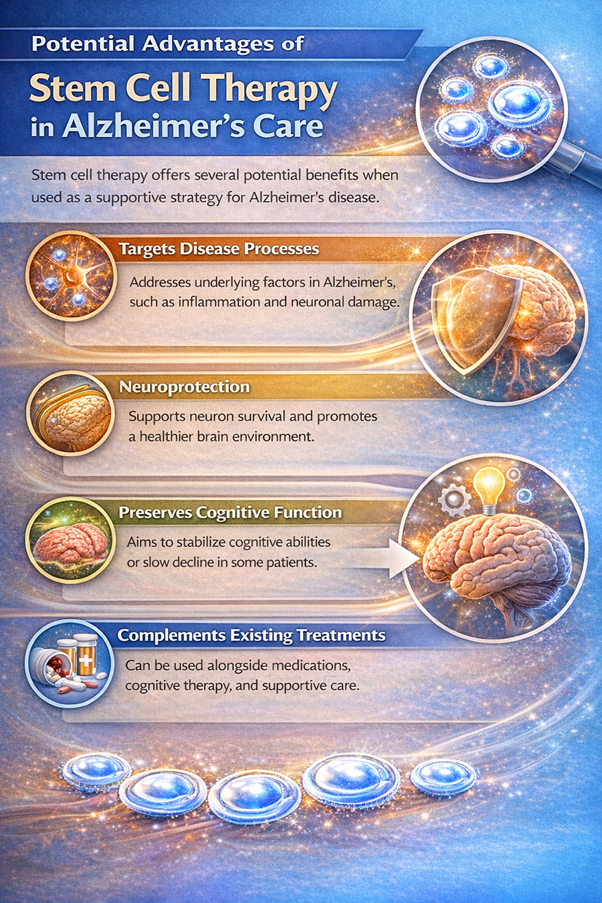
Stem cell therapy offers several potential advantages when used as a supportive strategy for Alzheimer’s disease. One key benefit is that it targets biological processes involved in the disease, such as inflammation and neuronal damage, rather than focusing only on symptoms.
Another possible advantage is neuroprotection. By supporting the survival of existing neurons and promoting healthier cellular environments, stem cells may help preserve brain function. Early clinical observations also suggest that stem cell therapy could contribute to stabilizing cognitive abilities and maintaining daily functioning in some patients.
In many cases, stem cell therapy is not intended to replace existing treatments but rather to complement them. It may be used alongside medications, cognitive therapy, and supportive care to create a more comprehensive approach to disease management.
Thailand’s Role in Advancing Regenerative Neurology
Thailand has become an important center for research and clinical practice in regenerative medicine. Many hospitals and specialized medical facilities in the country operate advanced laboratories designed for stem cell processing, storage, and quality control according to international standards.
Medical teams in Thailand often include experts in neurology, regenerative medicine, and clinical research who collaborate to develop safe and responsible treatment protocols. Their work contributes to the global understanding of how stem cell therapies may be used for neurological conditions, including Alzheimer’s disease.
The country also has a well-developed medical tourism system that allows international patients to access specialized treatments. Coordinated healthcare programs, multilingual medical staff, and comprehensive patient support services make Thailand an accessible destination for individuals seeking advanced medical care.
Conclusion
Alzheimer’s disease continues to present one of the most difficult challenges in modern medicine. With current treatments offering only limited relief, the search for therapies that address the underlying causes of neurodegeneration has become increasingly urgent.
Stem cell therapy represents an emerging and promising avenue of research. By supporting neuronal survival, regulating inflammation, improving blood circulation, and enhancing the brain’s repair mechanisms, stem cell therapy may offer new possibilities for improving patient outcomes.
Regenerative medicine is opening new pathways in the fight against neurodegenerative diseases. With its growing expertise in stem cell science and advanced medical infrastructure, Thailand is playing a meaningful role in exploring these innovative approaches and helping shape the future of Alzheimer’s care.