

Sports injuries are a common challenge for both professional athletes and active individuals. Damage to muscles, ligaments, tendons, cartilage, and bones can significantly limit performance and disrupt daily life. Conventional treatments—primarily focus on relieving symptoms and supporting natural healing. However, these approaches may not fully repair damaged tissues or prevent future complications. In contrast, stem cell therapy introduces a regenerative strategy that works by enhancing the body’s own repair mechanisms, offering a more comprehensive path to recovery.
The Science Behind Stem Cell Therapy in Sports Medicine
In sports injuries, stem cells may develop into muscle cells, cartilage cells, or tendon cells, contributing directly to tissue repair.
Beyond their ability to differentiate, stem cells also influence the healing environment through several biological mechanisms. One of their primary functions is the release of bioactive substances, including growth factors and signaling proteins. These molecules stimulate nearby cells, encourage the formation of new blood vessels, and activate repair processes throughout the injured tissue.
Another important aspect of stem cell therapy is its anti-inflammatory effect. Persistent inflammation often delays healing and contributes to chronic pain. Stem cells help regulate the immune response, reducing swelling and creating conditions that are more favorable for tissue regeneration.
Additionally, stem cell therapy is particularly beneficial for soft tissues, which typically heal slowly due to limited blood supply. By enhancing cellular activity and improving local circulation, this treatment can significantly accelerate recovery in areas where healing is usually prolonged.
Types of Sports Injuries That May Benefit
Stem cell therapy is being applied to a wide range of sports-related injuries, both acute and chronic. It offers a regenerative option for individuals seeking to avoid invasive procedures or improve healing outcomes.
Tendon and ligament injuries are among the most common conditions treated with stem cell therapy. Injuries such as Achilles tendon inflammation, anterior cruciate ligament (ACL) tears, and rotator cuff damage often require extended recovery periods. Stem cells can support faster repair and improve the structural integrity of these tissues, potentially reducing downtime and enhancing long-term stability.
Cartilage damage is another area where stem cell therapy shows promise. Conditions like meniscus tears or joint degeneration can be difficult to treat because cartilage has limited ability to heal on its own. By stimulating cartilage regeneration, stem cells can help reduce joint pain, improve mobility, and restore function.
Muscle injuries, including strains and partial tears, are also suitable for this treatment. Stem cells promote the formation of new muscle fibers, helping restore strength and flexibility more quickly than traditional rehabilitation alone. This can be particularly valuable for athletes who need to regain performance levels in a shorter time frame.
Bone injuries, such as stress fractures or delayed-healing fractures, may also benefit from stem cell therapy. While bones typically have strong healing capacity, certain cases require additional support. Stem cells can enhance bone regeneration, improve healing efficiency, and reduce the risk of complications.
Clinical Advantages of Stem Cell Therapy for Sport Injuries
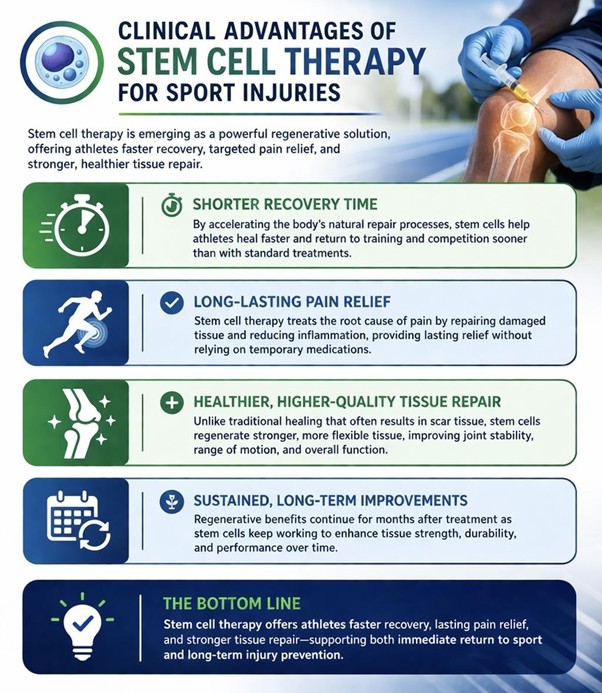
One of the most appealing aspects of stem cell therapy is its potential to shorten recovery time. By accelerating the body’s natural repair processes, athletes may return to training and competition sooner than expected with standard treatments. This can be a crucial advantage in competitive sports where time away from activity can impact performance and career progression.
Pain relief is another significant benefit. Unlike medications that temporarily mask discomfort, stem cell therapy addresses the underlying cause of pain by promoting tissue repair and reducing inflammation. Many patients experience long-lasting improvements, making it an attractive option for chronic injuries.
The quality of healed tissue is also an important consideration. Traditional healing often results in scar tissue, which may be weaker and less flexible than the original structure. Stem cell therapy, on the other hand, supports the regeneration of healthier, more functional tissue. This can lead to better joint stability, improved range of motion, and a lower likelihood of reinjury.
In addition to immediate benefits, stem cell therapy may provide long-term improvements. Regenerative processes can continue for months after treatment, gradually enhancing tissue strength and function. This sustained effect makes it a valuable option not only for recovery but also for long-term injury prevention.
Thailand as a Destination for Regenerative Sports Medicine
Thailand has become a leading destination for advanced medical treatments, including stem cell therapy. The country is known for its modern healthcare infrastructure, skilled medical professionals, and adherence to international standards. Many clinics specialize in regenerative medicine and offer tailored treatment plans for sports injuries using stem cells.
The use of umbilical cord–derived stem cells is carefully regulated to ensure ethical sourcing and safety. Laboratories follow strict quality control measures to maintain the viability and effectiveness of the cells. As a result, patients can access cutting-edge therapies in a safe and professional environment.
Thailand’s reputation in medical tourism also makes it an attractive choice for international patients. Combining high-quality care with relatively affordable treatment options, the country continues to draw athletes and active individuals seeking innovative recovery solutions.
Conclusion
The management of sports injuries is evolving with the introduction of regenerative therapies like stem cell therapy. By harnessing the body’s natural healing capacity, this approach goes beyond conventional methods to repair tissues at a deeper level. From ligament tears and muscle injuries to cartilage damage and fractures, stem cell therapy offers a versatile and effective solution.
With benefits such as faster recovery, reduced pain, improved tissue quality, and long-term healing, it provides athletes with an opportunity to return to activity stronger and more resilient. In Thailand, where medical innovation and expertise continue to grow, stem cell therapy is helping redefine how sports injuries are treated—supporting better performance, quicker recovery, and a healthier future for active individuals.