

Knee pain and joint degeneration are among the most common musculoskeletal conditions affecting people worldwide. These problems may arise from aging, sports injuries, repetitive stress, or degenerative diseases such as osteoarthritis. Conventional treatment options are commonly used to manage these conditions. However, most of these approaches primarily focus on relieving symptoms rather than repairing the underlying tissue damage within the joint.
In recent years, regenerative medicine has introduced new therapeutic strategies designed to address the root causes of joint deterioration. One of the most promising innovations is the use of umbilical cord–derived mesenchymal stem cell (UC-MSC) therapy. This advanced treatment focuses on restoring damaged cartilage and bone in the knee joint by stimulating the body’s natural healing processes.
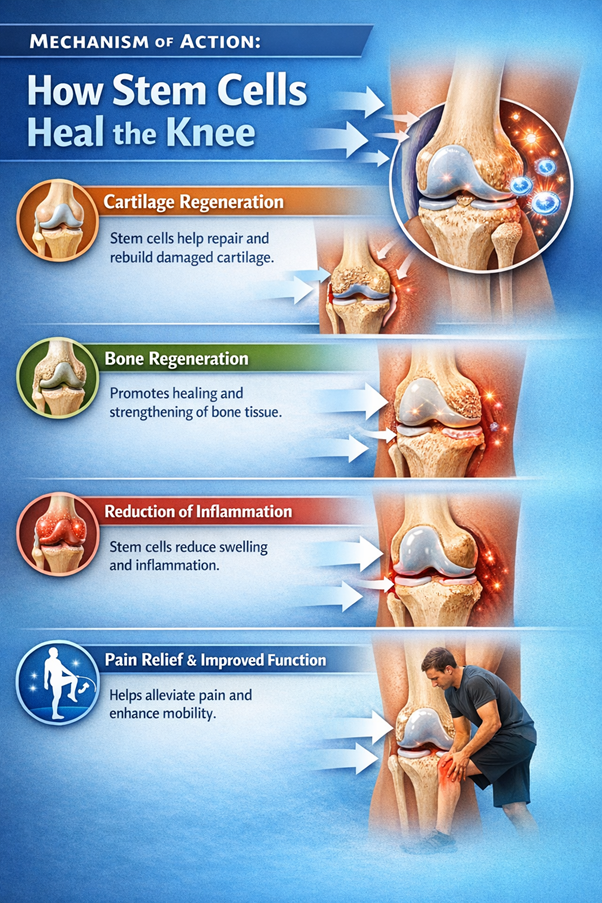
Mechanism of Action: How Stem Cells Heal the Knee
- Cartilage Regeneration
Stem cells can stimulate the formation of new cartilage by promoting the activity and development of chondrocytes. Through the release of growth factors and regenerative signals, these stem cells encourage the body’s natural repair processes to rebuild damaged cartilage surfaces. As new cartilage forms, the joint may regain smoother movement and improved flexibility.
- Bone Regeneration
Stem cells have the ability to differentiate into osteoblasts, the specialized cells responsible for producing new bone tissue. This capability allows stem cell therapy to support bone regeneration and strengthen weakened areas within the joint.
- Reduction of Inflammation
Stem cells possess strong anti-inflammatory properties that help regulate immune responses. These stem cells release anti-inflammatory cytokines that calm the inflammatory environment and prevent further tissue breakdown. By reducing inflammation, the joint environment becomes more favorable for healing and regeneration.
- Pain Relief and Improved Function
As stem cell therapy repairs damaged cartilage and bone while reducing inflammation, many patients experience significant improvements in symptoms. Decreased inflammation and restored tissue integrity often result in reduced pain levels and better joint function. Patients may notice improvements in mobility, flexibility, and overall comfort during daily activities. These functional improvements can greatly enhance quality of life and support a more active lifestyle.
Approaches to Stem Cell Therapy for Knee Treatment in Thailand
- Intra-Articular Injection
The most commonly used and minimally invasive technique is intra-articular injection. In this procedure, stem cells are injected directly into the knee joint. The injection is often performed with imaging guidance to ensure precise placement within the affected area. Once inside the joint, the stem cells migrate toward damaged tissues and begin releasing growth factors that support repair and regeneration.
- Scaffold-Based Stem Cell Therapy
For patients with extensive cartilage or bone loss, stem cells may be combined with specialized biomaterial scaffolds. These scaffolds serve as supportive frameworks that allow stem cells to attach, grow, and develop new tissues. This method is particularly useful when large or deep tissue defects require additional structural support for successful regeneration.
- Combination of Stem Cell and Platelet-Rich Plasma (PRP) Therapy
Another therapeutic strategy involves combining stem cell therapy with platelet-rich plasma. When used together with stem cells, PRP can enhance regenerative effects, accelerate tissue repair, and further reduce inflammation within the joint.
- Surgical Stem Cell Implantation
In cases where knee damage is severe or localized to specific areas, stem cells may be implanted during minimally invasive surgery. This technique allows physicians to place the cells directly into the damaged region, improving the chances of effective tissue regeneration. Surgical implantation is typically considered when targeted repair of cartilage or bone defects is required.
The Advantages of Using Stem Cell Therapy for Knee Joint Issues
Stem cell therapy offers several important benefits compared with conventional treatments.
One major advantage is its regenerative nature. Instead of simply masking symptoms or replacing the joint mechanically, stem cells work to repair damaged tissues and restore natural joint function. The treatment is also minimally invasive, particularly when administered through injections, which reduces recovery time and lowers the risk of complications.
Additionally, the anti-inflammatory molecules released by stem cells help relieve swelling and discomfort more naturally than many conventional medications. As cartilage and bone structures improve, patients often experience greater joint stability, flexibility, and endurance. For many individuals—especially those with early or moderate joint degeneration—this therapy may delay or even eliminate the need for total knee replacement surgery.
Stem Cell Therapy in Thailand
Thailand has become a leading destination in Asia for regenerative medicine treatments, including stem cell therapy for joint disorders. The country offers advanced medical infrastructure, skilled healthcare professionals, and modern biotechnology laboratories that follow international safety and quality standards.
Stem cells used in these therapies are ethically sourced from donated umbilical cords after childbirth. The donated tissues are processed in certified laboratories under carefully controlled and sterile conditions to ensure the safety, purity, and quality of the cells. Many Thai medical centers also incorporate rehabilitation programs alongside stem cell therapy. These programs may include physiotherapy, strengthening exercises, and lifestyle guidance to enhance treatment outcomes and promote long-term joint health.
Conclusion
Umbilical cord–derived mesenchymal stem cell therapy represents an exciting advancement in the treatment of knee cartilage and bone disorders. By harnessing the regenerative capabilities of stem cells, this innovative therapy aims to repair damaged tissues, reduce inflammation, and restore normal joint function. Unlike traditional treatments that focus mainly on symptom relief, stem cell therapy addresses the underlying causes of joint degeneration.
As research in regenerative medicine continues to grow, stem cell therapy is emerging as a promising alternative for patients seeking effective, minimally invasive solutions for knee pain and mobility problems. With its advanced medical facilities and expanding expertise in regenerative therapies, Thailand has become a leading destination for individuals seeking innovative treatments to restore knee health and regain an active, pain-free lifestyle.