

Autism Spectrum Disorder (ASD) is a multifaceted neurodevelopmental condition that influences how individuals perceive, communicate, and interact with others. People on the autism spectrum may experience difficulties with social communication, interpreting nonverbal cues, and adapting to changes in routine. The condition varies widely in presentation, with some individuals displaying mild social challenges, while others may have more significant developmental delays, learning differences, or repetitive behavioral patterns. This diversity makes autism a highly individualized condition that requires tailored support strategies.
Conventional management of autism typically focuses on behavioral and developmental interventions. These may include speech therapy, occupational therapy, educational programs, and structured behavioral approaches designed to enhance communication skills, social interaction, and daily functioning. Family involvement also plays a critical role in reinforcing these strategies. While such interventions are essential and often highly beneficial, they mainly target observable behaviors rather than addressing the biological or neurological factors that may contribute to the condition.
In recent years, regenerative medicine has attracted growing interest as a potential way to explore underlying biological mechanisms associated with autism. Among these emerging approaches, stem cell therapy—particularly involving mesenchymal stem cells (MSCs)—has become a topic of increasing research and discussion. These cells are known for their ability to support tissue repair, regulate immune responses, and influence cellular communication, making them a promising candidate for further investigation in autism.
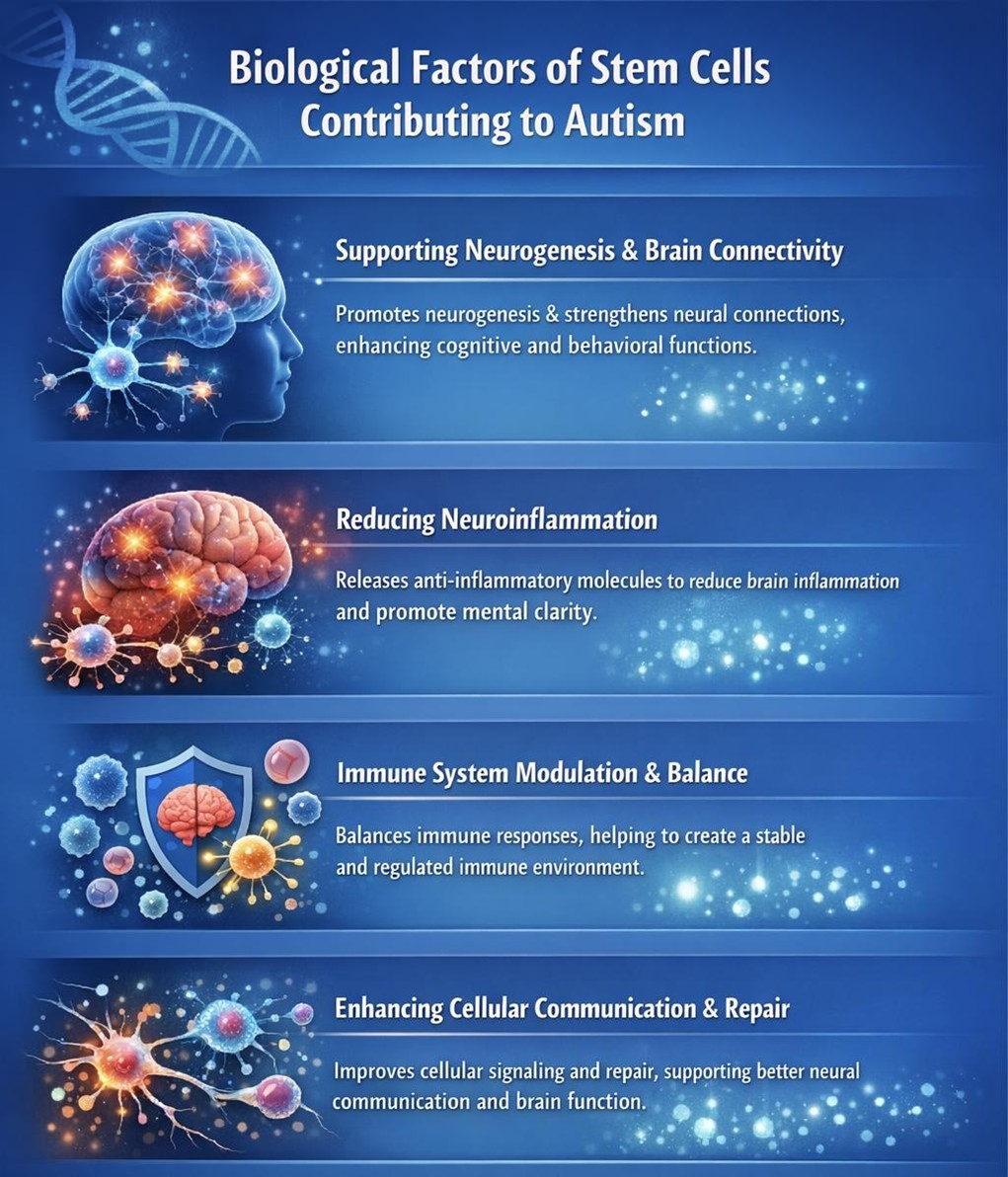
Biological Factors of Stem Cells Contributing to Autism
Supporting Neurogenesis and Brain Connectivity: One of the proposed benefits of stem cell therapy lies in its potential to support neurogenesis and neural connectivity. People with autism often show variations in how different areas of the brain connect and communicate with one another. Some neural pathways may be overactive, while others may not function as efficiently. These variations can affect emotional regulation, language development, and executive functioning. Stem cells have been shown in preclinical research to release growth factors that encourage the formation of new neurons and strengthen existing neural connections. By promoting neuroplasticity—the brain’s ability to reorganize and adapt—this therapy may contribute to improved cognitive and behavioral outcomes over time.
Reducing Neuroinflammation in Autism: Another important area of focus is the reduction of neuroinflammation. Increasing evidence suggests that some individuals with autism experience elevated levels of inflammation within certain regions of the brain. This chronic inflammatory state may interfere with normal neural signaling and contribute to behavioral and cognitive challenges. Stem cells are known to release anti-inflammatory molecules that help regulate immune responses. By reducing excessive inflammation, these cells may help create a more balanced neural environment, potentially supporting clearer thinking, improved focus, and better behavioral regulation.
Immune System Modulation and Balance: In addition to addressing inflammation, stem cell therapy may help balance overall immune system function. Some individuals with autism exhibit irregular immune responses, including heightened inflammatory activity or autoimmune tendencies. Stem cells have the ability to modulate immune activity, shifting it toward a more stable and regulated state. This immune-balancing effect may reduce biological stressors that impact brain development and function, contributing to improved overall well-being.
Enhancing Cellular Communication and Repair: Stem cells also play a role in enhancing cellular communication and repair. They release signaling molecules, including growth factors and extracellular vesicles such as exosomes, which influence how cells interact with one another. These signals help create a supportive environment for tissue repair and functional improvement. In the context of autism, improved cellular communication within the brain may support more efficient neural processing. Early observations from clinical research suggest that these effects may be associated with gradual improvements in behavior, communication, and learning capacity.
Thailand as a Center for Stem Cell Therapy
Thailand has become an increasingly recognized center for regenerative medicine, including the application of stem cell therapy for autism. The country has invested in modern healthcare infrastructure, advanced laboratory technologies, and the training of medical professionals in the field of cellular therapy. These developments have enabled the safe and controlled exploration of innovative treatments within a structured clinical environment.
A key strength of Thailand’s approach lies in its emphasis on safety and quality. Umbilical cord stem cells used in treatment are obtained through ethical donation programs and undergo rigorous laboratory testing to ensure purity, sterility, and viability. Treatment protocols are typically supervised by qualified medical professionals and include comprehensive patient assessments before therapy, as well as ongoing monitoring afterward. This ensures that each treatment plan is tailored to the individual while maintaining high standards of care.
In addition, Thailand is actively involved in clinical research and international collaboration related to stem cell therapy. Hospitals and research institutions are participating in studies aimed at evaluating the safety and potential benefits of stem cell therapy for autism. These efforts focus on refining treatment protocols, determining optimal dosing strategies, and identifying which patients may benefit most. Collaboration with global experts helps strengthen scientific understanding and supports the responsible advancement of this emerging field.
Conclusion: A New Direction in Autism Care
Stem cell therapy represents a promising and research-driven approach to supporting individuals with Autism Spectrum Disorder. By addressing factors such as inflammation, immune imbalance, and neural connectivity, this therapy offers a potential pathway toward improving cognitive, behavioral, and social outcomes. While it is not a cure, it reflects an important shift toward exploring the biological foundations of autism alongside traditional therapies.
Thailand’s growing expertise in regenerative medicine, combined with its commitment to ethical practices and clinical innovation, positions it as a significant contributor to the development of stem cell–based treatments for autism. As research continues and our understanding deepens, this approach may become an important component of comprehensive care strategies aimed at enhancing quality of life, developmental progress, and long-term well-being for individuals on the autism spectrum.