

Parkinson’s disease is a progressive neurological disorder that primarily affects movement and coordination. Conventional treatments for Parkinson’s disease, including medications and surgical interventions, are mainly designed to manage symptoms rather than repair the underlying damage. In recent years, however, regenerative medicine has introduced new possibilities. One of the most promising approaches involves the use of umbilical cord-derived mesenchymal stem cells (UC-MSCs), which are being studied for their potential to restore damaged neural tissue and improve neurological function.
Stem cell therapy focuses on harnessing the natural regenerative abilities of stem cells to repair or replace injured cells. In the context of Parkinson’s disease, stem cells are being explored for their ability to target the root cause of the condition—loss of dopamine-producing neurons—and potentially slow or reverse disease progression.
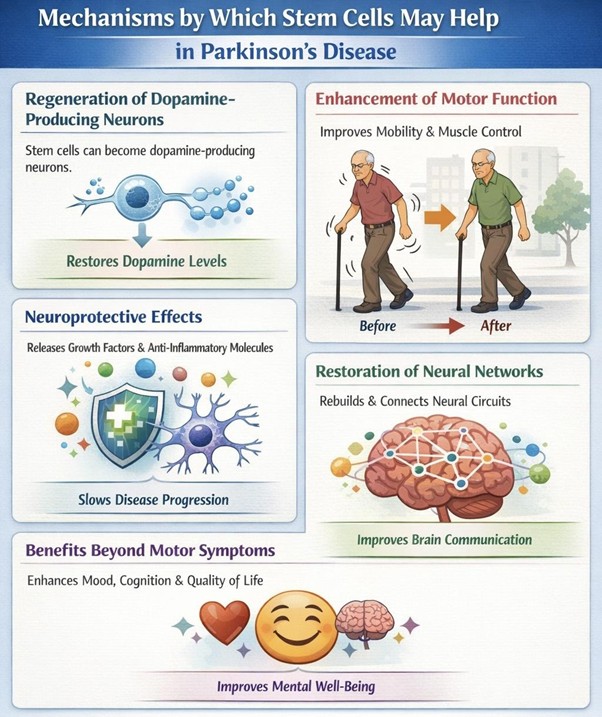
Mechanisms by Which Stem Cells May Help
- Regeneration of Dopamine-Producing Neurons
One of the most significant therapeutic goals in Parkinson’s disease is the restoration of dopamine levels in the brain. Stem cells have the unique ability to differentiate into various cell types under the right conditions. When introduced into the body, these cells may develop into neuron-like cells capable of supporting or replacing damaged dopamine-producing neurons.
This process, often referred to as neurogenesis, could contribute to replenishing the neuronal population that has been lost. By restoring dopamine production, stem cell therapy may help improve communication between brain regions responsible for movement control, potentially reducing the severity of motor symptoms.
- Enhancement of Motor Function
The hallmark symptoms of Parkinson’s disease—such as tremors, rigidity, and slowed movements—are directly linked to dopamine deficiency. By promoting the regeneration of dopamine-producing cells, stem cell therapy may help restore more normal motor function.
Patients undergoing this type of therapy may experience improvements in mobility, coordination, and muscle control. Although results can vary depending on the individual and the stage of the disease, even modest improvements in motor abilities can significantly enhance daily functioning and independence.
- Neuroprotective Effects
Beyond their regenerative capabilities, stem cells are known for their neuroprotective properties. These cells can release a variety of bioactive molecules, including growth factors and anti-inflammatory compounds, which support the survival and health of existing neurons.
This protective effect may help slow the progression of Parkinson’s disease by reducing ongoing neuronal damage. In addition, these secreted factors can create a more favorable environment within the brain, encouraging repair processes and minimizing further degeneration.
- Restoration of Neural Networks
Parkinson’s disease not only involves the loss of individual neurons but also disrupts the complex networks that coordinate movement. Effective motor control depends on precise communication between different regions of the brain.
Stem cells may contribute to rebuilding these neural circuits by integrating into existing pathways and forming new connections. This process could enhance signal transmission within the brain, leading to improved coordination and smoother movement. Reestablishing these networks is essential for achieving long-term functional recovery.
- Potential Benefits Beyond Motor Symptoms
While Parkinson’s disease is primarily associated with movement disorders, it also affects other aspects of health, including mood, cognition, and overall mental well-being. Many patients experience symptoms such as depression, anxiety, and cognitive decline.
Dopamine plays a role not only in motor control but also in emotional regulation and cognitive function. By helping restore dopamine balance, stem cell therapy may offer benefits that extend beyond physical symptoms. Some individuals may notice improvements in mood, mental clarity, and overall quality of life.
Additionally, the anti-inflammatory properties of stem cells may help reduce neuroinflammation, which is believed to contribute to both motor and non-motor symptoms of the disease.
Why Thailand Is Emerging as a Destination for Stem Cell Therapy
Thailand has become a leading location for advanced medical treatments, including stem cell therapy. The country offers modern healthcare facilities, experienced medical professionals, and a growing focus on regenerative medicine.
Stem cell therapy in Thailand is often conducted in specialized clinics that follow strict medical protocols and international standards. The use of umbilical cord-derived stem cells is particularly appealing because these cells are readily available, non-invasive to obtain, and have strong regenerative potential.
Moreover, Thailand’s accessibility and comparatively lower treatment costs make it an attractive option for both local and international patients seeking innovative therapies.
Conclusion
Stem cell therapy represents a forward-looking approach to addressing Parkinson’s disease by targeting its underlying causes rather than only managing symptoms. Through mechanisms such as neuronal regeneration, neuroprotection, and restoration of neural networks, this therapy holds the potential to improve both motor and non-motor aspects of the condition.
By promoting the growth of new dopamine-producing cells and supporting the survival of existing neurons, stem cells may help restore more balanced brain function. While further research is needed to fully establish its long-term effectiveness, stem cell therapy offers hope as part of an evolving strategy in regenerative medicine.
As Thailand continues to advance in this field, it remains a key destination for individuals exploring innovative treatment options for Parkinson’s disease.