

Dermatology has entered a new era with the rise of regenerative medicine, an approach that focuses on repairing and restoring tissues rather than simply treating visible symptoms. Among the most promising advancements in this field is the use of umbilical cord–derived mesenchymal stem cells (UC-MSCs). This innovative therapy uses the biological potential of stem cells to rejuvenate the skin, repair damage, and support long-term skin health at the cellular level.
Thailand has become an important center for regenerative medicine, with advanced medical technology, skilled specialists, and growing expertise in stem cell research and clinical applications. In dermatology, stem cell therapy is increasingly used for both medical and cosmetic purposes. Medical dermatology applications include treatment of chronic inflammatory skin conditions, while aesthetic dermatology focuses on skin rejuvenation and anti-aging. Because of their powerful regenerative properties and ability to regulate immune responses, stem cells are being explored as potential treatments for a wide variety of skin issues, including acne scars, burns, wrinkles, pigmentation disorders, and inflammatory diseases such as eczema and psoriasis.
Key Regenerative Roles of Mesenchymal Stem Cells
One of the primary advantages of stem cells is their capacity for cellular differentiation. These cells can develop into fibroblasts and keratinocytes, which are two essential types of skin cells. Fibroblasts are responsible for producing collagen and maintaining the skin’s structural framework, while keratinocytes form the protective outer layer of the skin and maintain barrier function. By replenishing these cell populations, stem cells help restore the structural integrity and resilience of the skin.
Another important function of stem cells is their anti-inflammatory capability. Many chronic skin disorders arise from excessive or prolonged immune responses that lead to redness, irritation, and tissue damage. Stem cells release bioactive molecules that help regulate immune activity, reducing inflammation and helping calm conditions such as psoriasis, rosacea, and eczema. Stem cells also produce growth factors and signaling molecules that stimulate tissue repair. Stem cells create an environment that encourages skin repair and regeneration.
How Stem Cell Therapy Supports Skin Repair
Cell Renewal and Tissue Restoration: One of the most important effects of stem cell therapy is its ability to promote the replacement of damaged or aging cells. Stem cells help rebuild the skin’s architecture and support the regeneration of healthy tissue. This process improves skin texture, strengthens the protective barrier, and contributes to a more even skin tone.
Stimulation of Collagen and Elastin Production: Stem cells can stimulate fibroblasts to increase the production of collagen and elastin. As a result, the skin becomes firmer and more flexible, and visible signs of aging may be reduced.
Enhanced Healing of Wounds and Burns: Stem cell therapy has shown considerable potential in accelerating the healing of wounds, burns, and surgical scars. Stem cells promote angiogenesis, which is the formation of new blood vessels that supply oxygen and nutrients to damaged tissues. They also assist in remodeling collagen, helping wounds heal more efficiently while reducing the formation of excessive scar tissue. This can lead to improved cosmetic outcomes and faster recovery.
Immune and Inflammatory Regulation: Stem cells release molecules that regulate immune responses and reduce inflammatory activity. This immunomodulatory effect can help relieve symptoms such as redness, itching, and swelling in diseases like atopic dermatitis, psoriasis, and eczema.
Balancing Skin Pigmentation: Stem cells may influence melanocytes, the cells responsible for producing skin pigment. By regulating melanin production and supporting melanocyte health, stem cell therapy may help correct uneven pigmentation. This approach could be beneficial for conditions such as melasma, hyperpigmentation, and even certain forms of depigmentation disorders.
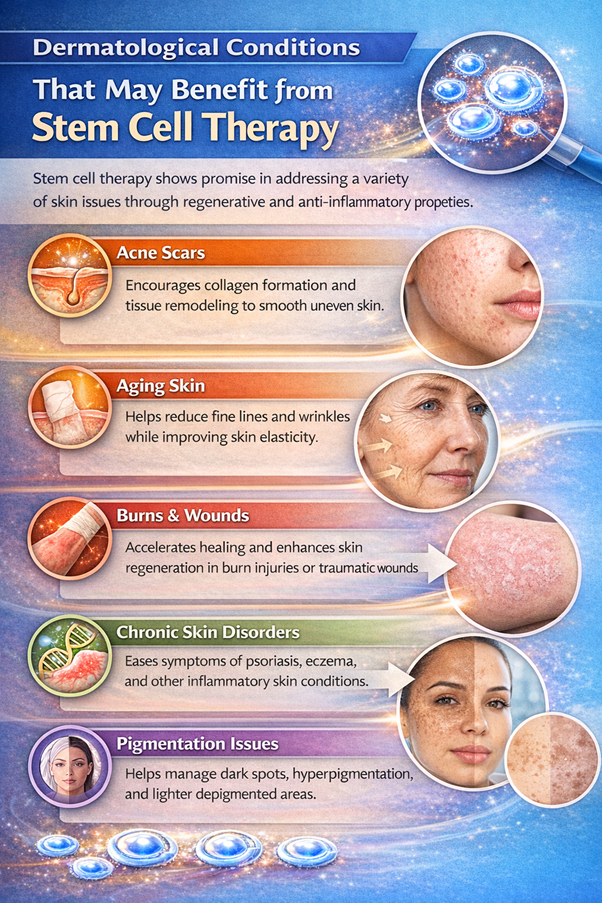
Dermatological Conditions That May Benefit from Stem Cell Therapy
Stem cell therapy has demonstrated potential in addressing a wide range of skin conditions. For example, it may improve acne scars by stimulating collagen formation and encouraging tissue remodeling, which can smooth uneven skin surfaces. In cases of aging skin, the therapy may help reduce fine lines and wrinkles while improving elasticity.
Patients with burn injuries or traumatic wounds may benefit from the therapy’s ability to accelerate healing and improve skin regeneration. Additionally, individuals suffering from chronic inflammatory skin disorders, including psoriasis and eczema, may experience symptom relief due to the immunomodulatory effects of stem cells. Emerging research also suggests that stem cell therapy could help manage pigmentation irregularities, improving both darkened and lighter areas of the skin.
Advantages of Stem Cell Therapy in Dermatology
Compared with many traditional dermatological treatments, stem cell therapy offers several unique advantages. One of the most notable benefits is its regenerative nature. Rather than providing temporary cosmetic improvements, the therapy works to repair tissue at the cellular level, which may lead to more durable and natural-looking results.
Another advantage is that most procedures are minimally invasive, often requiring little downtime. This makes the therapy appealing for individuals seeking effective treatments without lengthy recovery periods.
Stem cell therapy also provides comprehensive skin repair, as it addresses multiple layers of the skin and influences the biological processes responsible for aging and damage. Because stem cells have low immunogenicity, the likelihood of immune rejection is relatively low, making them safe for therapeutic use.
Conclusion
Stem cell therapy is playing an increasingly important role in the evolution of modern dermatology. By supporting cell renewal, enhancing collagen production, regulating inflammation, and promoting tissue repair, this regenerative approach offers new possibilities for both medical and cosmetic skin treatments.
In Thailand, where regenerative medicine continues to develop rapidly, stem cell therapy is helping redefine standards in dermatological care. Through advanced technology and innovative treatment protocols, patients now have access to therapies that aim to restore the skin from within rather than simply masking visible concerns. As scientific research continues to expand, stem cell therapy may become a key component of next-generation dermatology, combining the body’s natural healing mechanisms with cutting-edge medical science to achieve healthier and more resilient skin.