

Keloid scars are a complex skin condition that can impact both a person’s appearance and confidence. Unlike ordinary scars that gradually fade over time, keloids grow beyond the boundaries of the original wound due to an exaggerated healing response. This abnormal growth can lead to thick, raised tissue that may feel itchy, tender, or even painful. In recent years, advances in regenerative medicine have introduced new approaches to managing keloids, with umbilical cord-derived mesenchymal stem cell (UC-MSC) therapy emerging as a promising option in Thailand. This innovative treatment is gaining interest as a potential alternative to conventional methods.
How Stem Cell Therapy Works for Keloid Scars
Stem cell therapy offers a different and more targeted strategy. These stem cells are derived from umbilical cord tissue and are known for their regenerative and immunomodulatory properties. Rather than focusing solely on the surface appearance of scars, this therapy aims to restore balance within the skin’s healing environment. By influencing cellular behavior and promoting healthier tissue repair, stem cells may help reduce the formation and progression of keloids.
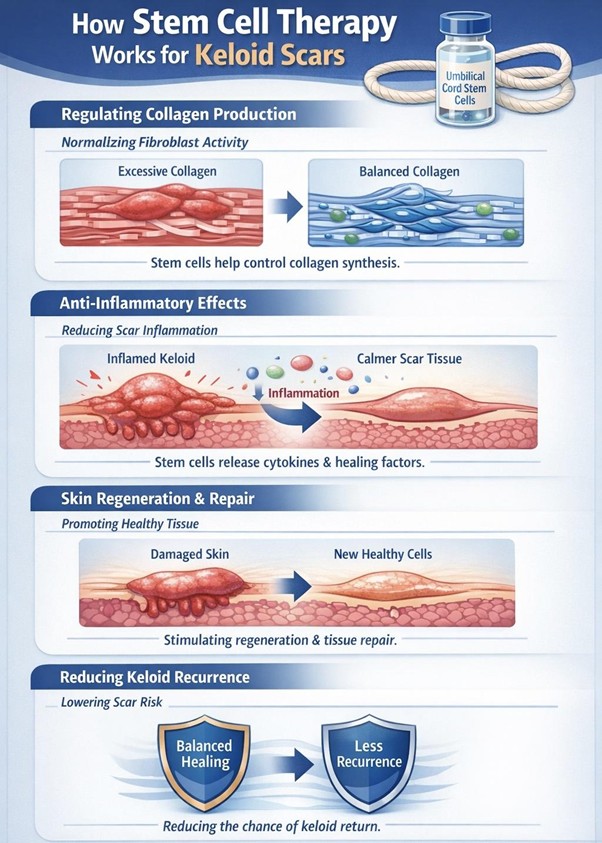
Regulating Collagen Production in Keloid Scars: One of the primary mechanisms through which stem cell therapy may benefit keloid scars is by regulating collagen production. Fibroblasts, the cells responsible for producing collagen, are highly active in keloid tissue. Their overactivity leads to excessive collagen accumulation, which contributes to the raised and thickened appearance of the scar. Stem cells have the ability to interact with fibroblasts and modulate their function. By helping to normalize fibroblast activity, stem cells may reduce the overproduction of collagen and encourage a more controlled healing process. This regulation is crucial in preventing the development of abnormal scar tissue.
Anti-Inflammatory Effects of Stem Cell Therapy: Another significant advantage of stem cell therapy is its anti-inflammatory effect. Chronic inflammation is often linked to the formation and persistence of keloids. Stem cells release a variety of bioactive substances, including cytokines and growth factors, that can help reduce inflammation at the site of the scar. These molecules work by calming the immune response, decreasing irritation, and limiting the factors that contribute to scar growth. As inflammation subsides, the scar tissue may gradually become softer, flatter, and less noticeable.
Skin Regeneration and Tissue Repair: In addition to controlling collagen production and inflammation, stem cells play an important role in tissue regeneration. These cells can promote the repair of damaged skin by stimulating the growth of new, healthy cells. This regenerative effect may improve the overall texture, elasticity, and appearance of the skin. Instead of simply concealing the scar, stem cell therapy works at a deeper level to rebuild and restore the skin’s natural structure. As a result, patients may experience more natural-looking and longer-lasting improvements.
Reducing the Risk of Keloid Recurrence: Preventing recurrence remains one of the biggest challenges in treating keloid scars. Even after successful treatment, keloids often return and may become larger than before. Stem cell therapy may offer an advantage in this area by supporting balanced wound healing. By regulating cellular activity and minimizing excessive collagen production, stem cells may reduce the likelihood of scar recurrence. Early research suggests that stem cell-based therapies could provide more durable results compared to traditional treatments.
Treatment Techniques and Combination Approaches
Ongoing research is exploring different methods of applying stem cell therapy for keloids. One commonly used technique involves injecting stem cells directly into the scar tissue, allowing them to act precisely where they are needed. In some cases, this therapy is combined with other treatments—such as laser therapy, corticosteroid injections, or silicone-based products—to enhance overall effectiveness. These combination approaches aim to maximize treatment outcomes by addressing multiple aspects of scar formation at once.
Thailand as a Destination for Stem Cell Therapy
Thailand has become a recognized destination for advanced medical care, including stem cell therapies. The country is known for its modern healthcare infrastructure, experienced medical professionals, and growing focus on innovative treatments. Many clinics in Thailand are actively involved in research and clinical applications of stem cell therapy, making it an appealing option for patients seeking cutting-edge solutions for conditions like keloid scarring. However, it is essential for patients to carefully evaluate their options and make informed decisions before undergoing any medical procedure.
Conclusion: Future Potential of Stem Cell Therapy for Keloids
Stem cell therapy represents a new and promising approach to the management of keloid scars. By targeting the underlying causes of abnormal scar formation—such as excessive collagen production, chronic inflammation, and disrupted healing—this therapy offers a more comprehensive solution than traditional treatments. Its ability to promote tissue regeneration and support balanced healing may lead to improved outcomes and a reduced risk of recurrence.
Stem cell therapy continues to show encouraging potential in dermatology and regenerative medicine. As scientific knowledge advances and treatment techniques improve, stem cell therapy may become an important option for individuals struggling with keloid scars. For now, it stands as a hopeful innovation, offering new possibilities for more effective and lasting scar treatment in the future.