

Hair loss is a common issue that affects millions of people worldwide, impacting both men and women across different age groups. While genetics, hormonal imbalances, stress, and aging are among the most frequent causes, the emotional and psychological effects of hair thinning or baldness can be significant. In recent years, scientific advancements have introduced new possibilities for addressing this concern. One of the most innovative developments is stem cell therapy, particularly the use of umbilical cord-derived mesenchymal stem cells (UC-MSCs), which is gaining attention in Thailand as a potential solution for promoting natural hair regrowth and improving scalp health.
This emerging treatment marks a shift away from traditional methods such as surgical hair transplantation or long-term medication use. Instead of simply masking symptoms, stem cell therapy focuses on restoring the biological environment of the scalp, revitalizing hair follicles, and encouraging sustainable hair growth.
Stem Cell Therapy Biological Mechanisms Behind Hair Regrowth
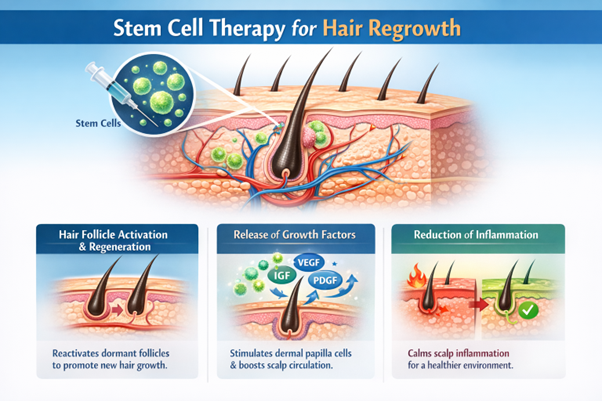
Stem cell therapy promotes hair regrowth through multiple biological pathways that work together to restore healthy follicle function.
Hair Follicle Activation and Regeneration: Hair follicles can become dormant or damaged due to various factors, leading to thinning hair or baldness. Stem cells help reactivate these follicles by either differentiating into supportive cell types or by releasing signals that stimulate existing follicular stem cells. This process encourages the natural hair growth cycle to resume.
Release of Growth Factors: One of the key strengths of stem cells lies in their ability to secrete growth factors and signaling molecules. These consist of vascular endothelial growth factor (VEGF), insulin-like growth factor (IGF), and platelet-derived growth factor (PDGF). Together, these compounds stimulate dermal papilla cells, which play a central role in initiating and maintaining hair growth. They also enhance blood circulation in the scalp, ensuring that hair follicles receive adequate nutrients and oxygen.
Reduction of Inflammation: Chronic inflammation of the scalp is a contributing factor in many types of hair loss. Stem cells have strong anti-inflammatory and immunomodulatory properties, which help calm irritated tissues and create a healthier environment for hair follicles. By reducing inflammation, the therapy supports long-term follicle survival and function.
Benefits of Stem Cell Hair Therapy in Thailand
Minimally Invasive Procedure: Unlike traditional hair transplant surgery, which involves incisions and extended recovery periods, stem cell therapy is minimally invasive. The use of injections makes it a convenient outpatient procedure with little downtime, allowing patients to resume normal activities quickly.
Natural and Biologically Driven Results: This therapy works by stimulating the body’s own regenerative processes rather than introducing synthetic substances. As a result, the outcomes tend to appear more natural, with gradual improvements in hair density and thickness over time.
Improved Hair Quality and Density: Patients who undergo stem cell therapy often notice thicker strands, increased hair volume, and regrowth in areas that previously showed thinning. In addition to promoting new growth, the treatment can improve overall scalp condition, leading to healthier and stronger hair.
Versatility Across Hair Loss Conditions: Stem cell therapy can be applied to various types of hair loss, including androgenetic alopecia (pattern baldness), alopecia areata, telogen effluvium, and hair thinning following pregnancy. Its ability to address multiple underlying causes makes it a flexible treatment option.
Thailand as a Destination for Regenerative Hair Therapy
Thailand has become a leading center for advanced medical treatments, including regenerative medicine and stem cell therapy. The country offers modern healthcare facilities, highly trained professionals, and competitive pricing compared to many Western nations.
Clinics in Thailand often adhere to strict quality and safety standards, ensuring that stem cell therapies are conducted in controlled environments. Additionally, many practitioners have international training and experience, contributing to high levels of patient care. The country’s growing reputation in medical tourism has made it a popular destination for individuals seeking innovative and cost-effective solutions for hair restoration.
Future Developments in Stem Cell Hair Restoration
The field of regenerative hair therapy continues to evolve rapidly, with several exciting advancements on the horizon.
One promising area is the use of combination therapies, where stem cells are paired with other regenerative treatments such as exosomes or PRP. These approaches aim to deliver multiple healing signals simultaneously, potentially enhancing treatment outcomes.
Another area of research involves tissue engineering, where scientists are working to grow hair follicles in laboratory settings. This breakthrough could one day allow for the transplantation of entirely new follicles, offering a more permanent solution for severe hair loss.
Personalized medicine is also expected to play a significant role in the future. By analyzing an individual’s genetic profile, clinicians may be able to tailor stem cell treatments to achieve more precise and effective results.
Conclusion
Stem cell therapy represents a promising advancement in the treatment of hair loss. By targeting the underlying causes—such as follicle damage, inflammation, and poor scalp health—this approach goes beyond temporary solutions to promote genuine regeneration. Its minimally invasive nature, combined with its ability to deliver natural-looking results, makes it an appealing option for individuals seeking to restore their hair.
In Thailand, where regenerative medicine continues to advance, stem cell therapy is becoming increasingly accessible to both local and international patients. With ongoing research and technological improvements, this innovative treatment has the potential to transform the way hair loss is managed, offering renewed confidence and long-lasting results for those affected.