

Researching Breakthrough Treatments Focusing on UC-MSCs for Chronic Obstructive Pulmonary Disease (COPD) in a Specialized Stem Cell Clinic
The primary requirement for human existence is a functioning respiratory system. When respiratory disease causes permanent impairment of the lungs’ ability to facilitate the passage of air to the lungs, the person is plagued by severe dyspnea. This results in a profound deterioration in the overall quality of life. The situation is even worse considering the lack of effective therapies for this branch of medicine. Primary pulmonary failure is amongst the most common causes of death globally. The gradual and insidious process of the lungs losing their ability to function makes the patient dependent, and turns their everyday tasks into a battle. This transforms even the most basic activities, such as getting out of bed, into an overwhelming and exhausting task. Major efforts have been made in the world to try to get a better understanding of the cellular chaos that creates large destruction in the lungs and to develop valid interventions. One of the more recently developed and active areas of Stem Cell Clinic is the use of UC-MSCs. COPD and their complications have been a healthcare concern for many years. The integration of UC-MSCs into therapy could profoundly alter the approach to these patients. Those patients at the final stage of anarchy at the cellular level within their lungs. They need a radical novel therapy that can integrate reengineering of the cellular architecture of the lungs, specifically the alveoli.
1.Destructive Deconstruction Mechanisms of the Lungs
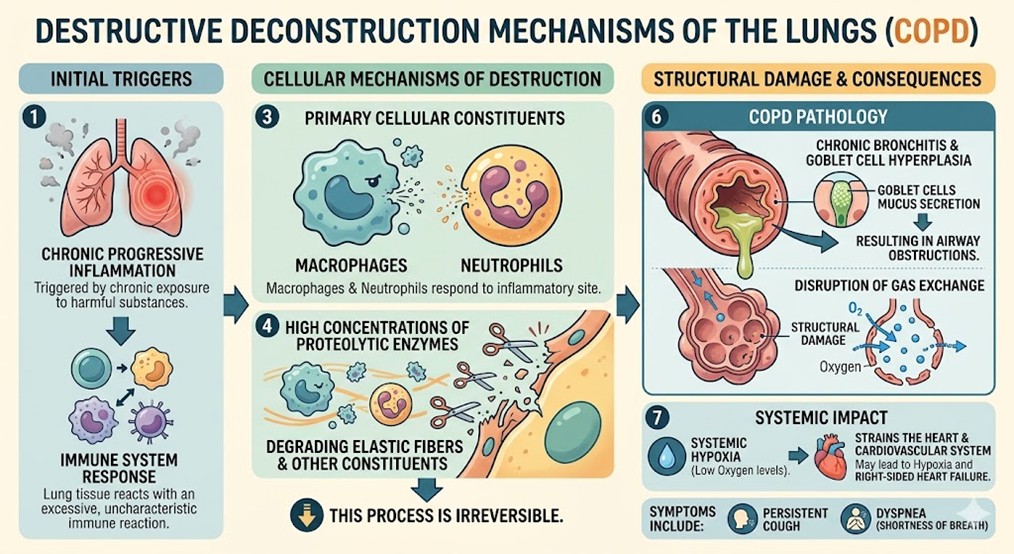
The initial layers of the ancient walls of a cellular mechanism of destruction of the cell walls of the lungs that is due to the cellular interstitial of chronic progressive inflammation and incessant destruction of the walls of the pulmonary airways. Lungs are very sensitive to the air they exchange. They react to the continuous presence of certain harmful substances in an exaggerated and uncharacteristic manner. Lungs respond by generating an immune system response that is beyond what is considered normal and acceptable. The primary cellular constituents of the immune system respond to the injury area. macrophages and neutrophils respond to the inflammatory site and secrete high concentrations of certain proteolytic enzymes that are responsible for the degradation of the elastic proteolytic and other constituents. This process of destruction is irreversible. Chronic Bronchitis works alongside goblet cell hyperplasia which heightens mucus secretion and this results in airway obstructions. A COPD patient suffers from a persistent cough and may experience violent and severe episodes of dyspnea. There are structural damage and disruption of gas exchange which results in systemic hypoxia. This can strain the heart and the rest of the cardiovascular system and may even result in hypoxia and right-sided heart failure.
- Shortcomings of Treatments in Conventional Medicine
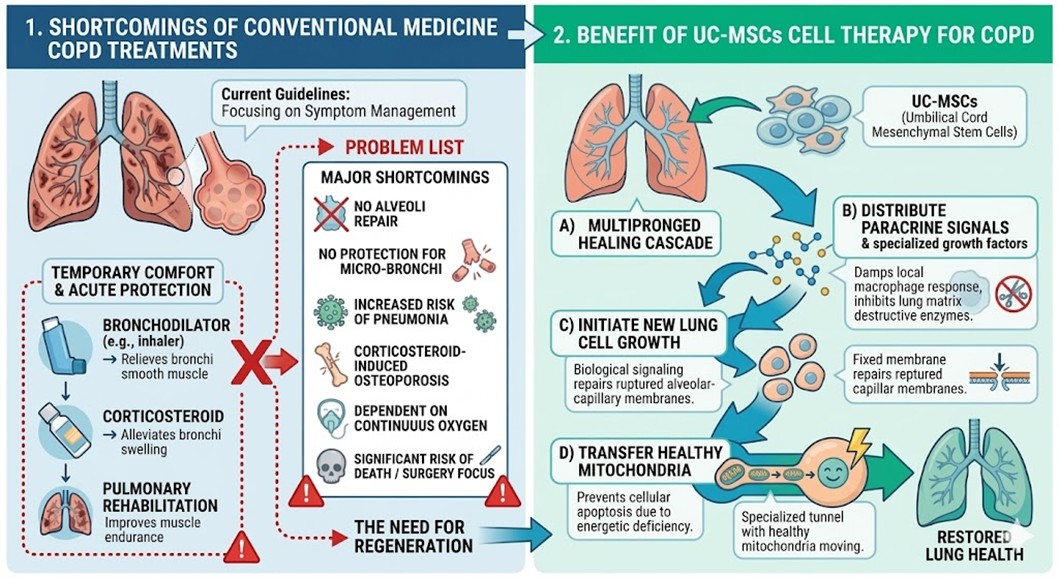
Current medical COPD guidelines focus on temporarily enhancing the patient’s comfort and protecting the patient from acute worsening episodes of their condition. This includes the issuance of bronchodilators that aim to relieve the smooth muscle of the bronchi and enhance airflow. Due to the chronic inflammation of the bronchi, a bronchodilator is paired with a corticosteroid prescribed to alleviate the swelling of the bronchi. This also includes the practice of pulmonary rehabilitation which improves patient muscle endurance through instruction. These still repeat the same methods from before and suffer from many shortcomings. Conventional medicine does not address damage to the alveoli and does not offer protection from further damage to the microscopic bronchi. Patients also face a greater risk of developing pneumonia and are likely to experience corticosteroid-induced osteoporosis. Patients at this stage are often dependent on a continuous flow of breathable oxygen. At this stage of illness, the associated risk of death is so significant that surgical treatment of the lungs becomes a primary focus. This highlights the urgency of developing UC-MSCs Stem Cell Clinic for COPD methods of cellular regeneration.
- Cell Therapy’s Benefits and Enhanced Healing
The COPD Stem Cell Clinic works by performing targeted cell rehabilitation on patients with significant lung tissue damage. The use of UC-MSCs has significant clinical advantages over earlier cellular constructs as UC-MSCs have phenomenal immunomodulatory potential with virtually no immunogenicity. When UC-MSCs are introduced to the lungs, they develop one of the most sophisticated multipronged healing cascades to date. Initially, the introduced cells span the lung micro-environment and distribute a multitude of paracrine signaling molecules as well as a large number of specialized transforming growth factor. These specialized proteins significantly dampen the local macrophage response and their lung matrix destructive enzymes. Moreover, they provide the requisite drive to initiate the growth of new lung cells. Additionally, through effective biological signaling, they repair the ruptured alveolar-capillary membranes. Furthermore, the cells are also capable of transferring healthy mitochondria to pulmonary cells through specialized microtubule tunnels which prevents cellular apoptosis due to energetic deficiency. For this reason, it is imperative to use advanced cellular agents to restore lung health.
- The Future of Regenerative Medicine for the Lungs in Southeast Asia
Southeast Asia is home to a number of groundbreaking regenerative biotechnology advancements. For example, people from various countries travel to Southeast Asia to access cutting-edge therapies for Chronic Obstructive Pulmonary Disease (COPD). Medically regulated hospitals in Thailand particularly benefit international patients. Thailand is a developing country in Southeast Asia that has excellent hospital biolabs that specialize in cell cultivation. The Thai government implemented a policy that encourages biomedical researchers to conduct multipotent Stem Cell Clinic trials. This balances researchers’ freedom with patient safety and optimal biomedical outcomes. Additionally, Thai medical professionals benefit from decades of experience concerning precise cellular dosage protocols. With the complexity of the treatment combined with the exceptional Thai hospital friendliness, it is no wonder that the country is a leading option for medical treatment.