

As contemporary populations are living longer, the gap between lifespan and healthspan has become progressively significant. Aging is no longer seen just as a passive effect of time but rather as an active biological process with characteristics such as cumulative cellular damage, diminished repair capacity, mitochondrial dysfunction and chronic bland inflammation. As such regenerative medicine is a discipline that is garnering attention for the ability it has to bolster biological resilience, rather than merely help mask exterior signs of aging. Of the cell types under investigation, umbilical cord-derived mesenchymal stem cells (UC-MSCs) are especially attractive due to their immunomodulatory, trophic and regenerative signalling capabilities. These cells are incorporated into larger anti-aging, wellness-focused regenerative programs within advanced clinical environments throughout Thailand.
- Biological Aging, Senescence, and the SASP Network
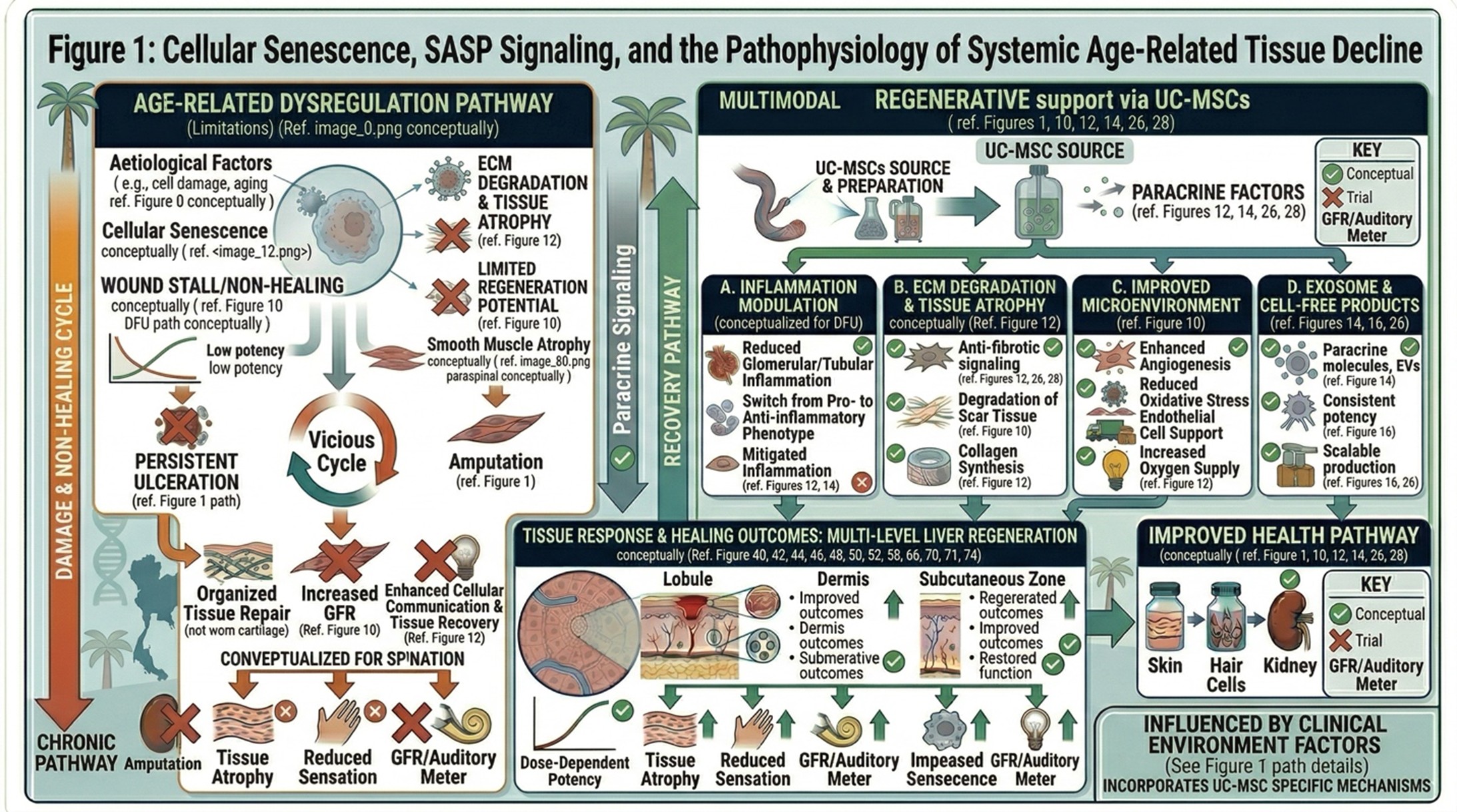
Cellular senescence is a core feature of modern aging biology. As a result of accumulating DNA damage, telomere shortening and metabolic stress over time, some cells become senescent instead of dividing normally. These cells do not just vanish. Instead, they can remain metabolically active but secrete a cocktail of inflammatory mediators, chemokines and matrix-remodeling enzymes termed reputation the senescence-associated secretory phenotypes (SASP).
This SASP is important as it can affect neighboring cells and create a chronic inflammatory landscape often seen in aging. The disorder has been associated with stiffness of the tissue, remodeling of the extracellular matrix, impaired regeneration and loss of organ function over time. Rather than sustaining a healthy local environment, senescent cells might also translate into a progressive push of tissues towards dysfunction. This was one of the reasons why cellular strategies that can contribute to regulating the inflammatory signaling profile and help improve a friendlier tissue microenvironment gained much attention in regenerative medicine.
- Limitations of Conventional Anti-Aging Interventions
Most traditional anti-aging interventions focus on symptom or aesthetic improvement but not targeting the underlying biological mechanisms of aging itself. Those approaches that are topical may improve hydration or skin appearance but are severely limited in their capacity to impact systemic inflammatory signaling or higher-order tissue remodeling. Nutritional supplements and pharmacologic agents can be supportive in selected cases, but there is often great variability in bioavailability, tissue penetration and response to treatment.
Hormonal interventions can help, at least in selected patients — for example when specific deficiencies are present — but they do not directly fix more global processes like mitochondrial dysfunction, senescent cell burden or chronic extracellular matrix degradation. Accordingly, a gap exists between generic or organ-targetted approaches and other more participative, randomized approaches that directly influence tissue biology. This disconnect has only fed into increasing interest in regenerative protocols seeking to signal influence the internal cellular environment in a less fragmented manner.
- Mitochondrial Function and Intercellular Rescue Mechanisms
Declining mitochondrial function is one of the most discussed aspects of biological aging. Mitochondria are pivotal to cellular energy generation, thus age-associated mitochondrial dysfunction has been linked to fatigue, decreased recovery capacity, oxidative stress and diminished tissue performance. As defective mitochondria accumulate, the cells may start to produce more reactive oxygen species but make less ATP, which is metabolic inefficiency.
One of UC-MSC’s proposed mechanisms, in part due to their proclivity to migrate to tissue environments where there is injury or stress. View of severe renal atrophy and cysts in 20-24h soils from Zhen Z, Huang W. genetics Pan Huajian system: mesenchymal stem cells exosomes can protect damaged cells by precociously specialized intercellular signal exchangers based on tunneling nanotubes (TNT), like the kind of biological active substances transfer researchers To this end, let us provide experimental evidence. In aging research, this has raised interest as to whether MSC-based therapies might stabilize cellular bioenergetics and improve resilience in chronically stressed tissues (Table 1).
Instead of envisioning a direct reversal of aging, one can argue a compelling scenario here that UC-MSCs bridge the metabolic milieu through protective signaling and intertissue metabolic communication. This is, in part, why they are discussed more and more among regenerative approaches to healthy aging.
- Exosomal Signaling, miRNA Activity, and Functional Reprogramming
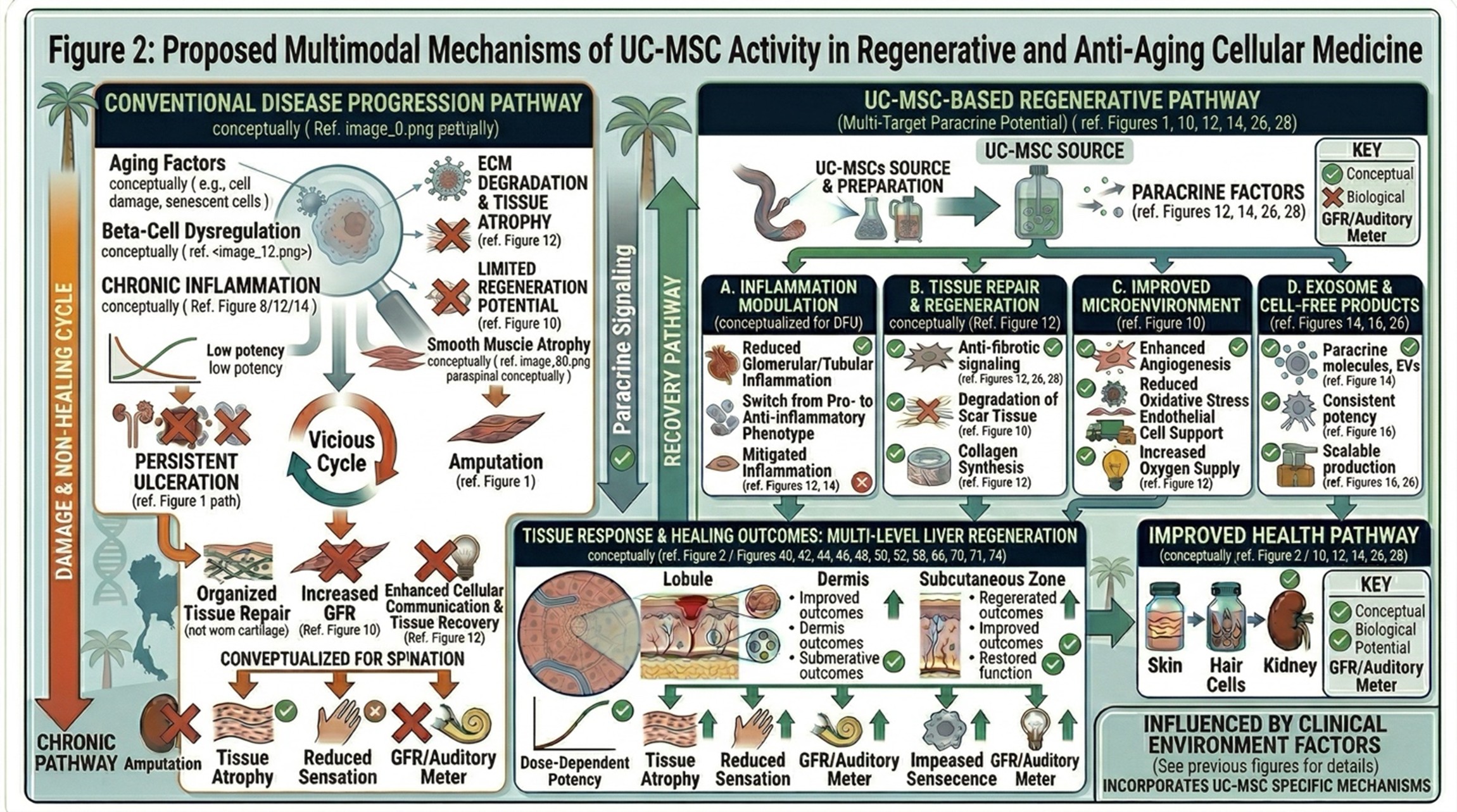
Besides cell-to-cell contact, UC-MSCs carry out a great proportion of their effects via paracrine activity, in particular exosomes. These are membrane disrupting vesicles that contain proteins, lipids and regulatory nucleic acids (e.g., microRNAs [miRNA]), which can modulate gene expression and modify behavior of recipient tissues. This exosomal signaling has now emerged to be one of the powerful concepts in regenerative medicine.
UC-MSC-derived exosomes have been a noteworthy topic of interest in anti-aging, due to their potential for modulation of inflammatory pathways, tissue remodeling support, and positive effects on fibroblast behavior. Assessed strategies include inhibition of pro-inflammatory signaling, stimulation of DNA repair pathways and promotion of collagen-related matrix processes. These processes are particularly pertinent in tissues that experience stiffening, structural collapse or lack of reconstitution with age.
The exosomes are often described as providing a more general systemic support effect because they can have influential effects beyond the precise administration site. The depth and breadth of inherent biological resilience that can be harnessed through UC-MSC-based strategies makes them uniquely fascinating in the context of anti-aging programs that prioritize addressing full-body biology over isolated symptoms alone.
- Why UC-MSCs Attract Attention in Regenerative Aging Medicine
The biological origin of umbilical cord-derived mesenchymal stem cells plays a crucial role in their popularity. Neonatal derivations are often described as having higher proliferative potential, longer telomeres and a more secretive trophic activity than other cell sources obtained from adults. These features have made UC-MSCs particularly appealing in clinical and translational regenerative medicine.
Their relatively low immunogenicity is another attractive property, lending to their potential for broader application in systemic regenerative therapies. The ability of the cells to secrete anti-inflammatory and tissue-supporting factors, without causing strong immune responses, is one reason they’re being increasingly explored in wellness- and age-supportive contexts. In reality, the power of UC-MSCs comes not from a singular blockbuster mechanism, but their ability to modulate numerous age-related pathways simultaneously, e.g. by dampening inflammation vs oxidative stress and promoting tissue remodeling and cellular communications.
- Clinical Translation and Regenerative Medicine Infrastructure in Thailand
As a key hub of practice in regenerative medicine, Thailand offers advanced biotechnology infrastructure alongside clinical experience and internationalised patient care systems. This has translated into the development of programs in anti-aging and wellness-oriented medicine that combine controlled clinical assessment and models of supportive care with laboratory-based biologic products.
One consideration is how cell-processing protocols might impact clinical product quality. The biological behavior of UC-MSCs may be influenced by factors such as viability, sterility, culture conditions and transport. Other laboratories use specialized culture methods that optimize cell viability and secretory function for administration. In a real-world clinical setting, delivery strategies would encompass systemic and targeted ways depending on the goals of care.
Thailand received broader appeal in this sector because of medical accessibility, regenerative expertise and integrative treatment planning. This has helped establish the country as an increasing destination for individuals seeking advanced supportive solutions in healthy aging and regenerative wellness.
- Concluding Perspective
UC-MSCs prove something even larger about the coming age of anti-aging medicine, and this is that aging itself is more understood today than ever before as a biological process that can be altered rather than just a circumstance imposed on us. UC-MSCs are already being evaluated as a tool in a more refined regenerative paradigm, involving inflammatory control, mitochondrial support and exosomal signaling thence inter-organelle communication at the system level.
At the same time, caution is warranted in interpretation UC-MSC-based anti-aging therapy must not be presented as an assured means to reverse aging but rather defined as a supportive regenerative strategy that is still under scientific and clinical development. Its promise is that you could improve the biological environment in which tissues operate and potentially help tissues recover, resilience, quality of life over time.
Within well-structured clinical settings in Thailand, this approach continues to attract attention as part of the evolving field of regenerative longevity medicine, where the goal is not simply to look younger, but to support healthier function across the aging process.