

Shoulder pain is one of the most common musculoskeletal complaints, affecting individuals across all age groups and lifestyles. It may develop due to sports injuries, repetitive overhead movements, physically demanding occupations, or the natural aging process. Because the shoulder joint is highly mobile and structurally complex, even minor damage to its tendons, ligaments, or cartilage can lead to significant discomfort and restricted movement. Everyday activities—such as lifting objects, reaching overhead, or even sleeping—can become difficult when shoulder function is compromised.
Traditional treatment approaches for shoulder pain often focus on symptom management rather than restoring the underlying tissue damage. Patients are typically advised to rest, undergo physiotherapy, or take anti-inflammatory medications. In more persistent or severe cases, corticosteroid injections or surgical procedures may be recommended. While these methods can provide temporary relief, they may not fully repair injured tissues or prevent long-term degeneration. As a result, regenerative medicine—particularly stem cell therapy—has emerged as a promising alternative that targets the root cause of shoulder dysfunction.
Stem Cell Therapy Mechanisms That Support Shoulder Healing
- Tissue Regeneration and Structural Repair
In cases such as tendon injuries or partial rotator cuff tears, stem cells may assist in rebuilding damaged fibers by differentiating into tendon-like cells. In degenerative conditions, they can also support cartilage repair, helping improve joint cushioning and mobility. This regenerative capability focuses on long-term healing rather than short-term symptom relief.
- Activation of Natural Healing Signals
Beyond their ability to transform into specialized cells, stem cells release bioactive molecules, including growth factors and cytokines. These substances help regulate the local environment by stimulating cell proliferation, guiding tissue remodeling, and enhancing coordination between different stages of healing. This process contributes to more organized and effective tissue repair.
- Reduction of Inflammation and Pain
Chronic inflammation is a key factor in many shoulder disorders. Stem cells have immunomodulatory properties, meaning they can help balance the immune response by reducing pro-inflammatory signals and promoting anti-inflammatory activity. As inflammation decreases, patients may experience relief from pain, swelling, and stiffness.
- Enhanced Blood Flow and Nutrient Supply
Another important effect of stem cell therapy is the promotion of angiogenesis, or the formation of new blood vessels. Improved circulation allows oxygen and nutrients to reach damaged tissues more efficiently while aiding in the removal of metabolic waste. This enhanced environment supports faster and more sustainable healing.
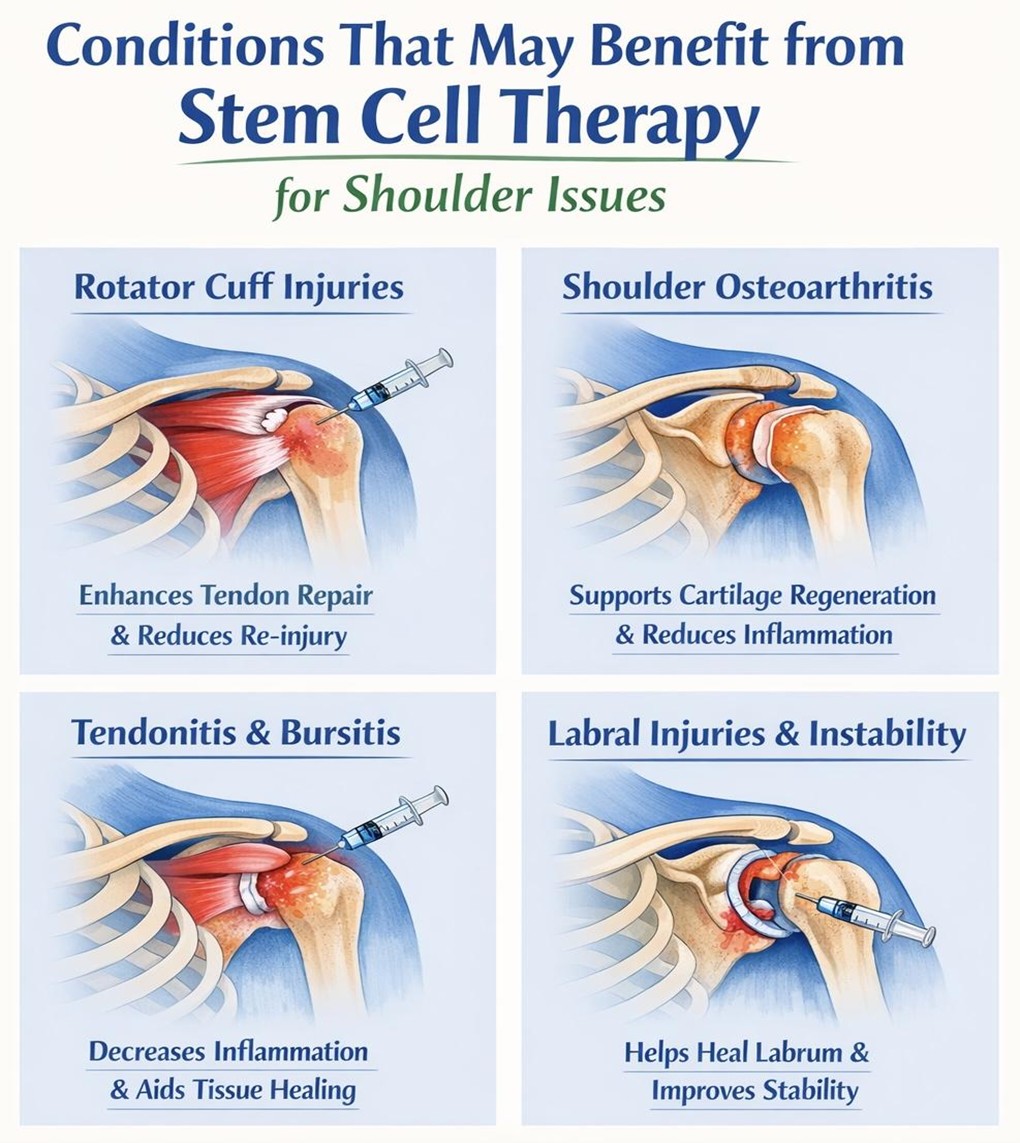
Conditions That May Benefit from Stem Cell Therapy
Rotator Cuff Injuries: Damage to the rotator cuff is a frequent cause of shoulder pain and weakness. Stem cell therapy may be used in mild to moderate cases as a non-surgical treatment or alongside surgery to improve healing outcomes. It may help strengthen tendon repair and reduce the likelihood of re-injury.
Shoulder Osteoarthritis: As cartilage gradually wears down, patients with osteoarthritis often experience stiffness, pain, and reduced range of motion. Stem cell therapy aims to support cartilage regeneration, improve joint lubrication, and reduce inflammation, potentially delaying the need for joint replacement surgery.
Tendonitis and Bursitis: Inflammation of the tendons or bursae can lead to persistent discomfort and limited mobility. Stem cell therapy may help calm inflammation while promoting tissue repair, allowing for improved function and reduced pain.
Labral Injuries and Joint Instability: The labrum plays a critical role in maintaining shoulder stability. Damage to this structure can cause pain and recurrent dislocations. In selected cases, stem cell therapy may support healing of the labrum and strengthen surrounding tissues, potentially reducing the need for invasive procedures.
Why Patients Choose Thailand for Regenerative Treatment
Thailand has become a prominent destination for regenerative medicine, attracting both local and international patients. The country offers a combination of advanced medical technology, experienced healthcare professionals, and patient-centered care.
One of the key advantages is access to minimally invasive treatments that may reduce the need for surgery. Recovery times are often shorter, as stem cell therapy works by enhancing the body’s natural healing processes while controlling inflammation. Many medical centers in Thailand also integrate regenerative treatments with personalized rehabilitation programs, ensuring that patients regain strength, flexibility, and functional movement.
Additionally, Thailand is known for its modern healthcare infrastructure, internationally accredited facilities, and specialized stem cell laboratories that adhere to strict safety and quality standards. These factors contribute to the growing reputation of the country as a leader in innovative orthopedic care.
A New Direction in Shoulder Pain Management
Stem cell therapy is reshaping how shoulder conditions are treated by focusing on biological repair rather than temporary symptom control. Through mechanisms such as tissue regeneration, immune regulation, and improved circulation, this approach offers a comprehensive pathway to recovery.
For individuals dealing with rotator cuff injuries, osteoarthritis, tendon inflammation, or joint instability, stem cell therapy presents a promising, non-surgical option. While results may vary depending on the severity of the condition and individual health factors, many patients are drawn to its potential to improve mobility, reduce pain, and enhance overall quality of life.
As research and clinical experience continue to expand, regenerative medicine is likely to play an increasingly important role in orthopedic care. In Thailand, where medical innovation and patient care go hand in hand, stem cell therapy offers a forward-looking solution for those seeking effective and less invasive treatment for shoulder pain.