

Sleep is a fundamental pillar of human health, yet a significant portion of the global population struggles with chronic sleep disorders that negatively impact physical wellbeing, emotional stability, and cognitive performance. While conventional treatments can offer temporary relief, they often fail to provide lasting solutions or address the deeper biological causes of disrupted sleep.
In recent years, regenerative medicine has introduced a new and promising approach to sleep health. Among these innovations, umbilical cord-derived mesenchymal stem cell (UC-MSC) therapy is gaining attention for its potential to repair underlying neurological damage and restore natural sleep regulation.
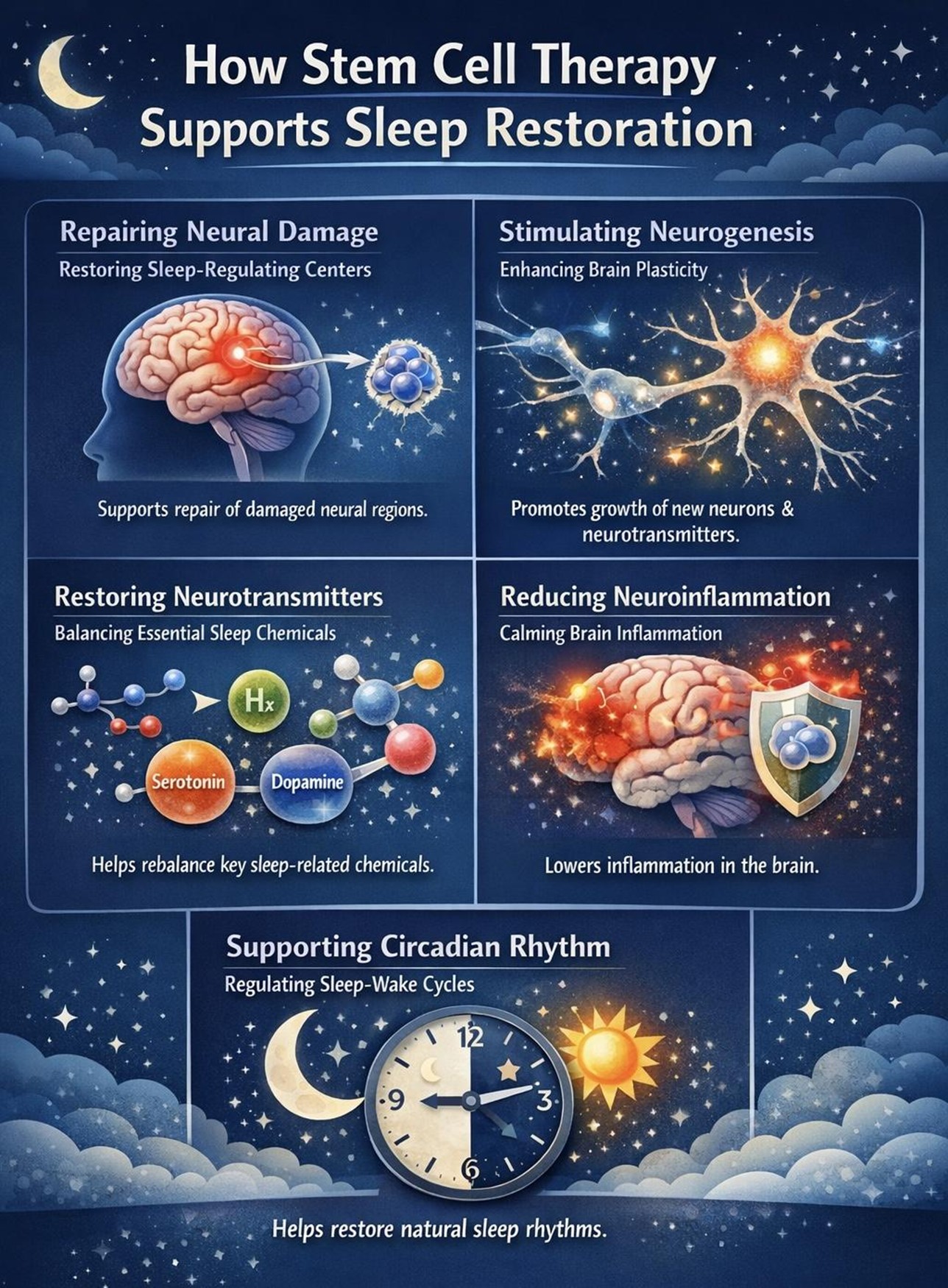
How Stem Cell Therapy Supports Sleep Restoration
- Repairing Neural Damage in Sleep-Regulating Centers
Many chronic sleep disorders are associated with damage or dysfunction in brain regions that control sleep cycles. Stem cells have the potential to differentiate into neural-like cells and integrate into existing neural networks. By supporting the repair of these areas, stem cell therapy may help restore normal signaling pathways that regulate sleep and wakefulness.
- Stimulating Neurogenesis and Brain Plasticity
Healthy sleep depends on a balanced production of neurotransmitters such as serotonin, dopamine, gamma-aminobutyric acid (GABA), and melatonin. Disruptions in these chemicals can lead to difficulty falling asleep, staying asleep, or maintaining a consistent sleep cycle. Stem cells can promote neurogenesis—the formation of new neurons—which may help rebalance these critical neurotransmitters and improve overall sleep quality.
- Restoring Essential Neurotransmitter Functions
Certain sleep disorders are directly linked to the loss or deficiency of specific neurotransmitters. For example, narcolepsy is associated with a lack of orexin-producing neurons, while restless leg syndrome is often related to dopamine imbalance. Stem cell therapy may help regenerate or support the function of these specialized cells, potentially restoring natural sleep-wake regulation without long-term reliance on medications.
- Reducing Neuroinflammation
Chronic inflammation within the brain has been increasingly recognized as a contributing factor to sleep disturbances. Inflammatory processes can disrupt neural communication, damage cells, and interfere with circadian signaling. Stem cells possess strong immunomodulatory effects, meaning they can reduce inflammation and create a more favorable environment for neural repair and recovery.
- Supporting Circadian Rhythm Regulation
The body’s natural internal clock, known as the circadian rhythm, controls when we feel awake and when we become sleepy. Disruptions to this system—common in shift workers, frequent travelers, or individuals with neurological conditions—can result in fragmented or irregular sleep. Stem cell therapy may assist in restoring circadian balance by repairing cells involved in time regulation and supporting the natural production of sleep-related hormones such as melatonin.
Sleep Disorder Conditions That May Benefit from Regenerative Stem Cell Therapy
- Insomnia: By addressing neurotransmitter imbalances and reducing brain inflammation, stem cells may improve the ability to initiate and maintain sleep.
- Sleep Apnea: Regenerative therapy may support neural control of breathing and reduce inflammation in airway-related structures.
- Narcolepsy: Stem cells could help restore orexin-producing neurons, improving wakefulness and reducing sudden sleep
- Restless Leg Syndrome: By supporting dopamine regulation, stem cell therapy may reduce involuntary limb movements and nighttime discomfort.
- Circadian Rhythm Disorders: Regeneration of circadian-regulating cells may help reestablish consistent sleep-wake cycles.
Thailand as a Hub for Regenerative Sleep Medicine Using Stem Cell Therapy
Thailand has gained international recognition for its leadership in regenerative medicine, offering advanced stem cell therapies supported by modern medical infrastructure and experienced healthcare professionals. Many clinics provide comprehensive treatment programs that combine stem cell therapy with diagnostic evaluations, sleep studies, and personalized rehabilitation strategies.
One of the key advantages of seeking treatment in Thailand is accessibility. Patients often benefit from high-quality care at more affordable costs compared to Western countries. Additionally, medical centers in Thailand frequently adhere to international standards, ensuring safety, quality, and ethical practices in stem cell processing and administration.
The country’s growing focus on medical tourism has also contributed to its reputation as a destination for innovative therapies. Patients from around the world are increasingly drawn to Thailand for solutions that go beyond conventional approaches to chronic health conditions, including sleep disorders.
Stem Cell Therapy Advantages Over Traditional Treatments for Sleep Disorder
Stem cell therapy offers several potential benefits when compared to standard sleep disorder treatments:
Long-Term Healing Potential: Unlike medications that temporarily alter brain chemistry, stem cell therapy aims to repair and regenerate the underlying neural systems responsible for sleep regulation. This approach may lead to more sustainable improvements.
Reduced Dependence on Medication: Many sleep medications come with side effects such as daytime drowsiness, cognitive impairment, and risk of dependency. By restoring natural sleep processes, regenerative therapy may decrease the need for long-term pharmaceutical use.
Personalized Treatment Strategies: Advances in regenerative medicine allow therapies to be tailored to each patient’s condition, biology, and response to treatment. This individualized approach can enhance effectiveness while minimizing potential risks.
A New Era in Sleep Health
The emergence of stem cell therapy marks a significant shift in how sleep disorders are approached. Rather than focusing solely on symptom relief, this regenerative strategy seeks to address the root biological causes of disrupted sleep, from neuronal damage to chemical imbalances and circadian misalignment.
In Thailand, where innovation in healthcare continues to advance, patients have access to state-of-the-art regenerative treatments designed to support long-term recovery and improved quality of life. While ongoing research is still expanding our understanding of stem cell therapy’s full potential, early findings and clinical experiences suggest a promising future.
For individuals who have struggled with persistent sleep issues and limited success from conventional treatments, stem cell therapy may offer a new and hopeful pathway—one that prioritizes restoration, balance, and the body’s natural ability to heal itself.