

Can stem cell therapy be an effective treatment for arthritis in Thailand?
Arthritis is one of the most prevalent chronic conditions affecting joints worldwide. Millions of individuals experience persistent joint pain, stiffness, swelling, and reduced flexibility as a result of this disorder. Conventional medical treatments for arthritis usually focus on controlling symptoms rather than repairing the underlying joint damage.
One emerging therapy attracting significant attention is the use of umbilical cord–derived mesenchymal stem cells (UC-MSCs). This innovative treatment aims to harness the regenerative capabilities of stem cells to repair injured tissues, reduce inflammation, and improve the overall function of arthritic joints. Unlike conventional therapies that primarily focus on symptom relief, stem cell therapy works at the cellular level to promote healing and potentially slow or reverse the progression of joint damage.
The Role of Stem Cells in Arthritis Therapy
Stem cell therapy is designed to utilize the body’s natural healing potential by introducing regenerative cells capable of repairing damaged tissues. Stem cells are unique because they can develop into specialized cell types and release biological signals that support tissue repair and regeneration. In arthritis treatment, mesenchymal stem cells are particularly valuable due to their ability to regenerate cartilage and regulate immune responses within the joint.
When stem cells are delivered into an arthritic joint, they interact with the surrounding tissues and release beneficial molecules that stimulate healing processes. These cells do not simply replace damaged structures; they also create a supportive environment that encourages the body’s own repair mechanisms.
Mechanisms Through Which Stem Cells Support Arthritis Treatment
Cartilage Regeneration: One of the most significant benefits of mesenchymal stem cells is their ability to transform into cartilage-producing cells called chondrocytes. These cells are responsible for synthesizing and maintaining cartilage tissue. When stem cells are introduced into a damaged joint, they can help rebuild the cartilage layer, restoring the cushioning surface necessary for smooth movement. By supporting cartilage regeneration, stem cell therapy may improve joint structure and enhance overall joint performance.
Regulation of Inflammation: Inflammation plays a central role in arthritis progression. Persistent inflammatory responses can damage cartilage and worsen joint pain. Stem cells release anti-inflammatory cytokines and growth factors that help regulate the immune system and calm inflammatory activity within the joint. This reduction in inflammation can relieve swelling, decrease pain, and slow the degenerative cycle that leads to further cartilage destruction.
Repair of Surrounding Joint Structures: Arthritis does not only affect cartilage. Other joint components such as ligaments, tendons, and the synovial membrane may also be damaged. Stem cells can assist in repairing these tissues by promoting cell growth, improving blood circulation, and stimulating the production of new connective tissue. Strengthening these supportive structures contributes to greater joint stability and improved mobility.
Pain Reduction: Stem cells may also influence the biological pathways associated with pain perception. By reducing inflammation and altering immune signaling within the joint environment, stem cells can decrease the release of substances that trigger pain signals. This effect can help patients experience reduced discomfort and improved ability to perform daily activities.
Potential Benefits of Using Stem Cell Therapy to Manage Arthritis
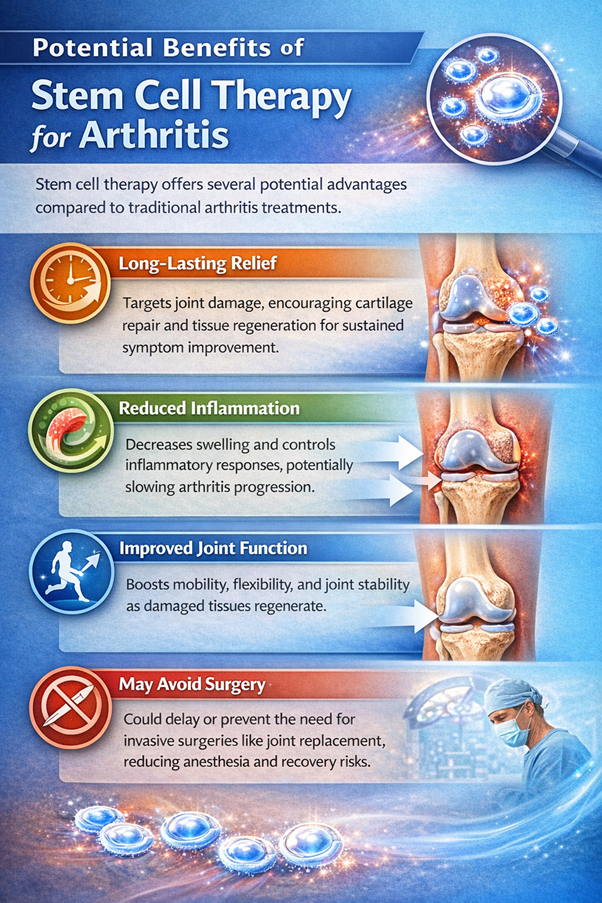
Stem cell therapy offers several potential advantages when compared with conventional arthritis treatments.
One major benefit is the possibility of long-lasting symptom improvement. Instead of simply masking pain, stem cell therapy targets the structural damage within the joint. By encouraging cartilage repair and tissue regeneration, this treatment may provide more sustained relief.
Another important advantage is reduced inflammation. Stem cells can regulate immune responses and decrease inflammatory molecules that contribute to swelling and pain. This effect can help slow disease progression while improving patient comfort.
Stem cell therapy may also contribute to better joint mobility and function. As damaged tissues begin to regenerate and inflammation subsides, patients often experience increased flexibility, improved joint stability, and greater range of motion.
Additionally, this regenerative approach may reduce the need for surgical intervention. For individuals with mild to moderate arthritis, stem cell therapy could potentially delay or prevent procedures such as joint replacement surgery. Avoiding surgery can reduce risks related to anesthesia, complications, and extended recovery periods.
Research Progress and Future Perspectives
Scientific research into stem cell therapy for arthritis continues to expand. Clinical studies are exploring optimal treatment protocols, including the most effective cell sources, dosages, and delivery methods. Mesenchymal stem cells remain the most widely studied type due to their strong regenerative and immunomodulatory properties.
Researchers are also investigating combination therapies that pair stem cells with growth factors, platelet-rich plasma, or biomaterials designed to enhance tissue regeneration. Improvements in laboratory techniques are helping scientists produce higher-quality stem cells with greater therapeutic potential.
Safety is an essential focus of ongoing research. Current studies indicate that stem cell therapy for arthritis has a generally favorable safety profile, with relatively few serious complications reported. Nevertheless, long-term clinical data are still needed to confirm the durability and effectiveness of these treatments over extended periods.
Conclusion
Stem cell therapy represents an exciting development in the management of arthritis. Rather than focusing solely on symptom relief, this regenerative approach aims to repair damaged tissues and address the underlying biological causes of joint degeneration. By supporting cartilage regeneration, reducing inflammation, repairing connective tissues, and alleviating pain, UC-MSC therapy may significantly improve joint health and patient quality of life.
As scientific research and medical technologies continue to advance, stem cell therapy has the potential to become an increasingly important component of arthritis treatment. For many patients, this innovative approach offers hope for more effective and lasting relief, as well as the possibility of maintaining mobility and independence despite the challenges of chronic joint disease.