

Wound healing is a vital biological function that allows the body to repair damaged skin and underlying tissues after injury. While most minor wounds heal naturally, more complex or chronic injuries often heal slowly or fail to heal altogether, increasing the risk of infection, prolonged discomfort, and long-term complications that significantly affect a patient’s quality of life.
Regenerative medicine has introduced innovative strategies designed to enhance the body’s natural repair mechanisms is stem cell therapy. This stem cell therapy has gained increasing attention for its ability to promote faster and more effective wound healing.
How Stem Cells Enhance the Healing Process
- Regenerating Skin and Structural Cells
Stem cells can differentiate into keratinocytes, which form the outer protective layer of the skin, as well as fibroblasts, which are responsible for producing structural proteins such as collagen and elastin. By replenishing damaged or lost cells, these stem cells contribute to restoring both the strength and appearance of the skin.
- Stimulating Repair Through Biological Signaling
Stem cells release a variety of growth factors and signaling molecules that influence surrounding tissues. This process, known as paracrine signaling, plays a critical role in coordinating the healing response. Key factors help promote cell migration, encourage the formation of new connective tissue, and improve the organization of collagen fibers. As a result, wounds can heal more efficiently and with improved structural integrity.
- Balancing Inflammation for Optimal Healing
Stem cells possess immunomodulatory properties that allow them to regulate the body’s immune response. By reducing harmful inflammatory signals and enhancing beneficial ones, these cells create a more balanced environment that supports effective tissue repair—particularly in chronic wounds where inflammation is a persistent issue.
- Enhancing Blood Flow Through Angiogenesis
Stem cells promote angiogenesis, the formation of new blood vessels, which improves circulation in the affected area. This enhanced blood flow not only accelerates healing but also helps reduce the risk of infection and supports long-term tissue health.
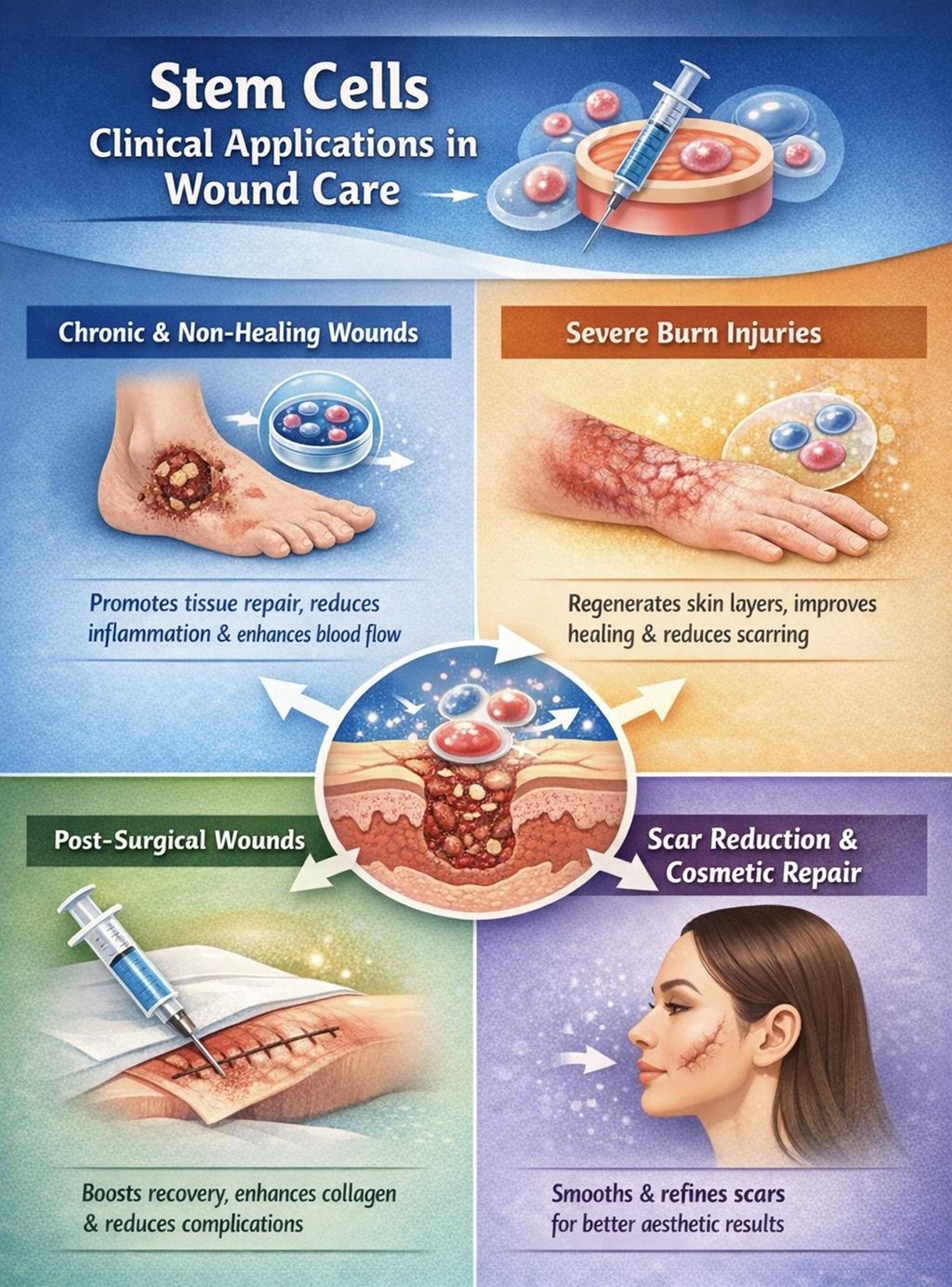
Stem Cells Clinical Applications in Wound Care
Chronic and Non-Healing Wounds: Conditions such as diabetic foot ulcers, venous leg ulcers, and pressure sores are often resistant to standard treatments. Stem cell therapy offers a proactive solution by delivering regenerative cells directly to the wound site, where they can promote tissue repair, reduce inflammation, and improve blood flow. This approach has shown promising results in accelerating healing and reducing complications.
Severe Burn Injuries: Deep burns that affect multiple layers of the skin can result in significant tissue loss, scarring, and functional limitations. While traditional treatments focus on preventing infection and managing pain, they may not fully restore the damaged tissue. Stem cells can support the regeneration of new skin layers, enhance elasticity, and reduce the formation of rigid scars. This can lead to faster recovery, improved appearance, and better mobility in the affected areas.
Post-Surgical Wounds: Healing after surgery can be challenging, especially for patients with underlying conditions such as diabetes or weakened immune systems. Complications like delayed healing or wound reopening can prolong recovery and increase healthcare risks. Stem cell therapy can enhance postoperative healing by boosting collagen production, controlling inflammation, and supporting the integration of new tissue. This results in faster recovery times and a lower likelihood of complications.
Scar Reduction and Cosmetic Repair: Even after a wound has healed, scarring can affect both appearance and function. Stem cells can influence how collagen is arranged during the remodeling phase, leading to smoother and more flexible tissue. This makes stem cell therapy valuable not only for medical wound care but also for cosmetic and reconstructive applications, helping patients achieve better aesthetic outcomes.
Advantages of Stem Cell Therapy for Wound Healing compared to Conventional Treatment
- Accelerated Healing: Enhanced cell regeneration helps wounds close more quickly.
- Reduced Risk of Infection: Faster healing minimizes exposure to bacteria and environmental contaminants.
- Improved Cosmetic Outcomes: Better collagen organization leads to softer, less visible scars.
- Effective for Complex Cases: Chronic and treatment-resistant wounds often respond well to regenerative therapy.
- Stronger Tissue Formation: Newly regenerated skin tends to be more resilient and flexible than tissue formed through standard healing processes.
Thailand’s Role in Advancing Regenerative Wound Care
Thailand has established itself as a leader in regenerative medicine, offering advanced stem cell therapies supported by modern infrastructure and experienced medical professionals. Many healthcare centers in the country combine innovative treatments with personalized care plans, ensuring that patients receive comprehensive support throughout the healing process.
In addition to high-quality medical services, Thailand is known for its accessibility and affordability compared to many Western countries. This combination of expertise, technology, and patient-centered care has made it an attractive destination for individuals seeking effective solutions for complex wounds.
A New Era in Wound Healing using Stem Cells
Stem cell therapy is redefining how difficult wounds are treated by focusing on regeneration rather than symptom management. Through its ability to repair damaged tissues, regulate inflammation, improve circulation, and support healthy remodeling, this approach offers a powerful alternative to traditional wound care methods.
From chronic ulcers and severe burns to surgical recovery and scar management, the applications of stem cell therapy continue to expand as research advances. In Thailand, where regenerative medicine is rapidly evolving, patients have access to innovative treatments that prioritize long-term healing and improved quality of life.
As scientific understanding grows and clinical outcomes continue to improve, stem cell–based therapies are poised to become an essential component of modern wound care—offering hope, faster recovery, and better outcomes for patients facing even the most challenging injuries.