

Shoulder pain is one of the most common musculoskeletal complaints affecting individuals of all ages. Traditional treatments for shoulder disorders typically focus on symptom management. Physicians may recommend rest, physical therapy, anti-inflammatory medications, corticosteroid injections, or surgical procedures depending on the severity of the condition. While these treatments can reduce discomfort and improve mobility in many cases, they often do not address the underlying biological causes of tissue damage. As a result, symptoms may return or gradually worsen over time. This limitation has encouraged growing interest in regenerative medicine, particularly stem cell therapy, which aims to repair injured tissues and support natural healing processes.
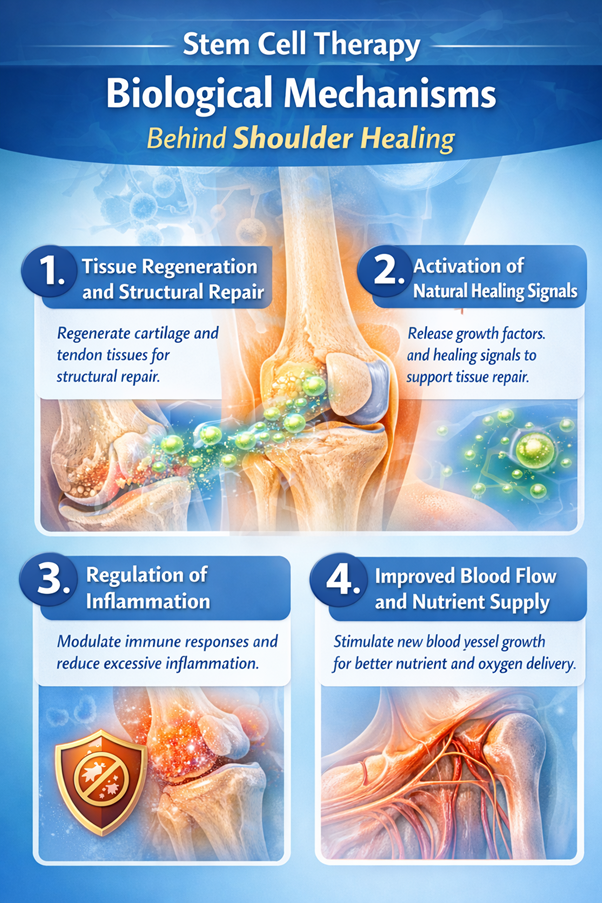
Stem Cell Therapy Biological Mechanisms Behind Shoulder Healing
- Tissue Regeneration and Structural Repair: In many shoulder conditions, damage occurs in tendons, cartilage, or other connective tissues. Stem cells have the ability to differentiate into specialized cells that resemble the tissues requiring repair. For example, when treating partial rotator cuff tears or tendon injuries, stem cells may develop into tendon-like cells that help rebuild damaged fibers. In degenerative joint conditions, they can also contribute to cartilage repair, helping to restore smoother joint surfaces and improve overall shoulder mobility.
- Activation of Natural Healing Signals: Beyond their ability to form new tissue, stem cells release a variety of biological molecules, including growth factors, cytokines, and extracellular vesicles. These substances act as signals that stimulate nearby cells to begin repairing themselves. This communication encourages organized tissue remodeling and supports healthy cell growth. By activating these natural healing pathways, stem cell therapy may enhance the quality and efficiency of the body’s recovery processes.
- Regulation of Inflammation: Persistent inflammation is a major contributor to chronic shoulder pain and tissue degeneration. When inflammation remains uncontrolled, it can accelerate the breakdown of cartilage and tendon fibers. Stem cells help regulate immune activity by producing anti-inflammatory molecules that calm excessive immune responses. As inflammation decreases, swelling and pain may diminish, allowing damaged tissues to recover in a healthier environment.
- Improved Blood Flow and Nutrient Supply: Stem cells can also stimulate angiogenesis, which is the formation of new blood vessels. Improved circulation increases the delivery of oxygen and essential nutrients to injured tissues. At the same time, enhanced blood flow helps remove metabolic waste products that accumulate in damaged areas. This improved vascular support can accelerate healing and contribute to long-term tissue health.
Shoulder Conditions That May Benefit from Stem Cell Therapy
- Rotator Cuff Injuries: Stem cell therapy may serve as a non-surgical treatment option for partial tears and tendon degeneration. In some cases, it may also be used alongside surgical repair to support tendon healing, strengthen the attachment between tendon and bone, and reduce the likelihood of re-injury.
- Shoulder Osteoarthritis: Stem cell therapy aims to promote cartilage regeneration while also reducing inflammation inside the joint. By improving the condition of joint tissues, this treatment may help delay or decrease the need for shoulder replacement surgery in certain patients.
- Tendonitis and Bursitis: Targeted stem cell injections may help calm inflammation while encouraging tissue repair, potentially restoring comfort and functional movement.
- Labral Tears and Shoulder Instability: Stem cell therapy may support healing of the labral tissue and strengthen surrounding structures. In selected cases, this regenerative approach may reduce the need for more invasive surgical procedures.
Thailand’s Growing Role in Regenerative Orthopedic Care
Thailand has become an important center for regenerative medicine in Asia. The country offers modern healthcare facilities, internationally accredited hospitals, and highly trained orthopedic specialists. These factors have contributed to Thailand’s reputation as a destination for advanced medical treatments, including stem cell therapy.
Patients often seek regenerative shoulder treatment in Thailand because it may provide several advantages. Stem cell procedures are typically minimally invasive and may involve shorter recovery times compared with traditional surgery. In addition, regenerative therapy focuses on repairing damaged tissues rather than simply masking symptoms, which can lead to longer-lasting improvements in joint health.
Many medical centers in Thailand combine stem cell therapy with personalized rehabilitation programs. Physical therapy, strengthening exercises, and guided movement training are often incorporated to support proper healing and restore shoulder function. This integrated approach helps maximize the effectiveness of regenerative treatment while improving long-term mobility and stability.
Conclusion
Stem cell therapy is changing the way shoulder pain is managed by shifting the focus from symptom control to biological repair. Through mechanisms such as tissue regeneration, inflammation regulation, improved circulation, and activation of natural healing signals, this innovative treatment offers promising possibilities for patients suffering from rotator cuff injuries, osteoarthritis, tendonitis, bursitis, and labral damage.
With its advanced medical infrastructure, experienced physicians, and growing expertise in regenerative medicine, Thailand continues to emerge as a leading destination for non-surgical orthopedic therapies. For individuals seeking modern, science-based solutions to shoulder pain, regenerative stem cell therapy may offer an effective path toward restored movement, reduced discomfort, and improved quality of life.