

Neck pain is a widespread musculoskeletal condition that impacts individuals across all age groups and lifestyles worldwide. Traditional treatments often focus on symptom management rather than addressing the root cause of the problem.
In response to this gap, regenerative medicine has introduced a new direction in the treatment of spinal conditions using umbilical cord–derived mesenchymal stem cells (UC-MSCs). This innovative, minimally invasive approach is designed to repair damaged tissues, reduce inflammation, and improve overall spinal function.
Neck Conditions That May Benefit from Stem Cell Therapy
One of the most prevalent is degenerative disc disease (DDD), which occurs when the discs between the vertebrae gradually lose hydration and elasticity over time. Stem cell therapy aims to support the repair of these discs and potentially slow further deterioration.
Cervical spondylosis is another condition frequently associated with aging. Regenerative stem cell therapy may help by reducing inflammation and encouraging the repair of cartilage within affected joints.
Herniated or bulging discs can also cause significant symptoms when disc material presses against nearby nerves. Stem cell therapy may assist in reducing inflammation around the affected area and promoting healing of the damaged disc structures.
Some patients experience ongoing discomfort even after undergoing cervical spine surgery. This post-surgical pain may be due to scar tissue formation, incomplete healing, or persistent inflammation. In such cases, regenerative stem cell therapy may help improve tissue quality and support better recovery outcomes.
Additionally, traumatic injuries such as whiplash can damage muscles, ligaments, and discs in the neck. Stem cell therapy may enhance the healing of these soft tissues and reduce long-term inflammation that contributes to chronic pain.
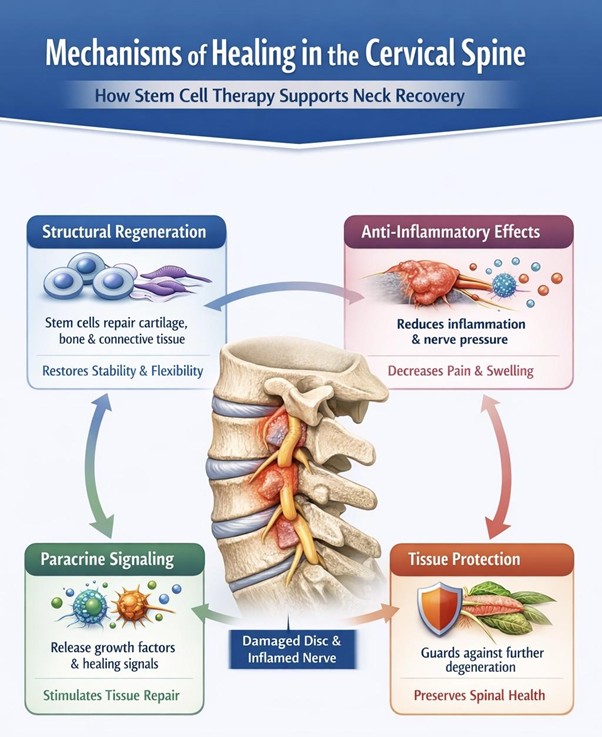
Mechanisms of Healing in the Cervical Spine
Stem cell therapy supports neck recovery through several biological processes. Stem cells have the ability to develop into different types of cells, including those involved in cartilage, bone, and connective tissue repair. By contributing to the restoration of these structures, they can improve spinal stability and flexibility.
Another essential mechanism is the therapy’s anti-inflammatory effect. Chronic inflammation often plays a central role in ongoing neck pain and nerve irritation. Stem cells release signaling molecules that help regulate immune responses, reduce swelling, and minimize oxidative stress. As inflammation decreases, pressure on nerves may be relieved, leading to reduced pain and improved mobility.
Paracrine signaling is also a key factor in the healing process. Stem cells release growth factors and extracellular vesicles that influence surrounding cells and stimulate the body’s natural repair systems. This communication enhances tissue regeneration, accelerates healing, and promotes long-term recovery.
In addition to repairing damaged tissues, stem cells may help protect existing structures from further degeneration. By reducing cellular stress and inflammation, they create an environment that supports the preservation of spinal health over time.
Potential Advantages of Stem Cell Therapy
Stem cell therapy offers several potential benefits compared to conventional approaches. One of its main advantages is that it targets the underlying causes of degeneration rather than simply masking symptoms. By encouraging tissue repair, it aims to provide longer-lasting improvements.
The procedure is typically performed using image-guided injections, making it minimally invasive. This reduces the need for large surgical incisions or implanted hardware, which can significantly shorten recovery time. Many patients also appreciate the possibility of reducing their reliance on long-term pain medications.
In clinical settings, stem cell therapy is generally well-tolerated when performed under appropriate medical supervision. While results vary, many individuals report meaningful improvements in pain and function over time.
Recovery and Expected Outcomes
The healing process following stem cell therapy is gradual, as it depends on the body’s natural regenerative mechanisms. Patients may begin to notice improvements within a few weeks, with continued progress over several months.
Commonly reported outcomes include reduced neck pain and stiffness, improved range of motion, and decreased nerve-related symptoms such as tingling or numbness. Many individuals also experience enhanced stability in the cervical spine and greater ease in performing daily activities.
It is important to note that results depend on several factors, including the severity of the condition, the patient’s age, lifestyle habits, and overall health. A comprehensive treatment plan and proper follow-up care can play a significant role in optimizing outcomes.
Thailand’s Role in Regenerative Spine Care
Thailand has become a leading destination for regenerative medicine, particularly in the field of orthopedic and spinal treatments. Medical centers across the country are equipped with advanced laboratory technologies and imaging systems that allow for precise preparation and delivery of stem cell therapies.
Several factors contribute to Thailand’s growing reputation in this area. Many hospitals and clinics meet international accreditation standards and are staffed by experienced physicians skilled in minimally invasive procedures. Treatment programs are often tailored to each patient based on detailed diagnostic evaluations, ensuring a personalized approach.
Cost is another important consideration. Compared to many Western countries, stem cell therapy in Thailand is often more affordable while maintaining high standards of care. In addition, structured follow-up programs help monitor patient progress and support long-term recovery.
This combination of expertise, advanced infrastructure, and patient-focused care has made Thailand an attractive option for both local and international patients seeking innovative solutions for chronic neck pain.
Conclusion
Stem cell therapy represents a promising development in the treatment of chronic neck pain and degenerative neck conditions. By focusing on tissue repair, inflammation control, and the activation of natural healing processes, this regenerative approach goes beyond temporary symptom relief. Instead, it aims to restore function, improve mobility, and enhance overall spinal health.
As research in regenerative medicine continues to expand, stem cell therapy may become an increasingly important component of cervical spine care. In Thailand, where advanced medical technology and specialized expertise are readily available, patients have access to forward-thinking treatments designed to support long-term recovery and a better quality of life.