

Chronic back pain remains one of the leading causes of long-term discomfort and reduced quality of life across the globe. Conventional treatments for chronic back pain are generally focused on symptom management rather than long-term repair. To address these limitations, regenerative medicine has emerged as a forward-thinking alternative that focuses on restoring damaged tissues at a biological level. Among these innovative therapies, umbilical cord–derived mesenchymal stem cell (UC-MSC) treatment is gaining recognition for its potential in spinal care due to its regenerative capabilities and favorable safety profile.
How Stem Cell Therapy Is Different from Conventional Treatments
Stem cell therapy seeks to repair and regenerate damaged structures within the spine. Stem cells are especially valuable because of their ability to support tissue healing, modulate immune responses, and reduce inflammation without triggering significant immune rejection.
Stem cells help regulate inflammation, promote cellular repair, and improve the overall function of spinal structures. By targeting the underlying causes of degeneration and impaired healing, this therapy offers a more comprehensive approach to managing chronic back pain.
Spinal Disorders That May Respond Positively to Stem Cell Therapy
A range of spinal conditions may benefit from stem cell therapy. Degenerative disc disease, which involves the gradual breakdown of intervertebral discs, is one of the most common indications. Bulging or herniated discs, where disc material presses on nearby nerves, may also respond well to this approach. In addition, individuals with osteoarthritis affecting the spinal joints, spinal stenosis, or persistent pain following surgery or injury may find relief through regenerative treatment strategies.
Tissue Repair and Regeneration Mechanisms
Stem cell therapy supports healing through several important biological mechanisms. One key function is its role in cellular repair and tissue regeneration. Stem cells have the capacity to develop into specialized cells that contribute to the maintenance and repair of cartilage, bone, and connective tissues. This ability may help strengthen spinal discs, improve joint stability, and enhance the integrity of surrounding structures, ultimately supporting better spinal function.
Another important mechanism involves biological signaling. Stem cells release a variety of growth factors, cytokines, and signaling molecules that coordinate the body’s natural healing processes. These substances can stimulate the formation of new blood vessels, attract additional repair cells to the site of injury, protect healthy tissue from further damage, and improve hydration within spinal discs. This network of communication plays a critical role in sustaining recovery and promoting long-term improvements.
In addition to supporting regeneration, stem cells also help regulate inflammation and immune activity. Chronic inflammation is a major contributor to ongoing back pain, often leading to nerve irritation and reduced mobility. By modulating the immune response and reducing inflammatory activity, stem cell therapy may help relieve pressure on nerves, decrease pain levels, and improve overall comfort.
Main Advantages of Stem Cell Therapy for Back Pain
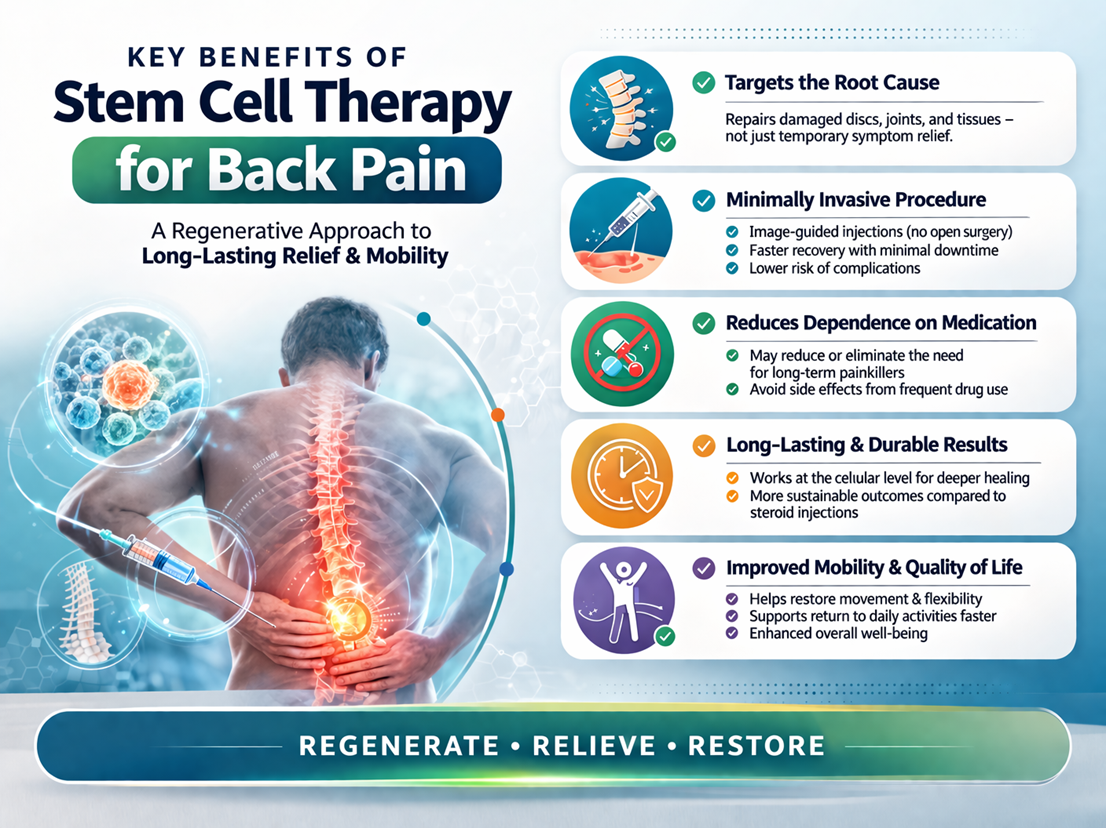
There are several advantages associated with stem cell therapy for chronic back pain. One of the most significant benefits is its focus on addressing the root cause of the condition. By repairing damaged tissues rather than simply alleviating symptoms, this approach aims to deliver more meaningful and lasting results. The procedure is also minimally invasive, typically involving image-guided injections rather than open surgery. This reduces recovery time, lowers the risk of complications, and allows patients to return to their normal activities more quickly.
Another advantage is the potential to decrease reliance on long-term medication use. As healing progresses, some individuals may find they no longer need frequent pain relief drugs, which can carry side effects when used over extended periods. Additionally, because the therapy works at a cellular level, the improvements achieved may be more durable compared to temporary treatments such as steroid injections.
Reasons Thailand Is a Top Choice for Stem Cell Therapy
Thailand has become a prominent destination for regenerative medicine, particularly in the field of stem cell therapy. The country offers a combination of advanced medical technology, experienced healthcare professionals, and patient-centered care. Many medical facilities are internationally accredited and equipped with modern laboratories designed for stem cell processing and application. Physicians specializing in regenerative medicine and minimally invasive spine treatments provide individualized care plans based on detailed imaging and diagnostic assessments.
Another factor contributing to Thailand’s popularity is the cost-effectiveness of treatment compared to many Western countries. Patients can often access high-quality care at a more affordable price, making it an attractive option for those seeking advanced therapies. In addition, the country’s wellness-oriented environment supports recovery, offering a comfortable setting for healing and rehabilitation.
Recovery Timeline and Expected Outcomes
Recovery following stem cell therapy is typically gradual, as the body’s natural repair processes take time to unfold. Improvements may begin to appear within a few weeks, but more noticeable changes often develop over several months. Many patients report reduced pain, increased flexibility, improved strength, and a greater ability to perform everyday activities. As inflammation decreases and tissues heal, these benefits may continue to progress, potentially reducing the need for repeated treatments.
Conclusion: A Promising Alternative for Chronic Back Pain
For those who have not found long-term relief through standard treatments or prefer to avoid surgical procedures, stem cell therapy presents a compelling option. This approach targets the underlying causes of pain by promoting tissue healing, reducing inflammation, and supporting the restoration of normal function. Rather than simply managing symptoms, it works to repair damaged areas within the spine. As a result, patients may experience improved movement, decreased pain levels, and a better overall quality of life, making it an increasingly attractive solution for chronic back pain management.