

Hip disorders can significantly impact mobility, comfort, and overall quality of life. Traditional primarily aim to manage symptoms or repair structural damage. However, many of these approaches do not fully restore the affected tissues or prevent further degeneration.
In recent times, orthopedic care has advanced through the development of regenerative medicine. Among the most promising developments is the use of umbilical cord-derived mesenchymal stem cells (UC-MSCs). This innovative therapy focuses on supporting the body’s natural healing processes, offering a minimally invasive alternative for individuals seeking relief from hip-related conditions without undergoing major surgery.
How Stem Cell Treatment Supports Healing in the Hip Joint
When stem cells are introduced into the affected hip area, they begin interacting with the surrounding tissues through several biological processes. Rather than simply replacing damaged cells, they influence the local environment to promote healing and recovery.
One of the key actions is the stimulation of cartilage regeneration. In conditions like osteoarthritis, the gradual breakdown of cartilage leads to joint pain and stiffness. Stem cells may encourage the development of new cartilage tissue, helping to improve joint cushioning and reduce friction between bones.
Another important mechanism is inflammation control. Stem cells release signaling molecules that calm the inflammatory response within the joint. This can result in reduced pain, decreased swelling, and improved joint comfort.
Stem cells also contribute to the healing of soft tissues surrounding the hip. Structures such as tendons, ligaments, and the labrum play critical roles in maintaining joint stability. By promoting repair and regeneration in these tissues, stem cell therapy can enhance overall joint function.
Additionally, stem cells may support improved blood flow in the treated area. By encouraging the formation of new blood vessels, they help deliver oxygen and essential nutrients to damaged tissues. This improved circulation supports faster and more effective healing.
Hip Conditions That May Benefit from Stem Cell Therapy
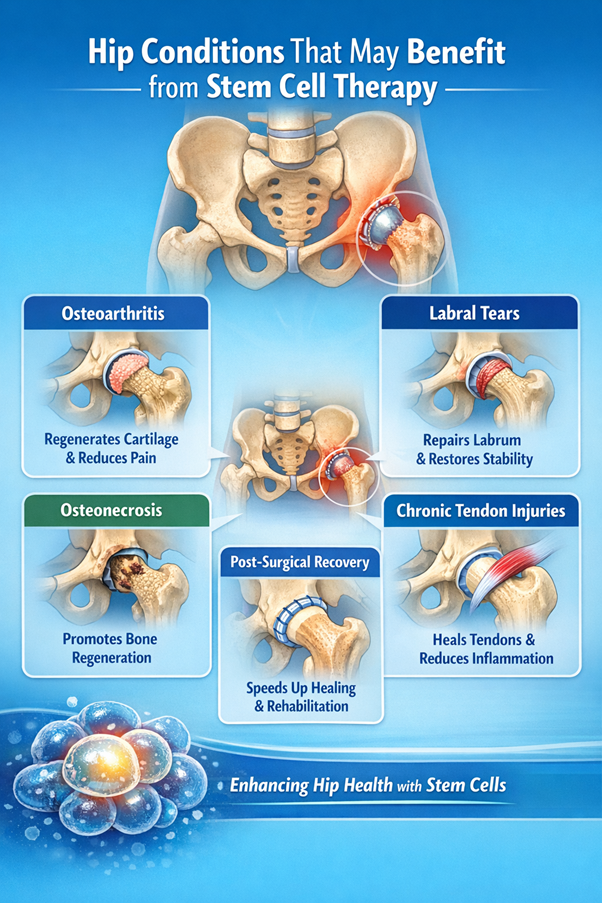
Stem cell therapy is being explored for a wide range of hip-related conditions, particularly those involving degeneration, injury, or chronic inflammation.
Osteoarthritis is one of the most common applications. This condition involves the gradual wearing down of joint cartilage, leading to stiffness, pain, and reduced mobility. Stem cell therapy may help regenerate cartilage and improve joint movement.
Labral tears, which affect the ring of cartilage that stabilizes the hip joint, may also benefit from regenerative treatment. By supporting tissue repair, stem cells can help restore the integrity of the labrum and reduce discomfort.
Osteonecrosis, also known as avascular necrosis, occurs when reduced blood supply leads to the death of bone tissue. Stem cell therapy may promote bone regeneration and improve circulation, potentially slowing or preventing joint collapse.
Chronic tendon conditions, such as gluteal tendinopathy or hip flexor injuries, are another area where stem cells may be useful. These conditions often involve prolonged inflammation and tissue degeneration, which stem cell therapy may help address.
In addition, patients recovering from hip surgery may benefit from stem cell treatment as part of their rehabilitation process. By accelerating tissue repair, stem cells may support faster recovery and improved outcomes.
Effectiveness and Patient Outcomes
Many individuals who undergo stem cell therapy for hip conditions report meaningful improvements in their symptoms and overall function. Common outcomes include reduced pain levels, increased flexibility, and a greater range of motion in the joint.
Patients often notice improvements in their ability to perform daily activities, as well as enhanced participation in physical exercise or recreational activities. These changes can have a significant positive impact on quality of life.
Clinical studies investigating stem cell therapy for hip disorders have shown encouraging results. Imaging techniques have revealed signs of cartilage regeneration in patients with early-stage osteoarthritis. Additionally, many participants report noticeable pain relief within a relatively short period following treatment.
Functional improvements, such as increased strength and better joint stability, have also been observed. These benefits tend to be more pronounced in individuals who are in the earlier stages of joint degeneration or who maintain overall good health.
Key Advantages of Using Stem Cells to Treat Hip Disorders
Stem cell therapy offers several important advantages compared to traditional treatment options. One of its primary benefits is that it involves minimal surgical intervention. Unlike major surgical procedures such as hip replacement, stem cell injections do not require large incisions or extended hospital stays.
Recovery time is typically much shorter, allowing patients to return to their normal routines more quickly. This makes the therapy particularly appealing for individuals who wish to avoid the lengthy rehabilitation associated with surgery.
The chances of complications occurring are generally minimal. Since the procedure does not involve general anesthesia or extensive surgical intervention, the chances of infection, blood clots, or other serious side effects are reduced.
Another key advantage is the potential for long-lasting results. By addressing the underlying causes of joint damage—such as inflammation and tissue degeneration—stem cell therapy may provide more sustained relief compared to temporary solutions like pain medications or steroid injections.
Conclusion
Stem cell therapy represents a promising advancement in the treatment of hip conditions, offering a regenerative alternative to traditional approaches. By supporting the repair of damaged tissues, reducing inflammation, and improving joint function, this therapy addresses the root causes of pain and mobility limitations.
For individuals seeking a non-surgical solution to hip problems, stem cell therapy provides a compelling option. While further research is still needed to fully establish long-term outcomes, current findings and patient experiences suggest that this innovative treatment holds significant potential.
As regenerative medicine continues to evolve, stem cell therapy may play an increasingly important role in helping patients restore mobility, reduce discomfort, and regain an active, healthy lifestyle.