Our Services
Others
- DFPP
- Shockwave
- IV Drip

Chronic wounds are a significant clinical problem, particularly for those with chronic diseases such as diabetes mellitus, vascular disease or impaired mobility. In contrast, chronic wounds persist open for weeks to months and do not respond adequately to standard treatments as they are unable to progress through the classical phases of wound healing. E.g. diabetic foot ulcers, venous leg ulcers, pressure sore and chronic surgical wounds which take time for healing. Such chronic wounds result in persistent pain, infection, decreased quality of life and in severe cases, tissue or limb loss.
Conventional wound care (cleaning, changing dressings, antibiotics, pressure reduction, and even surgery) are useful adjuncts to healing but largely ineffective where blood flow clearance is inadequate or cellular inflammation persists. As a solution to these constraints, a best alternative came in the form of regenerative medicine. UC-MSC therapy is a form of second generation treatment, promoting tissue regeneration and damage repair by taking advantage of the natural wound-healing properties of the body. This makes Thailand one of the top countries in this new healing way, handy around along with a developed health care system and developing knowledge of regenerative medicine.
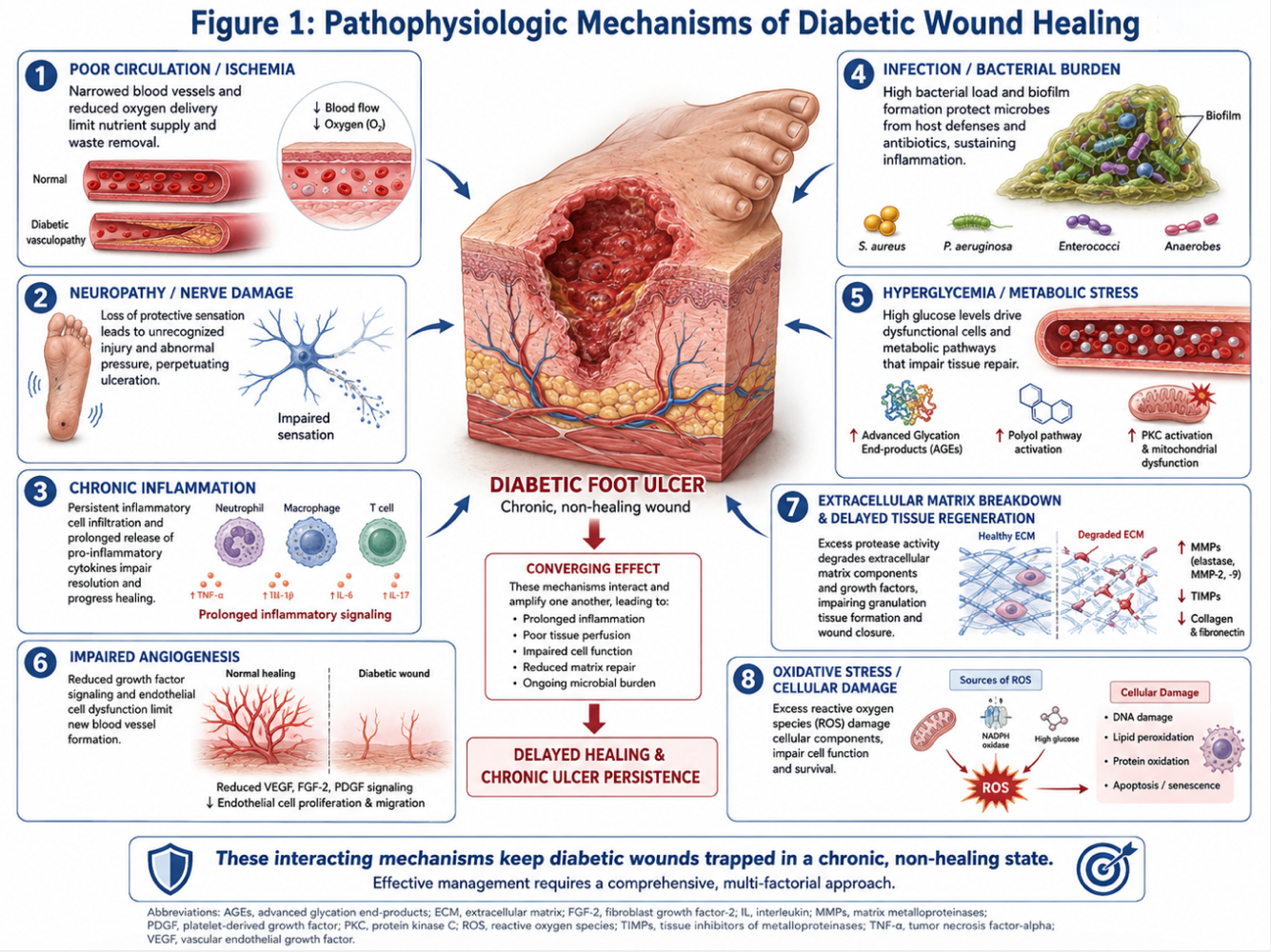
Wound healing is a sequence of the stages, inflammation, formation of tissue, and remodeling. Chronic is a wound that has become trapped in the inflammatory phase with an inability to form new tissue. Here are just a few possible reasons for this problem:
Effective therapy runs deeper than mere physical barriers we need to navigate the biological obstacles of wellbeing.
Stem cell therapy at the forefront of regenerative medicine and its greatest benefit is to stimulate new tissue. UC-MSC stem cells, in arbitrary order, can further acquire skin cell types and stimulate neighboring surrounding to regenerate injured areas. This ends up kind of reconstructing the wound bed, allowing new tissue to grow.
Conversely, chronic wounds are in an extended state of inflammation that effectively inhibits healing. In UC-MSC, factors that are secreted by stem cells promote a change of the immune response and repair of tissue damage via inhibition of inflammation. This therapy stimulates the wound to heal by accelerating the inflammatory phase of healing.
Healing of wounds necessitates sufficient perfusion. The secretion of angiogenic factors, such as vascular endothelial growth factor (VEGF), from stem cells may lead to neovascularization. Improved blood supply supplies oxygen and nutrients that are needed for tissue repair and helps in healing long-term.
On the immune-modulating side, certain types of stem cells might improve immunity and give greater resistance to infection. They can produce antimicrobial substances and enhance localized immune response, protecting against bacterial infection in wound.
Stem cells from UC-MSCs secrete a few biologically active molecules having higher levels of fibroblast growth factor (FGF) and platelet-derived growth factor (PDGF). These agents promote collagen deposition and increase migration of cells, resulting in more rapid contraction followed by closure.
How stem cells are used depends on the type of wound and clinical strategy, for example.
Examples of effects that commonly occur in chronic wound patients with UC-MSC stem cell therapy are:
Although the efficacy of regenerative therapy will depend on overall health and degree of damage in the wound, it may provide a new approach for patients who did not respond to standard care.
Thailand has built a good name for itself with regenerative medicine in Thailand and Medical tourism in Thailand. Below are the reasons why it is topping stem cell-based wound treatment market:
Taking a step forward, stem cells therapy using UC-MSC moves from symptomatic relief to biological repair. This unique mechanism of action circumvents, and effectively tackles, the major obstacles to healing that make chronic non-healing wounds so intractable, by reducing inflammation via modulation, improving perfusion and facilitating immune defence whereupon ultimate tissue regeneration is stimulated.
In cases of diabetic foot ulcers, which are categorized as chronic or difficult-to-heal wounds, stem cell therapy in Thailand is one of the best solutions. Regenerating tissue integrity, which gets disrupted from any injury, and facilitating a better quality of life by overcoming complications—with modern medicine experience combined with boosting the body’s own ability to heal itself.