Our Services
Others
- DFPP
- Shockwave
- IV Drip

Abstract
Autism Spectrum Disorder (ASD) is a lifelong neurodevelopmental condition that affects communication, sensory processing, social interaction, and behavioral regulation. While established interventions such as speech therapy, occupational therapy, behavioral support, and educational programs remain central to autism care, growing scientific interest has focused on biological factors that may influence neurological function in some individuals with ASD.
Umbilical cord-derived mesenchymal stem cells are widely studied in regenerative medicine because of their strong signaling capacity and immune-modulating properties. Umbilical cord–derived mesenchymal stem cell therapy (UC-MSC) is being explored as a supportive regenerative approach rather than a cure for autism. Its potential role is linked to immune modulation, neuroinflammation control, oxidative stress reduction, microglial regulation, paracrine signaling, and support for cellular communication. These mechanisms may contribute to a healthier biological environment that supports attention, emotional regulation, sensory tolerance, communication, and developmental participation in selected patients.
Thailand has become a recognized destination for regenerative medicine due to its medical infrastructure, international patient coordination, ethical donor screening practices, and clinical experience with cell-based therapies. However, UC-MSC stem cell therapy for autism should be considered only after individualized medical screening, realistic expectation setting, and continued use of conventional developmental therapies.
This article reviews the biological rationale, potential mechanisms, patient selection considerations, safety screening, and Thailand’s role in providing responsible regenerative support for individuals with autism.
Autism Spectrum Disorder (ASD) is a complex neurodevelopmental condition that influences how individuals communicate, interact socially, process sensory information, and express behavior. People on the autism spectrum may experience challenges such as difficulty understanding social cues, heightened sensitivity to sound, light, or touch, repetitive behaviors, or a strong preference for routine and predictability. At the same time, many autistic individuals demonstrate remarkable strengths, including deep focus, creativity, honesty, and unique ways of understanding the world.
Autism exists along a wide spectrum, meaning each individual’s abilities, challenges, and support needs are different. Some people with ASD live independently and require minimal assistance, while others benefit from structured, long-term support. This diversity underscores the importance of personalized, respectful approaches to care approaches that acknowledge neurodiversity while seeking to reduce barriers that affect quality of life.
In recent years, regenerative medicine has opened new areas of scientific exploration related to neurological support. Among these developments, umbilical cord–derived mesenchymal stem cell therapy (UC-MSC) is being studied as a complementary option for individuals with autism, particularly in relation to biological processes that may influence neurological function.
Understanding the Role of Stem Cell Therapy in Autism
It is essential to clarify that stem cell therapy does not aim to cure autism or alter an individual’s identity. Autism is not a disease to be erased, but a neurodevelopmental difference. Regenerative approaches instead focus on addressing certain biological imbalances that may contribute to challenges experienced by some individuals with ASD.
UC-MSC stem cell therapy is being explored for its ability to influence biological pathways. By supporting immune balance and creating a healthier neural environment, stem cell therapy may help improve functional outcomes in areas such as attention, emotional regulation, sensory processing, and communication for some individuals.
Umbilical cord–derived stem cell therapy are of particular interest due to their biological youth, ethical sourcing, and strong regenerative and immune-modulating properties.
What Makes Umbilical Cord–Derived Stem Cells Unique
Umbilical cord–derived mesenchymal stem cells, or UC-MSCs, are collected from umbilical cord tissue after full-term, healthy deliveries. The donation process is non-invasive and performed only with informed consent, as the umbilical cord is normally discarded after birth. Before clinical use, donor screening and laboratory quality checks are required to confirm safety, sterility, and suitability.
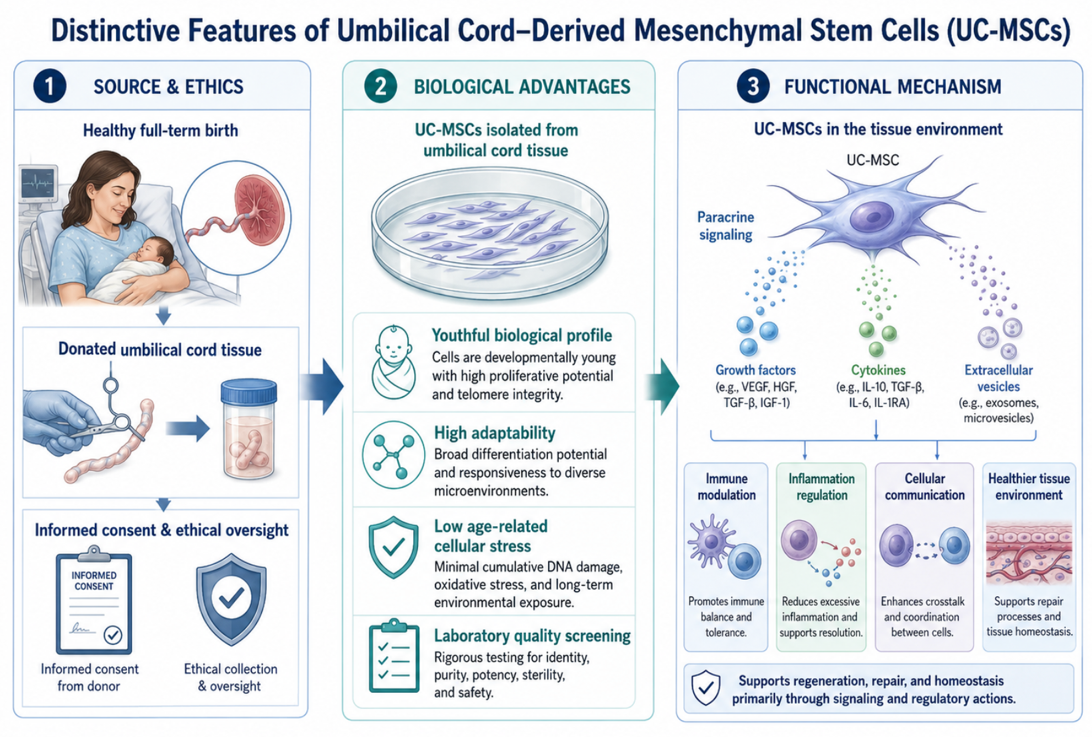
Figure 1 : Distinctive Biological and Functional Features of Umbilical Cord–Derived Mesenchymal stem cell therapy
What makes UC-MSC stem cell therapy especially important in regenerative medicine is their youthful biological profile. Compared with adult-derived cells, they have not undergone years of aging, inflammation, metabolic stress, or environmental exposure. This gives them strong functional activity, high adaptability, and a valuable ability to communicate with surrounding cells. Rather than working by directly becoming new brain cells, UC-MSC stem cell therapy are mainly studied for their signaling effects. They release bioactive molecules, including growth factors, cytokines, and extracellular vesicles, which may help regulate inflammation, support immune balance, and encourage healthier cellular communication.
In this way, UC-MSC stem cell therapy is not based on simple cell replacement. Its potential role is better understood as biological support: helping the body create a more balanced internal environment where repair, regulation, and functional recovery may be better supported over time.
How Stem Cell Therapy May Support Neurological Balance in ASD
Reduction of Neuroinflammation
Ongoing inflammation within the brain has been observed in some individuals with autism and may interfere with neural communication. Stem cells naturally release anti-inflammatory molecules that help calm excessive immune activity. By reducing neuroinflammation, therapy may support more stable brain signaling and emotional regulation.
Immune System Modulation
Irregular immune responses, including elevated inflammatory markers, have been reported in subsets of the autism population. Stem cells help regulate immune activity by suppressing harmful inflammation while promoting balance within the immune system. Improved immune stability may positively influence neurological consistency and overall well-being.
Support for Neural Plasticity
Neural plasticity the brain’s ability to adapt, reorganize, and form new connections is essential for learning, development, and behavioral progress. Stem cells release growth factors that support neuron health, synaptic development, and communication between brain cells. Enhanced plasticity may help support improvements in learning, focus, language development, and emotional processing.
Improved Cerebral Blood Flow
Stem cells may encourage angiogenesis, the formation of new blood vessels. Improved circulation enhances oxygen and nutrient delivery to brain tissue, supporting healthy metabolism and sustained cognitive function.
Regulation of Microglial Activity
Microglia are immune cells within the brain responsible for maintaining neural health. When overactivated, they may contribute to excessive inflammation and disrupted neural signaling. Stem cells may help normalize microglial behavior, reducing unnecessary immune activation and supporting a more balanced neurological environment.
Paracrine Signaling and Systemic Balance
Many effects of stem cell therapy are attributed to paracrine signaling rather than direct cell replacement. These signals help reduce oxidative stress, support tissue repair, and promote biological equilibrium within the nervous system and beyond.
Potential Advantages of Stem Cell Therapy as a Supportive Option
Targets biological factors such as inflammation and immune imbalance
Minimally invasive and does not require harvesting cells from the patient
Ethically sourced from donated umbilical cord tissue with informed consent
Designed to complement not replace behavioral therapy, education, speech therapy, and occupational therapy
Early clinical observations have noted functional changes in some individuals, including improvements in attention, emotional regulation, language use, and social engagement
Thailand’s Role in Regenerative Autism Support
Thailand has emerged as a regional leader in regenerative medicine, supported by advanced healthcare infrastructure and a strong commitment to ethical medical practice. Specialized hospitals and clinics integrate modern laboratory technology with evidence-based protocols for cellular therapies.
Experienced Medical Teams: Physicians specializing in regenerative medicine, neurology, and pediatric care often collaborate within multidisciplinary teams, ensuring careful assessment and responsible treatment planning.
Research and Clinical Development: Thai medical institutions actively contribute to clinical research and data collection related to stem cell–based neurological therapies, supporting ongoing refinement of treatment protocols.
Ethical and Regulatory Oversight: Donor screening, cell processing, and clinical application are governed by regulatory frameworks designed to prioritize patient safety and ethical standards.
Conclusion: A Regenerative Perspective on Autism Support
Umbilical cord–derived mesenchymal stem cell therapy represents an emerging and complementary approach to autism support. By addressing biological factors such as inflammation, immune regulation, and neural connectivity, this regenerative strategy offers new possibilities for supporting communication, sensory integration, and emotional balance in some individuals with ASD.
In Thailand, where advanced medical expertise is combined with ethical oversight and patient-centered care, families have access to innovative regenerative options delivered responsibly by experienced professionals.
As regenerative medicine continues to evolve, stem cell therapy may become an important addition to holistic care helping individuals on the autism spectrum enhance well-being, strengthen developmental potential, and engage with the world more comfortably and confidently.
Frequently Asked Questions
Is stem cell therapy a cure for autism?
No. Stem cell therapy is not a cure for autism. It is being explored as a supportive regenerative approach that may help influence immune regulation, inflammation balance, and cellular communication in selected patients.
Can UC-MSC therapy replace speech therapy or occupational therapy?
No. Speech therapy, occupational therapy, behavioral therapy, educational support, and developmental rehabilitation remain important parts of autism care. UC-MSC therapy should only be considered as an additional supportive option.
How soon can families notice changes after treatment?
If changes occur, they are usually gradual and may be noticed over weeks to months. Families may monitor attention, sleep, communication, sensory tolerance, emotional regulation, and participation in therapy.
Is every child with autism suitable for UC-MSC therapy?
No. Every patient requires medical screening. Children with uncontrolled seizures, active infection, severe unstable illness, active cancer, or unclear neurological symptoms may require further medical evaluation before treatment is considered.
Why choose Thailand for autism stem cell therapy?
Thailand is a recognized destination for regenerative medicine and international patient care. Families often choose Thailand for medical expertise, treatment coordination, accessible costs, and experience supporting overseas patients.