Our Services
Others
- DFPP
- Shockwave
- IV Drip

For individuals relying on daily injections, the most common question in regenerative medicine is: can stem cell therapy replace insulin? As research into advanced cellular therapies progresses, many patients wonder if a complete transition away from traditional diabetic management is finally within reach.
Lowering your daily insulin dose is a realistic goal for some patients in clinical trials. However, complete insulin independence after stem cell therapy is still rare, and when achieved, it usually requires taking heavy immunosuppressive drugs to prevent the body from rejecting the new cells.
If you are exploring your options, it is vital to separate sensational headlines from clinical reality. In this guide, we will break down whether you will I still need insulin after stem cell therapy, how different cell types work, and what a realistic timeline looks like for modern diabetes care.
In the medical world, “insulin independence” does not necessarily mean your diabetes is entirely cured or that your pancreas has miraculously regenerated to its original state. Clinically, it means that a patient is able to maintain healthy,stable blood glucose levels without needing to inject or pump exogenous (outside) insulin. Achieving this state requires a delicate biological balance. Your body must have enough functioning beta cells to secrete insulin in response to the food you eat, and your immune system must allow those cells to survive. While complete independence is the ultimate finish line for researchers, most current regenerative approaches focus on a more immediate,practical milestone: stem cell therapy to reduce insulin dose and prevent dangerous drops in blood sugar.
To understand the future of treatment, it helps to know how are stem cells turned into insulin-producing cells in the laboratory. Stem cells are essentially biological blank slates. In specialized, highly regulated laboratories, scientists expose these blank slates to a specific sequence of proteins and growth factors over several weeks. This carefully controlled environment mimics human embryonic development. Step by step, the cells are guided to mature into pancreatic progenitor cells, and finally, into functional insulin-producing cells from stem cells. Once transplanted into the body, the goal is for these new cells to sense blood sugar levels and secrete insulin dynamically, just as a healthy pancreas would.
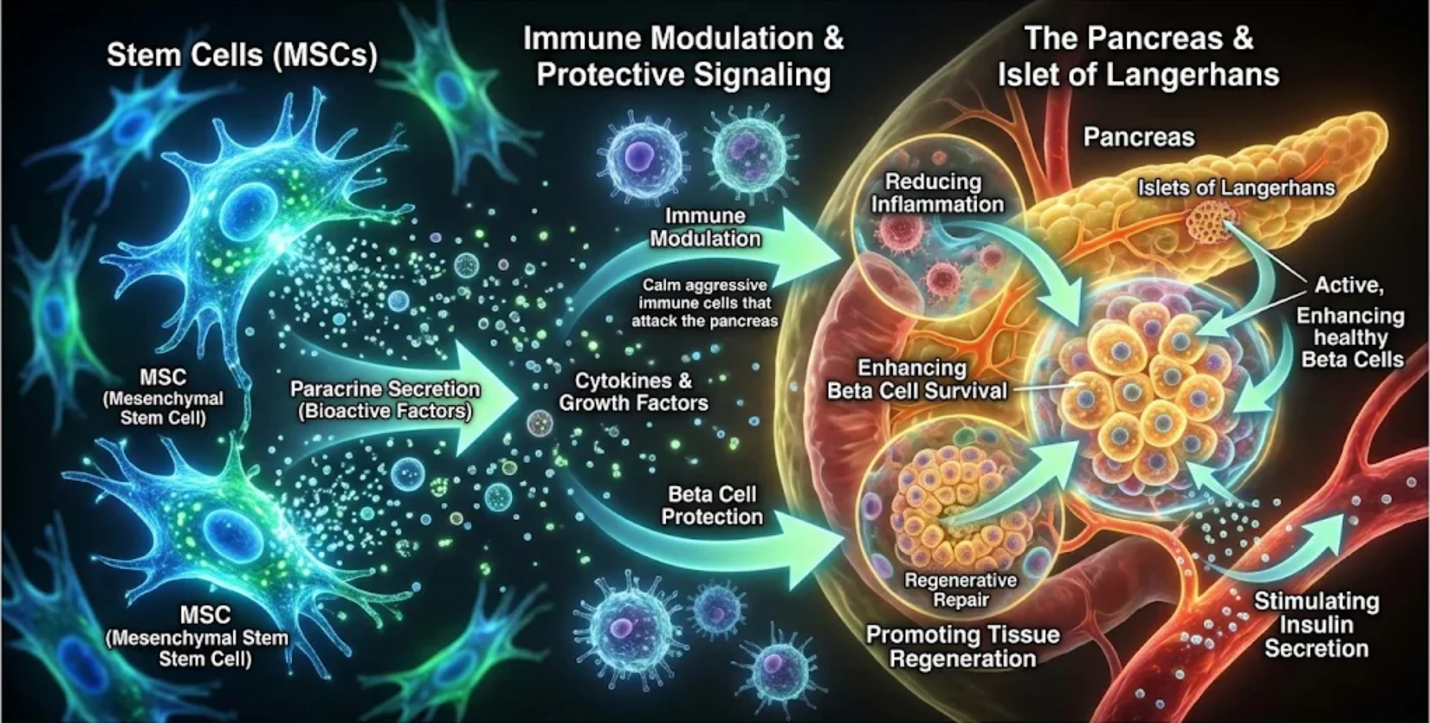
Figure 1: The Diabetes Bio-Augmentation Framework illustrates how stem cells (MSCs) support beta cell function,promote tissue repair, and modulate the immune response in diabetes.
Researchers are investigating several cellular sources, ranging from ethically sourced umbilical cords to bone marrow and fat stem cells for diabetes. For a deep dive into the different cellular origins and how they function, please visit our comprehensive.
A major conversation in medical research is the debate between using own cells vs donor cells for diabetes stem cell therapy. Both approaches have distinct advantages and significant clinical hurdles.
Recently, global headlines reported on a woman cured of type 1 diabetes with her own stem cells. In this groundbreaking 2024 clinical trial, scientists used induced pluripotent stem cells (iPSCs). They took the patient’s own cellular material, reprogrammed it back to a stem cell state, and then guided it to become insulin-producing islets.Because this was an autologous stem cell therapy for diabetes (using her own cells), her body did not immediately recognize the cells as foreign. While this early evidence is highly promising and marks a major scientific milestone, the process is currently incredibly slow, expensive, and remains strictly in the experimental trial phase for a very limited number of participants.
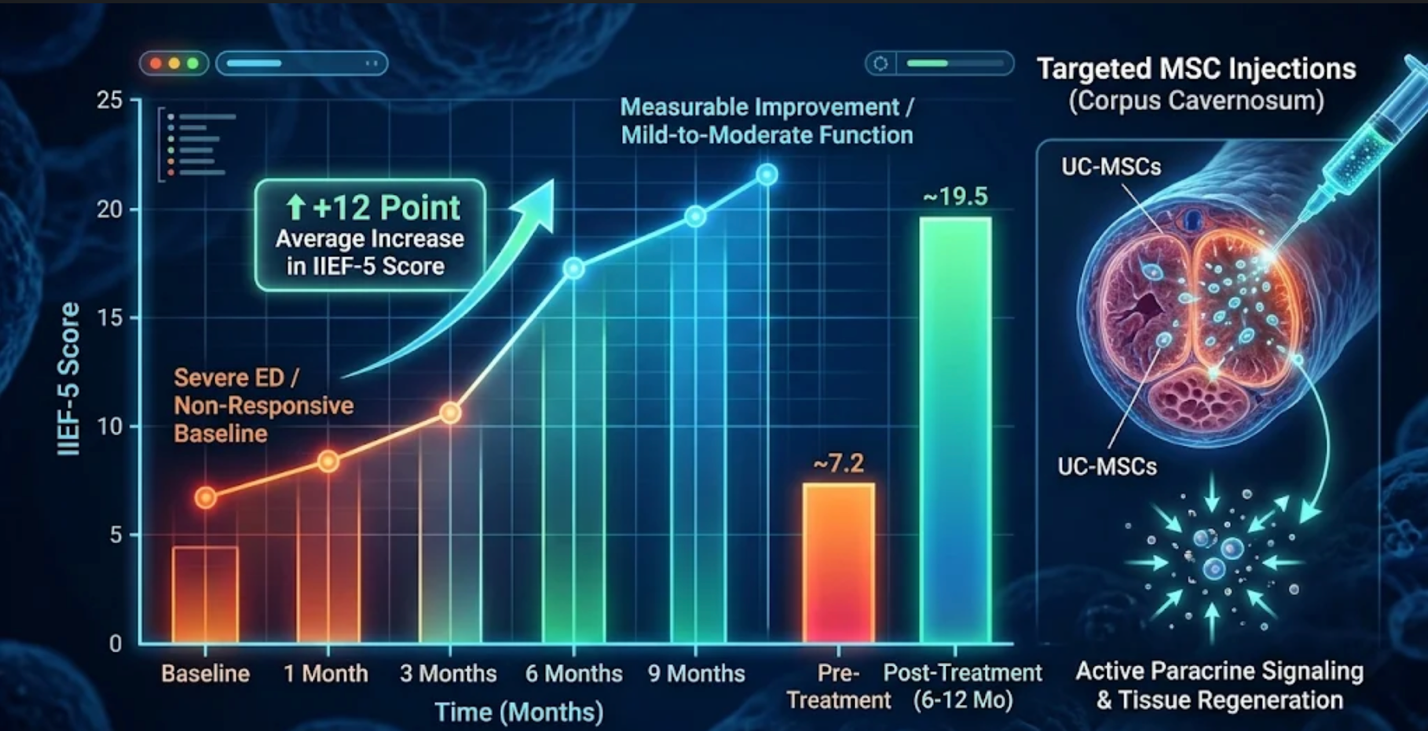
Figure 2: Clinical data shows measurable IIEF-5 score improvements following targeted MSC injections in non-responsive patients.
Another approach being studied is an autologous hematopoietic stem cell transplant type 1 diabetes (AHST). This intensive procedure is sometimes tested in patients who have been very recently diagnosed. It involves harvesting the patient’s own bone marrow stem cells, using high-dose chemotherapy to essentially wipe out the faulty immune system,and then reinfusing the stem cells to “reboot” the immune system before it can destroy all the beta cells. While it has shown the ability to halt disease progression in some trials, the intense chemotherapy risks mean it is not suitable for most patients.
In contrast to experimental stem cells, the current FDA-approved benchmark for cell replacement is Lantidra donor islet cell therapy. This involves taking functioning islet cells from deceased organ donors and transplanting them into a patient. While this can provide insulin independence for patients with severe, life-threatening hypoglycemia unawareness,there is a severe shortage of organ donors, making it impossible to scale this treatment to the millions of people who need it.
Whether using donor islets or lab-grown stem cell islets, a massive biological hurdle remains. Why do islet transplant patients need immunosuppression?
Your immune system is designed to destroy foreign invaders. If you receive cells from a donor (or from lab-grown donor stem cell lines), your immune system will immediately attack and reject them. To keep the cells alive, patients must take powerful, lifelong immunosuppressive medications. These drugs come with their own risks, including an increased vulnerability to infections and potential kidney strain. Therefore, doctors currently only recommend replacing insulin with donor cells when the patient’s diabetes is more dangerous than the side effects of the anti-rejection drugs.
When comparing stem cell therapy vs insulin injections or a stem cell therapy vs insulin pump and CGM, it is helpful to look at all current and experimental options side-by-side.
| Treatment Type | Primary Goal | Evidence Level | Immunosuppression Needed? | Can Stop Insulin? |
| Insulin Injections | Standard daily glucose control | Proven standard of care | No | No |
| Pump & CGM | Automated daily glucose control | Proven standard of care | No | No |
| Donor Islets (Lantidra) | Replace beta cells in severe cases | Approved for specific severe cases | Yes, heavy lifelong drugs | Yes, but varies by patient |
| Stem Cell Islets | Mass-produce replacement beta cells | In clinical trials | Yes | Goal is yes (in trials) |
| Own-cell iPSC Islets | Replace beta cells without rejection | Very early experimental trials | Typically no / reduced | Achieved in isolated cases |
| AHST | “Reboot” immune system to save remaining beta cells | Experimental (requires chemotherapy) | Yes (immune wipeout required) | Sometimes, temporarily |
| UC-MSC (Umbilical Cord) | Calm inflammation and support local tissue | Early clinical evidence | No | No (goal is dose reduction) |
For the vast majority of patients seeking cellular treatments today, the immediate goal is not to throw away your insulin pens. Instead, therapies utilizing UC-MSCs (Umbilical Cord Mesenchymal Stem Cells) are being studied for their ability to act as biological support managers. They release signals that may help quiet systemic inflammation and protect the insulin-producing cells you still have. By improving the internal biological environment, many patients in clinical studies have seen their blood sugar levels stabilize, making their condition easier to manage. Achieving a lower, more predictable daily insulin dose is a realistic,practical goal that can drastically improve your quality of life and reduce the daily mental burden of diabetes management.
If you participate in a successful trial, how long does insulin independence last after stem cell therapy? Because this field is so new, long-term data spanning decades does not yet exist. In trials utilizing donor islets or experimental stem cells, some patients maintain independence for several years, while others slowly require small doses of supplemental insulin over time as the transplanted cells naturally exhaust or face mild immune pressure.
If you are considering integrating regenerative care into your treatment plan, an honest medical evaluation is your first step. A proper insulin review before stem cell therapy in Thailand ensures that you understand exactly what cellular therapy can and cannot do for your unique biology. At Vega Stem Cell, we prioritize patient safety and realistic expectations. We do not make false promises of a “cure,” but we do provide advanced, carefully regulated supportive care aimed at optimizing your health.
Send us your daily insulin dose, latest CGM or HbA1c and C-peptide for an honest review. Our medical team is available via WhatsApp, email, or our secure consultation form to help you navigate your options safely.
Can stem cell therapy replace insulin?
Currently, replacing insulin entirely is largely restricted to highly experimental clinical trials or rare FDA-approved donor islet procedures for severe cases. For most patients exploring regenerative medicine today, the goal is to stabilize blood sugar and potentially reduce the required daily insulin dose, rather than replacing it completely.
Will I still need insulin after stem cell therapy?
Yes, the vast majority of patients will still need to take insulin. While regenerative therapies may help improve how your body manages glucose or protect remaining beta cells, they are not currently a standalone cure that allows you to stop standard medical care.
How are stem cells turned into insulin-producing cells?
In specialized laboratories, scientists expose stem cells to specific growth factors and proteins over several weeks. This carefully mimics natural human development, guiding the blank stem cells to mature into functional beta cells that can sense glucose and secrete insulin.
Why do islet transplant patients need immunosuppression?
Unless the cells come from your own body, your immune system recognizes transplanted cells as foreign invaders and will actively attack and destroy them. Immunosuppressive drugs are required to quiet the immune system so the transplanted insulin-producing cells can survive.
How long does insulin independence last after stem cell therapy?
Because treatments replacing insulin with stem cells are still in clinical trials, long-term data is limited. Some patients have maintained insulin independence for a few years,while others gradually require small amounts of supplementary insulin as the transplanted cells age or face immune pressure.
Is it safe to stop insulin after stem cell therapy?
No, it is extremely dangerous to stop insulin therapy on your own.Discontinuing insulin without medical supervision can rapidly lead to a fatal condition called Diabetic Ketoacidosis (DKA). Any changes to your medication must be managed strictly by your endocrinologist based on your daily glucose readings.